


Experiencing Indian culture in its homeland was the highlight of my recent trip. Simultaneously, I'm not a regular tourist. My experience as a tour manager and location-independent web developer gives me a unique digital nomad perspective.
I have a deep understanding of travel and digital infrastructure. In my previous articles, I covered:
- my first travel impressions,
- fascinating wedding traditions,
- connectivity reliability,
- UPI (QR) payments,
- challenges of not having an Indian number.
In this one, I'm sharing the broad perspective on moving around, sightseeing, and working remotely.
Everyone walks, but walkability is limited
Strolling is my favorite way to discover places. Moving at a slow pace allows me to see more and stay active. Yet in India, you need to develop a sixth sense to walk around. Because no rules govern the roads. All vehicles, people, and even cows move constantly in all directions. Like fish in the ocean, they overtake and swim around each other.
I experienced it before in Vietnam or Indonesia. But India is on another level, with people traversing on foot on 5-lane highways. Motorbikes driving at full speed in the opposite direction. Red traffic lights being ignored by everyone. Yet everyone stopping to let a cow pass through the traffic.
So I could walk anywhere, but it's better not to.
While Uber is dependable, its drivers are not
Ridesharing is the way to move around Indian cities. And Uber is the dominant app. While I don't agree with how Uber conducts its global business, I'm pleased with their app's user experience. I originally set up my account in Poland and connected my Revolut card to pay in any currency. Whether I'm in Tokyo, Sydney, or on this trip in Bangalore, the app works seamlessly.
Azeem's sketch is an excellent summary of India's driving culture
Unfortunately, the quality of the drivers varied tremendously. Some were helpful, professional, and welcoming. Many were distracted, rude, and unprofessional. I get that Indian driving culture is hectic. Horns are in constant use and dangerous speeding is the default. What I don't get is:
- Why Uber drivers don't greet customers?
- How Uber drivers can work with dysfunctional smartphones?
- Why was it impossible to retrieve an item left in the Uber car?
These experiences create the demand for robotaxis. I honestly can't wait for the global adoption of inexpensive, reliable, and customer-first autonomous taxis.
Savaari, the car rental with a driver
We used another ridesharing app for our weekend trip to Kabini National Park. It's about four hours outside Bangalore. We also needed rides to take part in excursions. The Savaari app allowed us to book two SUVs with drivers for the entire duration of our trip.
 Savaari Car Rentals Private Limited
It was fabulous to spend quality time with friends in a quiet nature resort. Again, the drivers were highly unprofessional. They:
- Took an hour longer to pick us up and did not provide any explanation.
- Didn't fuel up enough, and the car needed to be pushed to the gas station.
- Lost their way back and tried to drop us at the wrong destination.
Even once robotaxis dominate cities, we'd still need professional drivers to drive us on such long-distance trips. I believe these drivers will need to improve their customer skills to avoid the aforementioned issues.
Choking air pollution
A separate issue is the terrible air quality. Cars often exhaust thick black smoke. Food is cooked on open-air stoves. And in many places, like Kolkata, the emissions are trapped due to the terrain shape.
I grew up in Katowice, Poland, where the Air Quality Index (AQI) often hits 200. Headaches, stuffed nose and sore throat caused by hazardous levels of air particles are undesirable.
Orienteering helps when navigation fails
As mentioned earlier, I love exploring open spaces. Whether it's on foot or in a car, I actively use maps. And because I've done a lot of orienteering, I know what to do when navigation is inaccurate.
India, like many other places, uses Google Maps but also their local Mappls. Despite which app you use, the geo-coordinates are often misleading.

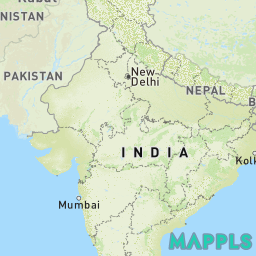
Our food deliveries from Swiggy were arriving on the other side of the block. Uber rides also tried to drop me there. Despite providing the correct address, the drivers' map apps were only showing them an approximate location. Hence, I was sending them pictures, Google Maps links, and orientation points.
Without these skills, it's harder to nomad in India.
Flying around India
We flew to Kolkata from Kuala Lumpur with AirAsia. The capital of Malaysia is my current base, so I'm used to AirAsia's standard. They are a low-cost carrier, and as long as I can get extra legroom, the flight quality is fine. As was that connection.
Air India Express took us from Kolkata to Bangalore. It's the low-cost branch of India's national carrier. While the booking experience was okay, the plane had malfunctioning aircon. When we boarded, the cabin was too hot. Half-way the flight, it was too cold. A few days later, I shared this feedback via their survey. Hopefully, if enough customers point it out, they'll address it.
The last connection from Bangalore to Kuala Lumpur was via IndiGo. An Indian low-cost airline with nice dark blue branding. Their booking flow worked well. My extra legroom seats were fine. And the aircon functioned normally. So, the overall experience was pleasant.
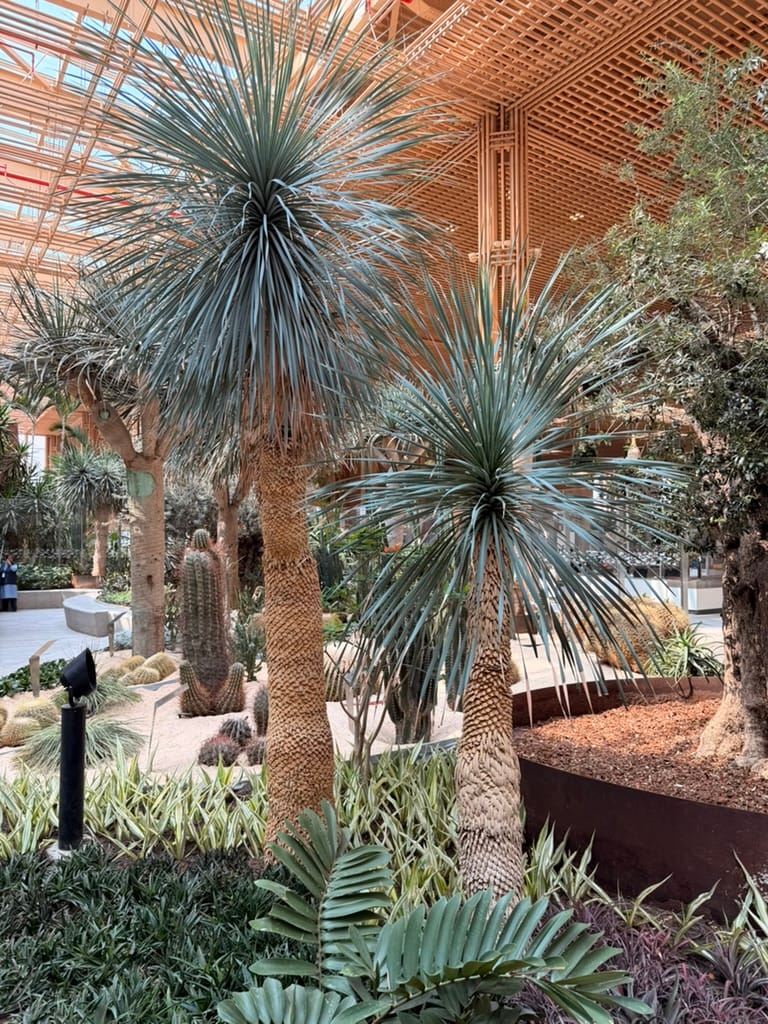
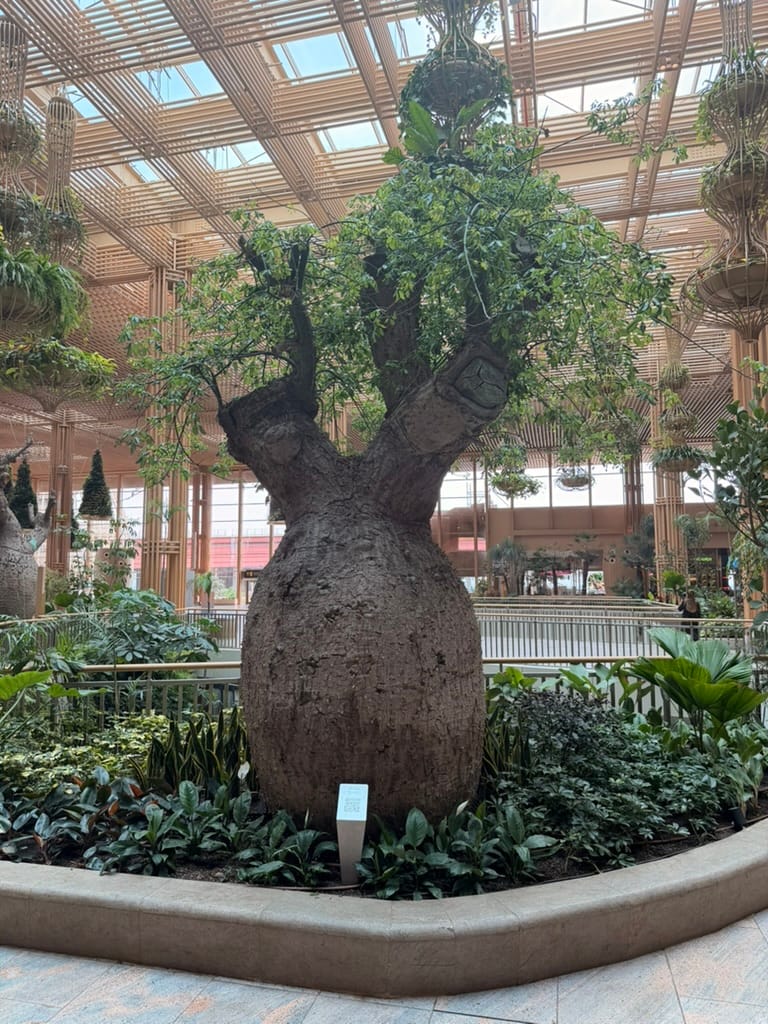
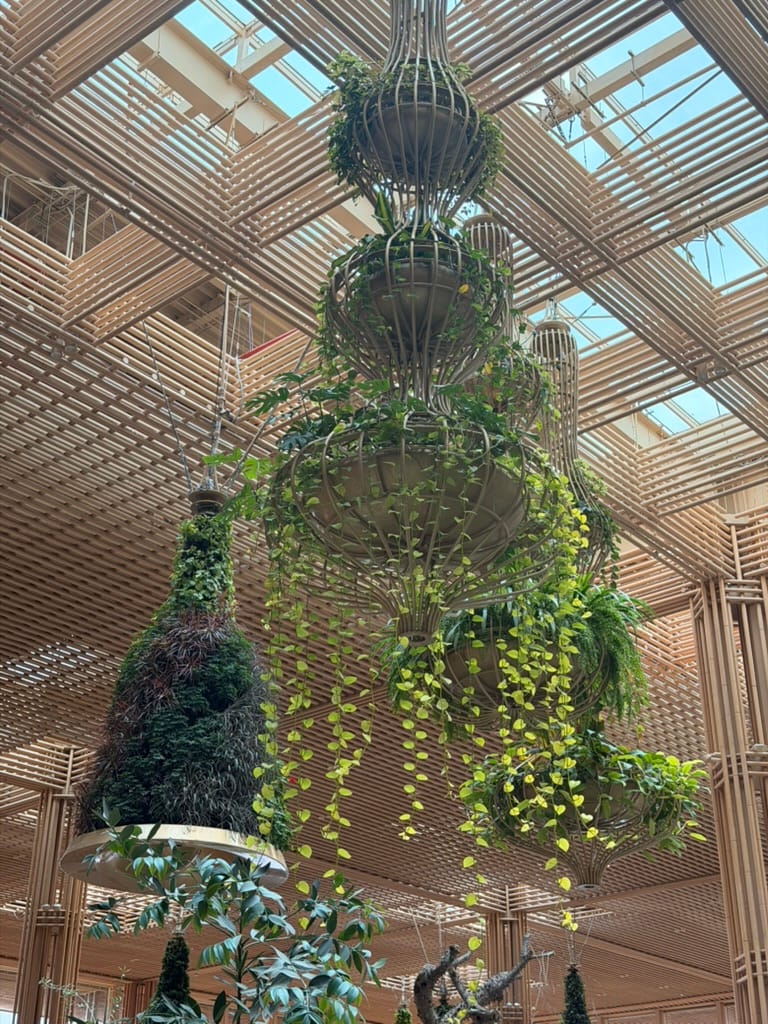
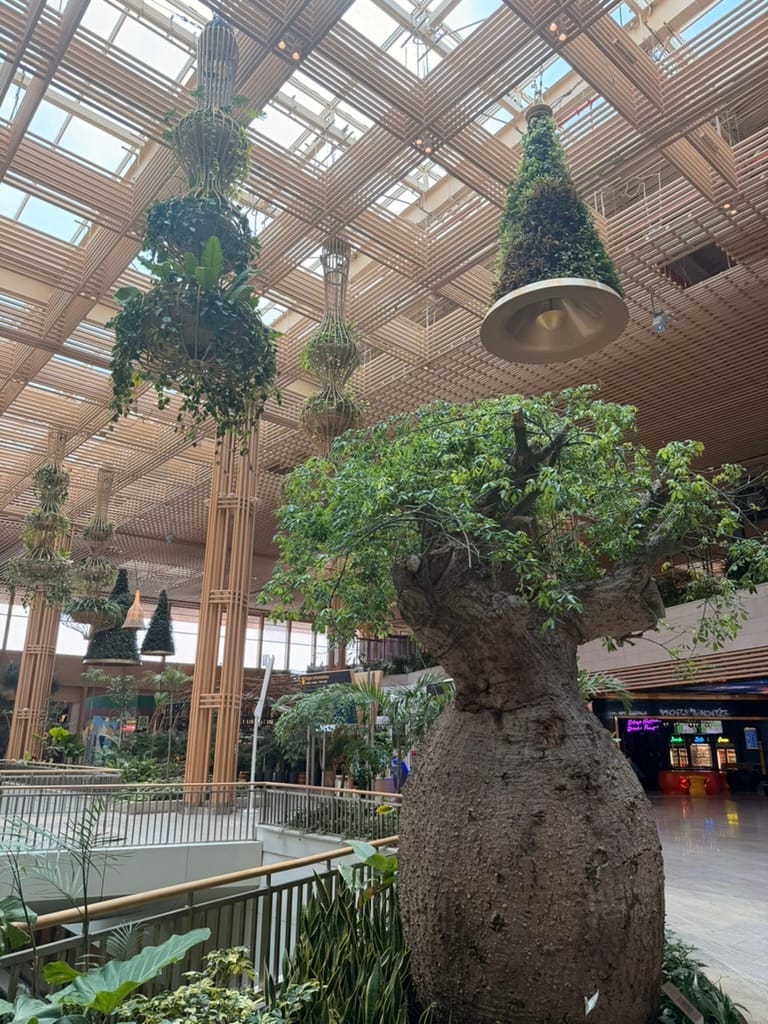
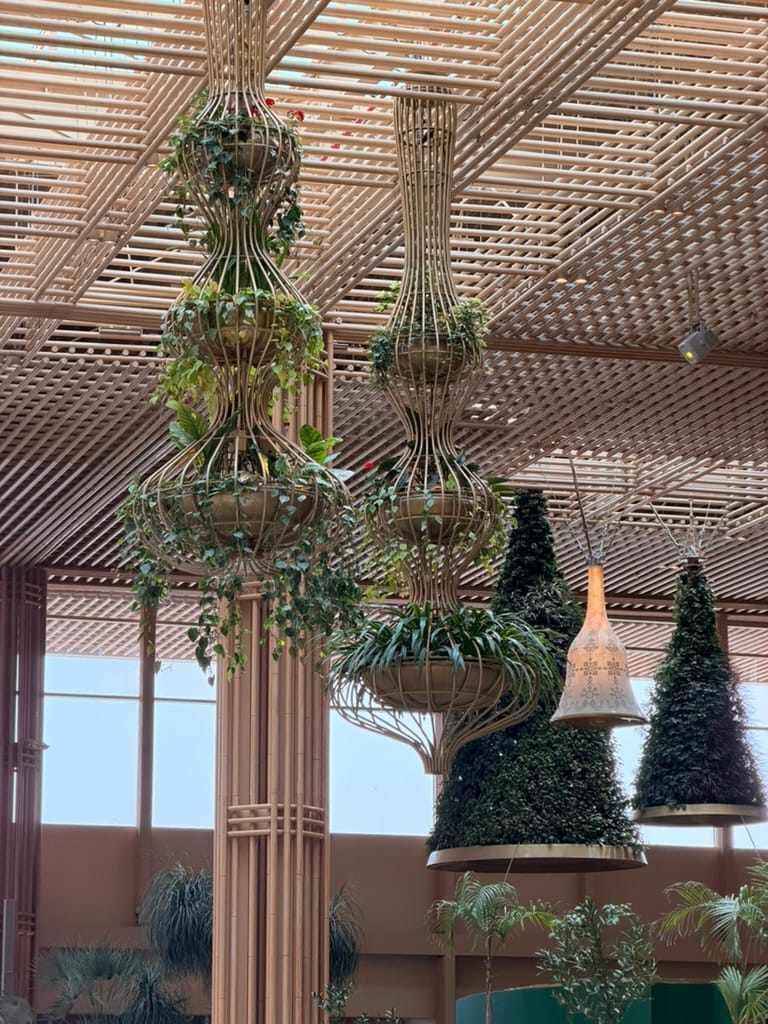
Excellent green space of Bangalore airport
Bangalore Airport like Singapore Changi
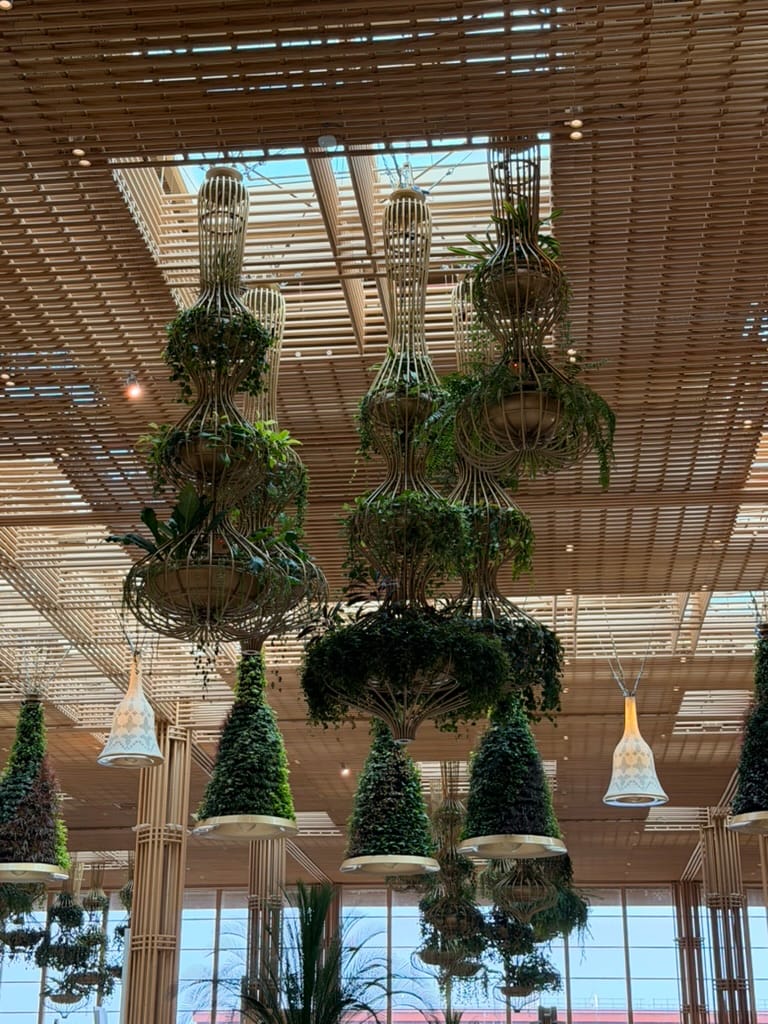
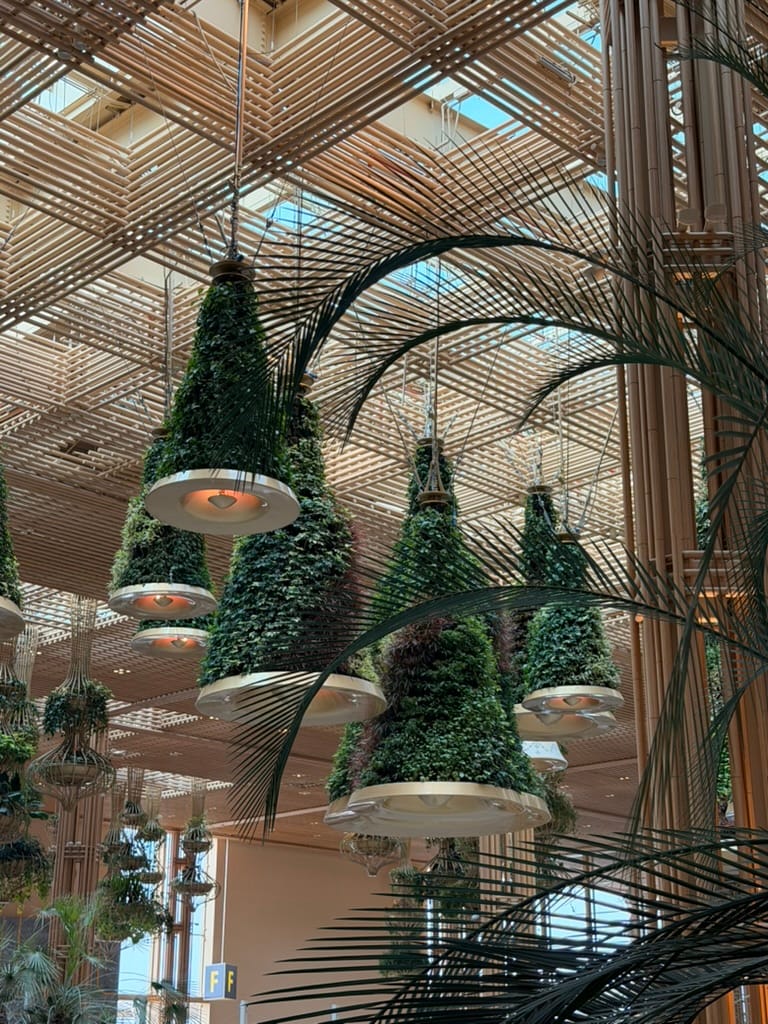
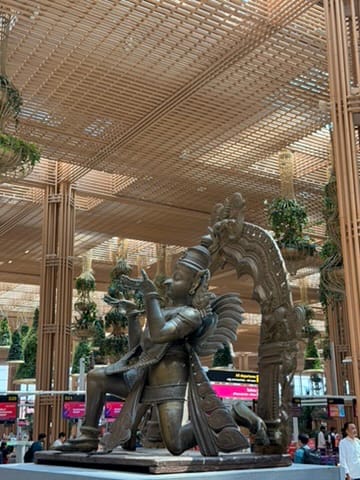
Bangalore's airport specifically caught my eye. Due to all the nature! Not some fake plastic plants. But an actual, full-scale garden. There were giant lamps covered with vegetation. A small waterfall inside the lobby. And a proper outdoor section with birds flying around.
Moreover, this airport was clean. After spending an extended time in India, we were astonished. The aforementioned bad air pollution and dust were everywhere. Except for the Kempegowda International Airport in Bangalore. It reminded me of Changi in Singapore, which is one of the best airports in the world.
Check my Walking with Piotrek vlog from the Bangalore Airport
Bangalore walking tour
Despite the crazy traffic and air pollution, we booked a walking tour. Europe is known for such sightseeing, and last year we had a rewarding experience exploring Vienna on foot.
In my AI research, the "Pete walk, an immersive walking tour in Bangalore with a guide" appeared as a good option. We visited a lot: a former palace, a fort, a temple, and an open market. The experience was fine, but not great. Each location had a rich and unique story. However, the guide's delivery lacked sophistication. It felt like a Wikipedia summary. We craved more engaging storytelling.
Electricity grid issues
Inconsistent power supply was the last, but equally important aspect. Before arriving in India, I read power cuts are frequent. Luckily, the hotels and our local friend's house were equipped with backup generators. Almost daily, we would hear the loud beep sound when the building's backup batteries were kicking in. Thanks to them, the Internet connection remained intact.
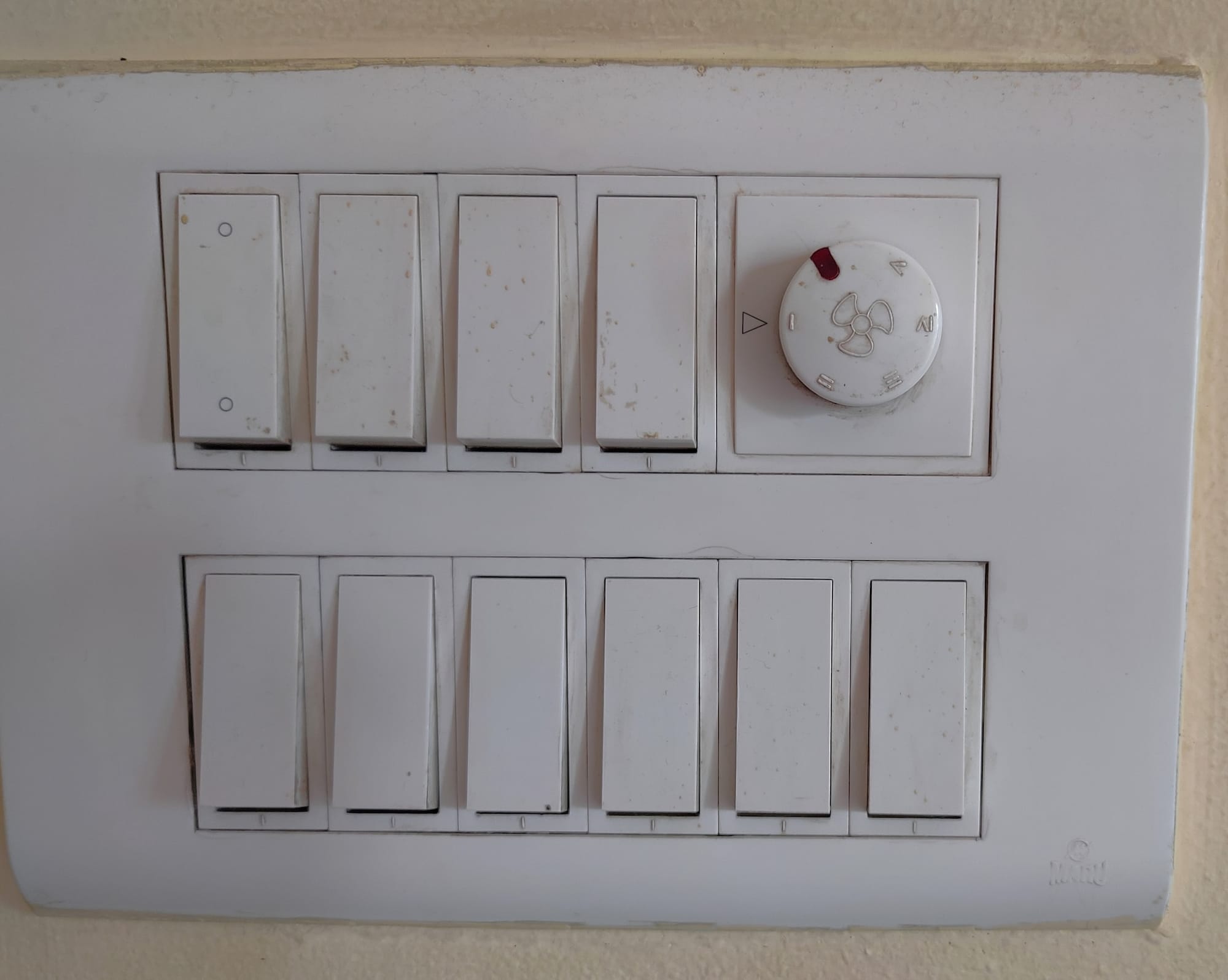
The nationwide power grid quality seems to be reflected in indoor wiring. Each room contained rows of a dozen light switches. No one ever labeled them. I would need to flip all of them each time to locate the one illuminating the primary lamp. Or the ceiling fan. Or discover that the second switch is the main power that needs to be activated before turning on any lights. A unique Indian quirk.
Equipment that performed well in India
As described in this and previous articles, India was a challenging trip. Therefore, I'm pleased with my Japanese iPhone 17 Pro. It proved to be an indispensable tool.
The increased battery and vapor chamber were key. My outside activities and heavy phone use raised its temperature. In all my previous iPhones, this degraded the performance and shortened the battery life. Yet my eSIM-only iPhone 17 Pro finally delivers. Despite the hot Indian sun and busy itinerary, I could rely on it.
The same goes for my 2021 M1 MacBook Pro. I replaced its battery in December 2025 to make it last longer. But performance-wise, it's an excellent computer. And I'm glad it has fans. They were essential when the power cut aircons and during my heavy AI usage.
Lastly, the 3M Aura 9332A+ FFP3 face masks became especially useful. Basic face masks are fine if you want to prevent spreading the flu. But this specific 3M mask had a filter to purify the air. It's not comfortable to wear it. Yet it was effective against the pollution in India.
India is uneven
Despite all the challenges, I'm thrilled to have experienced their digital inventions, excellent dishes, wedding traditions, and natural sites. On the one hand, India surprised with a mobile-first approach like QR payments. On the other, poor infrastructure caused blackouts and air pollution.
“The future is already here – it's just not evenly distributed." William Gibson
The famous quote applies here well. India's tech sector improves quality of life for both the locals and nomads. But be prepared for your trip to India. As the general travel infrastructure is still under construction.
How were your nomad experiences in India? Is walkability crucial for you as well? What apps and equipment do you use while in India?
Reply and tell me what you think. I strive to respond to every comment, and I'd love hearing from you.
See you next Tuesday.


Discussion