


Who is John Ho?
John Ho is a Hongkonger who has lived in Chiang Mai for a decade. He grew up in Cantonese-speaking, pre-1997 Hong Kong. Studied cognitive science at UCLA, picked up Japanese after graduation, and married a Thai woman.
Their kids speak three languages. He spent nine years working in Hong Kong hotels, then amassed a big following as a live streamer on Periscope, which is where his marketing instinct comes from.
He crowdfunded Alt_ChiangMai, the city's first coliving and coworking space purpose-built for remote workers, and later opened Alt_PingRiver in Wat Ket district.
Today he leads the Nomad Friendly District initiative with provincial government backing. Runs the Cosmo Local CNX pop-up village, co-writes The Extended Stay newsletter, and supports coliving owners across the world.
 CosmoLocal CNX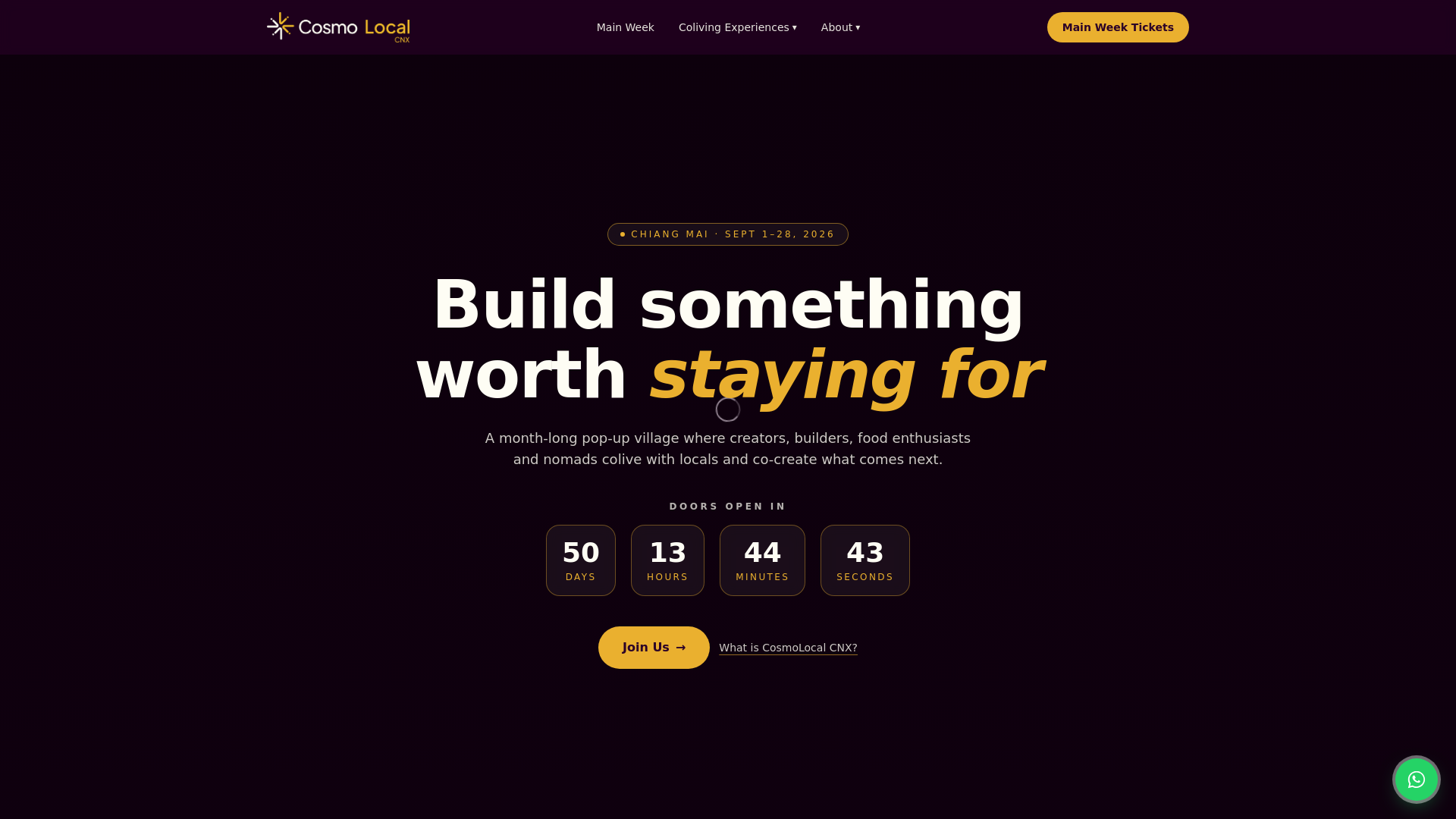
The CosmoLocal CNX is starting on September 1st 2026
John Ho's projects and online presence
- The Extended Stay — John's newsletter on community-powered hospitality. He published the Network School piece I mentioned in this episode
- How to Crowdfund a Coliving Space — an earlier interview with John on the Colivers Club podcast, if you want the origin story of Alt

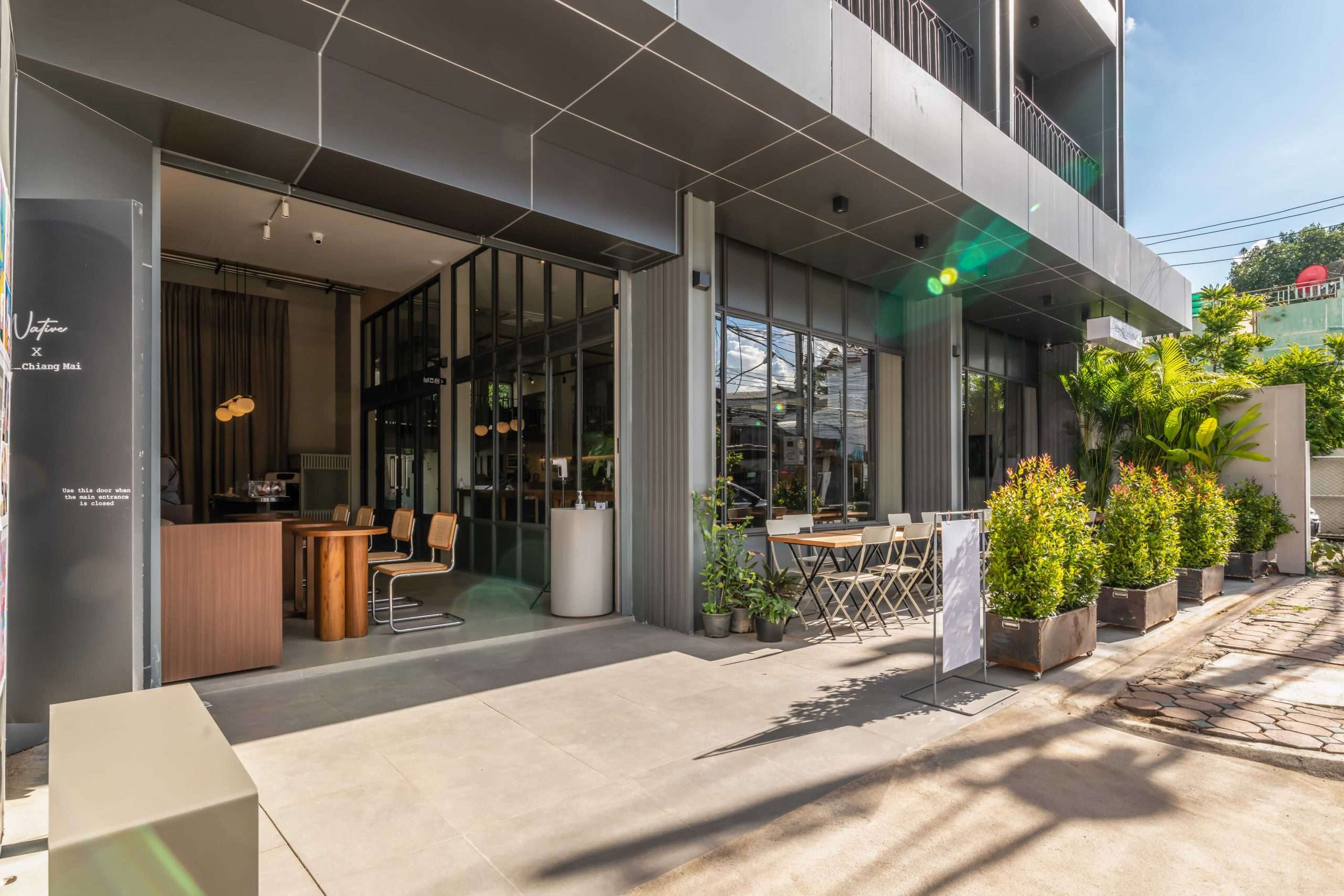
Colivings and coworking spaces
- Alt_Coliving — Chiang Mai's first purpose-built coliving and coworking spaces
- Alt_ChiangMai — the original site in the Old City, 27 ensuite rooms and a full coworking floor
- Alt_PingRiver — the second location in the Wat Ket riverside neighborhood, and the home base for Cosmo Local CNX
- Nine Coliving — the coliving in La Orotava, Tenerife, where I stayed. Placed in 19-century Canarian house in a town that has almost nothing to do with the tourist south
- Colive Fukuoka — the Japanese nomad gathering that partners with Alt
Events and projects
- Cosmo Local CNX — John's month-long pop-up village in Chiang Mai, September 2026
- We Got Government Support for a Nomad District in Thailand — how Wat Ket became Chiang Mai's officially recognized Nomad Friendly District
- Building a September — John's argument for filling Chiang Mai's quiet month instead of accepting it
- Can an Unknown Japanese Town of 7,000 Become a Digital Nomad Destination? — the Kotohira story I bring up when we talk about paying to stay a month somewhere you know nothing about
- The Role That Makes or Breaks Your Community Promise — John on community managers
The Network School case
- Network School — Balaji Srinivasan's live-in startup society, launched in Forest City, Johor in 2024
- Forest City, Johor — the half-empty megaproject next to Singapore that hosted it
- Forest City's Network School shut down after business licence revoked — the licensing decision that ended it in a week
- Booted from Malaysia, Balaji finds a new patron: Kazakhstan — the pivot I compare to leasing a cosmodrome
- The Network State — the book the whole movement came from
- Baikonur Cosmodrome — the Russian launch site leased from Kazakhstan. My reference point for what a rented enclave actually looks like
 John Ho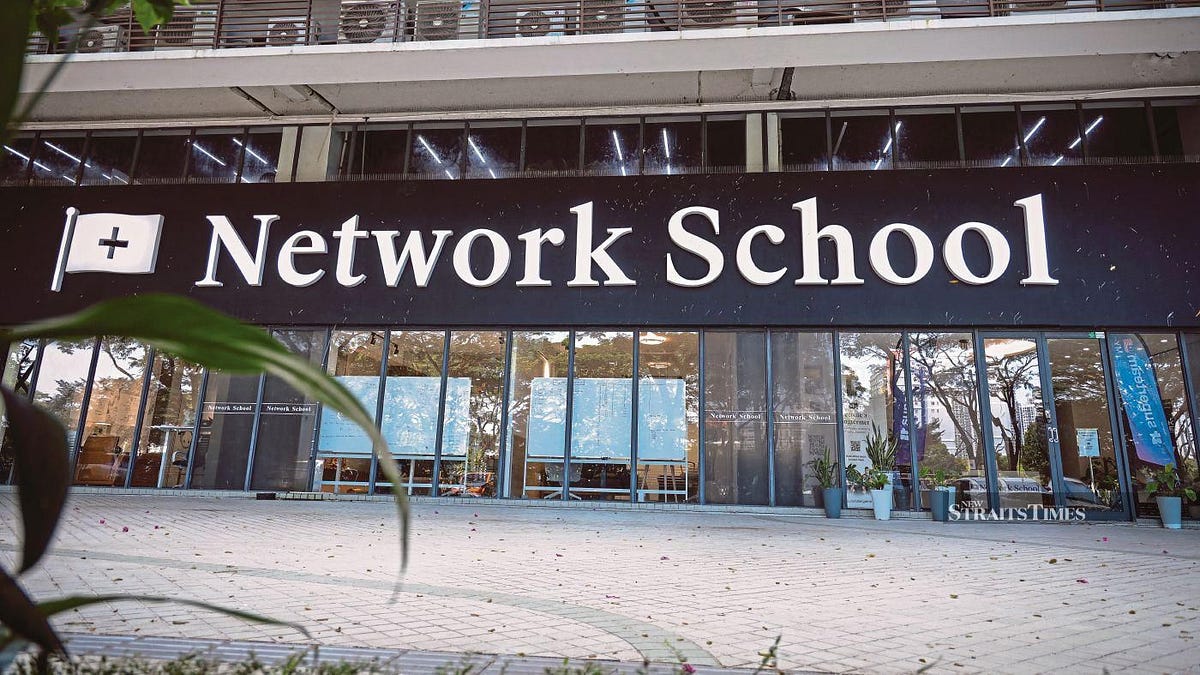
People and platforms
- Mapmelon — Ramón and Sole's coliving platform. They connected me with John, and I am grateful for that
- MangoBeds — their booking software built specifically for colivings
- Colivers Club — the coliving community and podcast where I was a guest as well
 Piotrek Bodera
Places we talked about
- Chiang Mai — a famous nomad hub where we met in person
- La Orotava — the hill town in northern Tenerife where I stayed for a year and met Ramón
- Jiuzhaigou — home of the Five Color Lake I spotted on John's Instagram, shot from a drone
- Kotohira — the Shikoku temple town of around 7,000 people that now hosts a coliving
- Kanazawa — another Japanese city building coliving and workation programs for remote workers
Hong Kong pop culture
- Jackie Chan — my biggest role model as a kid
- Jet Li — next in line for me after Jackie
- Hong Kong action cinema — the 1970s to 1990s run I still consider the benchmark for doing a lot with a small budget. No CGI, no AI, all stunts, and fights were real
Manga
- Naruto — the series I spotted on John's Instagram
- Boruto: Naruto Next Generations — the sequel still running after the main story finished
- One Piece — thousands of chapters and still one continuous story
- Manga Plus — the official app I recommend. Many manga titles are free. Full archive access requires a subscription. I use it on an iPad and it reconnected me with my teenage self


Concepts and references
- Six degrees of separation — the handshake theory that keeps proving itself in the nomad world
- 996 working hour system — my side-note question to John about how hard he actually works
- Periscope — the live streaming platform where John built his early audience
- Fiat 500 — the car from his Spanish road trip photos
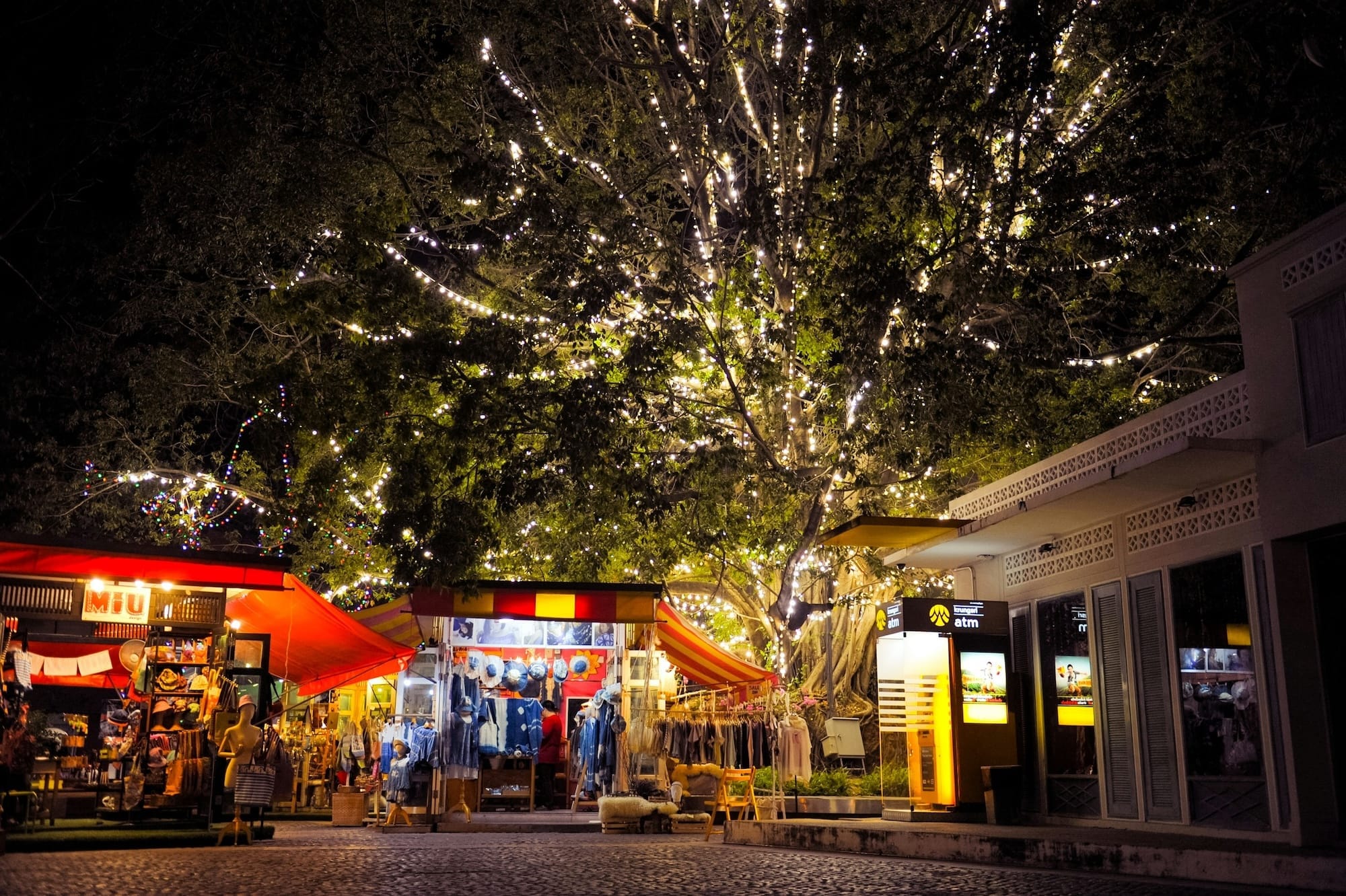
Chapters / Timestamps
0:00 Start
1:46 No culture = no identity: growing up Cantonese in Hong Kong
4:35 A colony's side effect: learning there is more than one way to live
7:32 Culture shock in California, a second life in Japan, third culture kids at home
11:53 Jackie Chan, kung-fu economics, and the golden era of Hong Kong cinema
16:47 What Hongkonger still means to John after ten years away
19:53 No money, no talk: Cantonese culture, swearing, and why every square meter counts
23:27 From landmark tourism to people tourism: John goes where someone will host him
28:59 Chiang Mai before the label: meeting nomads when the word was still new
32:09 Nomading is something you do, not something you are
33:53 Cosmolocalism explained: a pop-up village that rooted in Chiang Mai
39:48 Four tracks for September 2026: AI for Chiang Mai, solopreneurship, nourishing food, and a futures lab
45:26 John realized he was building bubbles: the 2.0 mission for Alt_Coliving
50:59 Membrane, not bubble: visas, taxes, and the pathways Thailand still lacks
52:45 Kotohira, population 7,000: how a temple town learned to host nomads
58:56 "996" workweek, overcommitting, and the monthly stay that baffles the locals
1:01:51 Network School post-mortem: Forest City, Edge City Lanna, and skipping the neighbors
1:07:22 White Lotus economics: enclaves, Baikonur, and the win-win-win alternative
1:12:07 The counter narrative: an AI agent, a bunker, and nomad loneliness
1:16:00 Wednesday runs: how a community outgrows its founder, John
1:19:54 Manga, Rick and Morty, and why every nomad has a good story
1:24:11 Where to find John Ho online
John Ho podcast quotes
“Because if you look at how the world is developing with technology, it is pushing us to be more and more independent, to be less reliant on people, to say, I can do everything by myself. All I need is an AI agent and a bunker.”
— John Ho
“Five years later, I understand that I'm actually building bubbles. I'm building bubbles for the nomads to be very comfortable to live within it, to live and operate within it. And that's not enough.”
— John Ho
“If you don't associate with the local space and people that you coexist with, then you might as well do it in Mars or the Moon or the Sahara Desert.”
— John Ho
“We want to grow, we want to develop, we want to be better. But hopefully not at the cost of the places that we pass by.”
— John Ho
“We can preach as much as we want about the importance of communities and loneliness is not good. But then at the same time, will you pay for it? Do you put the effort to talk to people that you don't agree with?”
— John Ho
Transcript from the conversation with John Ho
Read the full transcript
John Ho (00:00)
Because if you look at how the world is developing with technology, it is pushing us to be more and more independent, to be less reliant on people, to say, I can do everything by myself. All I need is an AI agent and a bunker.
Piotrek Bodera (00:24)
Yes.
All episodes of my Nerd on Tour Podcast are available for free. To listen to other inspiring nomad conversations, I encourage you to subscribe on YouTube, Spotify, Apple Podcasts or your preferred app. For full show notes, links and transcripts, go to nerdontour.net. It's my specialized blog designed for digital nomads. Besides podcasts, I write about slow travel, useful tools, and fostering great relationships. And now
Let's start the show.
John Ho (01:02)
Whoosh sound
Piotrek Bodera (01:04)
Hello, John. How are you?
John Ho (01:06)
I'm good, thank you. I should call you Piotrek
Piotrek Bodera (01:08)
Piotrek
Piotrek, yes, very good. Thank you. So we met recently in Chiang Mai in one of your colivings and it was really interesting to learn how much you are into cultures. we also have some common friends, Ramón and Sole from Map Melon and Mangobeds They actually connected me with you, so I'm really grateful for that.
And I would like to start from the perspective of why the cultures matter.
John Ho (01:46)
Right. Straight to the straight to the point. So for me personally, I was born and raised in a very traditional Chinese slash Hong Kong culture. we celebrate Chinese New Year, mid autumn festival. We eat Chinese food, we communicate and
In Cantonese and I grow up in an environment that most of my friends, my peers, my family members are Chinese. So that's my culture. And that's what I identify as Chinese. That's my identity. Right. So if you think, okay, why is culture important? Well, because without culture, then what is your identity?
I'm not a philosopher, so that might be a super philosophical question. But I think a lot of people's identity, including myself, comes from the culture. So then it shapes the ideologies of how I understand the world, how I interact with people, how I understand relationships, or how I want my relationships to be. Right? Now, of course.
Saying I'm Chinese is a very broad term because there's all sorts of Chinese people and there's all sorts of Chinese culture. But fundamentally, the the cultural aspect is something that is very impactful from for anyone who grows up and who develops into a person. So it means a lot to me at least.
Piotrek Bodera (03:42)
Nice. Yeah, I totally understand it and see it from the perspective of Polish culture, because this is where I grew up and it's also very strong, or let's say at the time in the nineties, early two thousands, we are considered a monolithic culture, which was not the case in the history. We're very diverse with a lot of religions and a lot of ethnicities, but nowadays that's the
You know, the shape of Poland. So that's the reason for me to travel the world and to experience other cultures and to now for many years live outside of my home country. So is it similar for you? Because from my experience, Hong Kong is very diverse. And then what is your relationship to other cultures?
John Ho (04:35)
So Hong Kong being Hong Kong, especially when I grew up, which is the nineties, the two thousands, and you know, the recent history of Hong Kong. well before nineteen ninety seven we were a colony of of British Kingdom, UK. So the people and the system, right, and the space is very much
Predominantly Chinese, physical location also in Asia, you know, like very close to China, the country. But we also have this injection of a very different type of understanding how life can be of a different setting. Right? So then in school, we learn English as a second language.
I was growing up in a Catholic school. Right. So it's also somewhat of a Western religion. I have foreigner friends because my family are religious and we have international friends from all over the world visiting. So I think I'm one of the more I would consider fortunate people who of course the base is in Hong Kong.
It is a very much Chinese society, but the exposure of these different cultures taught me there's there's there's different ways to live. You know, there's different ways to speak. there's different ways to think of a certain topic. Like governance.
Piotrek Bodera (06:22)
Yes.
John Ho (06:25)
and so it made me realize that, you know, being in Hong Kong.
rooted in my community, there's still the opportunities to understand the outside world and what does that mean for my upbringing, for my identity, for the way I understand things.
Piotrek Bodera (06:50)
I think very significant is also the fact that your wife is Thai, so you are like going even one step further and now living in Thailand. you are practicing, yeah, this cultural awareness. So I'm curious what is your perspective? Later on we'll be talking more about the specific activities you are organizing to bridge the locals and the nomads.
But right now I'm curious how the upbringing in Hong Kong and being, you know, submerged with all those different cultures is now helping you to build those bridges between different cultures.
John Ho (07:32)
So living in Hong Kong again, right, like we are exposed to these different cultures through my friends, through my family, through school. But I think the the first time I was genuinely cultural culture shocked was when I moved to USA to study higher education. Right. So I spent about five years in university in California, USA. And I still remember that.
You know, even though I speak English, I've watched TV shows and I thought I would understand this American culture thing. But it wasn't until the TV shows that I watched in America that gave me a different perspective of of that kind of culture. Right. I don't know if you've heard of like shows like Jerry Springer or The Real World.
All these T V shows that for me as a young adult was like mind blowing. I'm like, what is this? You know, how we're stern. and that was the first time I was culture shocked when I was about nineteen, twenty years old. And then there was also the opportunity I went to Japan after graduation.
And I was learning Japanese as a second language. And I also spent some time in Japan. So now that I'm in Chiang Mai, Thailand, and now that I have a Thai wife, this is actually not a second culture that I have been exposed to or the or or I I'm I'm immersing myself into right. So this is
Like this is the fourth culture, I guess. I don't know. Like it depends on how you count it. But I'm saying my point is, I guess, it's like this by by now, right? Moving having moved to Thailand since ten years ago, being with my wife, who's actually Thai, who's a Buddhist in religion, you know, this is not the first time that I have to be deep into a different culture than what is I identify as my own culture.
And obviously I have kids as well, right? So then they're TCKs, third culture kids. They speak three languages and they watch, you know, any kind of T V you can watch in the world, right? So it's getting more and more multi layered or complex when it comes to exposure of these cultures. And and I guess what what I understand is I'm fascinated. I'm always fascinated of how a person
is how a person speaks, apart from the language, or behaves, or interacts with people, or think of a certain topic, and how much that can be completely different from how I perceive the same thing. The same subject matter, let's put it that way. Yeah.
Piotrek Bodera (10:42)
Yeah, I I haven't had as much experience as you in terms of studying abroad or getting into like everyday life through like institution. However, I had I had similar awakenings, you could say, especially when I traveled to Australia or New Zealand and saw how the problems of everyday life can be solved. And that was for me eye-opening, like, okay.
Polish people are tend to be quite stiff and we want to do everything right now and like if ever anything is not happening, you know, as we want to, we just get frustrated, annoyed, whatnot. And then s a lot of people, including Thai people, which is amazing, probably because of the Buddhist religion, they are very calm. Whatever is happening, yeah, the flight is cancelled and like
Okay, that's life. Let's you know, go back home, come tomorrow. There will be another flight, yeah? It's like so it's really amazing to see it in practice.
John Ho (11:51)
Yeah.
Piotrek Bodera (11:53)
Would you like to regularly receive intriguing content like this? Then subscribe to Nomad Tuesday. Every week you will get an email from me with fresh podcast episodes, practical tools, and fascinating Nomad stories. Subscribe at nerdontour.net
Before we go forward, I would like to put a pin on the Hong Kong culture. Because when I was a kid, Jackie Chan was like the the biggest role model for me. Then Jet Li was like the next in line. And the action movies that came from Hong Kong, especially from the nineteen seventies up to nineteen nineties, they are still considered
Like one of the best examples of how we can create create amazing entertainment with really low budget and no CGI, no robots, no stuff that we now have or like AI prompting. No, everything was real, yeah, like the kicks, the jumps, the you know, everything they were doing. So, from your perspective, is do you think it is a good representation of Hong Kong culture?
John Ho (13:07)
I I remember whenever I traveled to Europe, right? I think it was Turkey or and then, you know, I would walk on the streets. This is usually very touristy places. And the the market people would, you know, see me as a Chinese person and be like, Hey Turkey Chan.
Piotrek Bodera (13:28)
Okay.
John Ho (13:30)
I mean, I I thought that was amusing, right? because
For people who haven't been to Asia, right? Or people who don't know anything about Chinese, assuming they can differentiate Chinese and Japanese and Korean and other Asian countries. That's their understanding. Chinese, Jackie Chan.
Piotrek Bodera (13:48)
Yeah.
John Ho (13:51)
It's fascinating because like of first I grew up watching Jackie Chan movies. I wanted to practice martial arts. My my my parents won't let me because it's a it's barbaric, right? Like only only the only the rough people learn learn how to fight. If you're proper, you learn how to study. Right. But that generation of entertainment in Hong Kong, you know, we call it the golden era of entertainment industry in Hong Kong. And that was also
the genre that that really we dominated as as a genre, right, in in the movie industry. You know, like if if you were to watch action movies in the eighties and nineties in in then Hollywood, they're like very much laughable, you know, because none of the actors know how to fight. So they're just pretending to fight. Whereas if you have people like if you if you're looking at they call it the Five Tigers or the Four Tigers, I c can't remember.
the Jackie Chan gang, right? All of them come from martial arts schools. You know, they they they they they learned martial arts since they were they learned kung fu since they were young. But the kung fu itself, you can't make money fighting. Right? There's no MMA sports back then. What are you gonna do? Like be a bully and just like beat people up and get money? You can't do that in a modern society, right? In a civilized society. So I guess
It was more out from like, okay, this is a pragmatic situation. We know how to fight, but we cannot fight to make money. Then we have to pretend. Right. So what's better to make money by pretending and utilizing the skills and do it in front of a camera. Of course. It's one of those like coincidental things, you know, like and then it got popular for that reason. Right. But I don't think it was engineered because people say this is going to be the thing that
defines yeah Hong Kong or the the movie culture of what under people understand about Hong Kong. Right. Yeah. Fun fact Jackie Chan's son used to study in the same school that I was studying. Yeah. And and and and and the funniest thing is like, you know, he's a superstar. So he doesn't want people to know his son, but his son looks exactly the same as him. Okay. So everyone's like
That's that's Jackie Chan's son, isn't it? Yeah, so he w he he was in our school for a couple weeks. Yeah. Yeah.
Piotrek Bodera (16:25)
Yeah.
Yeah, that's the proof of the what is it, the five handshakes, yeah, that you ca you know every person in the world just by knowing four other people in between. And here's an example.
John Ho (16:42)
It's a small city. Yeah, it's a small city. But yeah, it it was also interesting in that way.
Piotrek Bodera (16:47)
And
how would you say that your identity growing up in Hong Kong in the time when it was still part of the UK and you still like identifying yourself that you are the Hong Kong person because on your Instagram profile in your bio you you use the hashtag for the Hongkonger so
Wha what does it mean to you today? Yeah, because the place is changing. you mentioned the the governance and I don't want to go into politics 'cause it's not the podcast about it. I'm more interested about you as a person now living outside of Hong Kong and probably still having relatives there. What does it mean to you?
John Ho (17:36)
I think identifying as a Hong Konger versus an American saying, I'm from Texas, right? Versus an Italian says, I'm from Rome. It's just another level of understanding what does that mean. Right? So you cannot say or I I I can't say I'm Chinese because that's too broad as an identity, right? Because if you're from the north versus from the south versus from Hong Kong versus
you're an American born Chinese, that's that's like a complete different set of values and understanding and growth upbringing and and all these things, right? So I think my purpose of you know telling people that this is my roots is the assumption of people understand China is a very big country. There's a very long history. There's a lot of subcultures in language, in region, in
Food preferences and ideologies and and history and all of that, right? So then if I tell people that I'm from Hong Kong, that basically means, okay. Then Hong Kong is different from China in a sense, they have a history of under the colonization of the British government, right? But that also means that the school system is different.
The societies was governed in a different way, right? How people live was also very pragmatic because we were never taught about like you know governance or civil societies or like if you're in America, then you talk about democracy, right? We don't have those in school. Cause like we were just trying to live and enjoy life. So Hong Kong as an identity.
For me, it's like, well, if you know Hong Kong people, then you know there's more specific values that we're related to. For example, you know, we're very pragmatic people, right? No money, no talk.
Piotrek Bodera (19:51)
Okay.
John Ho (19:52)
There's literally a song by a famous s you know, like songwriter. The song title is No Money, no talk. It's a
Piotrek Bodera (19:59)
I should find it.
John Ho (20:01)
celebrity from the eighties or nineties. Like that's that's a fundamental value of Hong Kong. Like if we're not talking about money, we might as well not talk. Right? Yeah. And that doesn't apply to the other regions of of of China, for example. Right. We speak Cantonese. That's our official language. That's ninety nine percent of the people
in Hong Kong communicating if they're from, you know, if they're born and raised in Hong Kong, right? If you're in China, depending on the province, then you would speak a different dialect. Right. And that also shapes how you engage with people. For example, Cantonese is a very vulgar language. We cuss a lot. Like we swear a lot. No?
Piotrek Bodera (20:45)
It didn't know that.
John Ho (20:47)
So if you if you talk yeah, if you talk to my uncles, right?
I I have uncles living in the Canton province of China and they speak Cantonese. Swearing is as normal as talking to anyone. Your kids, your peers, your wife, everyone swears. Like the closer you are, the more you swear.
Piotrek Bodera (21:09)
Okay.
John Ho (21:11)
Seriously. Seriously.
Piotrek Bodera (21:13)
Mm.
John Ho (21:14)
And so there's there's that like language dynamic that because
It's a colloquial language, right? And and and we're just very like in your face, that kind of communication. Like I even behave different if I'm using Cantonese language versus when I'm speaking with you in English. Like you would see me in a different personality almost. If I were to communicate with someone in Cantonese, and you don't even need to understand the language, you can see my body gesture, and you're already saying, this is
This is a different version of John. Yes. You know? I walk faster when I'm in Hong Kong.
Piotrek Bodera (21:55)
And do you do you also stand in cues even though you don't know where they lead, but I heard like you love just queuing for like desserts, for you know, groceries, for coffee.
John Ho (22:09)
Yeah.
Some some Hong Kong people love that, not me.
Piotrek Bodera (22:15)
Yeah.
John Ho (22:16)
Yeah. Yeah. Yeah. Not not everyone likes that. I mean, even when it comes to understanding space utilization, right? Like you've been living in Alt Chiang Mai. And if someone is from Hong Kong, they can immediately tell that this place is built by a Hong Kong person. Do you know why? Because every single square meters of the space.
has to be utilized. Okay. And that's a very much like a design concept in Hong Kong, like space equals money. Every space being wasted, meaning every dollar is being wasted. And so when you're designing a space, you better utilize the space to the maximum possibility. And so when we were designing Alt Chiang Mai, the first co-living space, the architects in Thailand were like
You wanna fit dirty rooms in this space? And have a co-working space? And have a kitchen? And have this and have that Yeah. It's like is that possible? But yeah, yeah. Let me show you. And then they're like
Piotrek Bodera (23:27)
Nice. Yeah, thank you for all of that. And part of the cultural exploration is just by traveling. So I checked different posts on your Instagram and I was surprised to see the big variety of the destinations where you were going. I saw you were enjoying snow in Switzerland.
This is probably something unique, especially for people, you know, from Asia for those hot regions of Asia. And then what caught my eye was the five colour lake in China where you were like flying with the drone and taking some really nice pictures. and also like going around on like a road trip with Fiat five hundred in Spain.
So can you tell me more about your travels in general?
John Ho (24:26)
Again, being a Hong Kong person, we live in a very small city. And whenever you get a chance to have a holiday, majority of the people who mix a proper salary is like, we're going to a holiday. We're going to we're going outside of Hong Kong. We're gonna travel. So it's very much in the culture of a Hong Kong person when there's an opportunity, you just go out. And also my the influence from my dad, my
Parents also enjoyed traveling, also understood the importance of life experience, not just in the books. And so starting at a very young age, you know, like my parents would just take us through different countries. Taking a plane, being in different countries, that's that's nothing too foreign for a Hong Kong person. I think what's what's more different is since
So prior to prior to being a co-living, co-working space owner, I was actually a inf an influencer wannabe. And so I was trying to see if I could, you know, like put myself in front of social media space, do some live streaming and do some travel content. Or do a bunch of random content. But traveling was one of the content.
And what got more interesting in my ways of traveling since 10 years ago when I was using that tool is that I understood your experience of traveling can be drastically different depending on whether you know the people in that destination that you're traveling. And because of the app, because of the opportunity to know local people through the
I no longer choose destinations because of the destination. I choose the place because of someone that I know there that I think they can show me around as a local person. Perfect. And I think that type of travel versus let's go to Paris because there's the Louvre or the Eiffel Tower, right? Or let's go to I don't know.
Egypt to see the pyramids. Right. Nothing wrong about that. You know, you still want to travel and see the landmarks and and do that kind of stuff, but I'm older, I am a little bit more well traveled. So then the landmarks doesn't appeal to me as much as who am I traveling with? Who do I know? And can I see life as a local person and appreciate that experience? Mm-hmm.
For example, next year I've decided to travel to India. and I'm not traveling to Delhi, I'm not traveling to the main cities. I'm actually traveling because I know a co-living space owner in a jungle three hours away from Goa. And because of him, you know, I'm talking to my wife and saying, Let's make a family trip to India because
We know of a person who owns a co living space and we've never been to India and it sounds like a good idea.
Piotrek Bodera (27:54)
Yeah, yeah, yeah, yeah. you have been commissioned to give s you some talks about running Eco Living and how to yeah engage with the community. So I will ask you about this in a moment, but I just wanted to clarify when you mentioned the platform, was the Periscope your like biggest social media platform where you are active?
John Ho (28:23)
I was, right? When the app was still a thing, but now it's dead, you know? But yes, I was doing a lot of live streaming through the app of Periscope.
Piotrek Bodera (28:32)
Okay. Still, like on Instagram I see for example the content you are publishing for the co leaving or for the different events you are promoting. It's really engaging, it's really like well done. So I'm pleased to see that the skills you you developed are helping you now to like creating something, you know, that people engage with, yeah.
John Ho (28:56)
There's definitely relevance.
Piotrek Bodera (28:59)
Hm. So we covered the the traveling, your cultural experience and before we talk about the community and how well you can, you know, build it and and take care of it, what is your relationship to digital nomads? are you considered yourself a nomad, or how did you first meet them?
John Ho (29:21)
So I came to Chiang Mai eighteen years ago because I started dating my wife and that was eighteen, nineteen years ago. But I think the first time I realised the term was when I walked into a co working space in Chiang Mai. And this is maybe, I don't know, thirteen, fourteen years ago, because I was already working remotely.
And then I noticed that there's a lot of foreigners in Chiang Mai. You know, they identify themselves as digital nomads. And I was like, okay. 'Cause you know, we have a long history in Chiang Mai that the nomads would be here because it's cheap, you know, the infrastructure is nice. A lot of people pass through here. Tim Ferris four hour work week, nomad list, Peter Levels, you know, they all talk about Chang Mai, right?
So yeah, I do I identify as a nomad? no, not necessarily, because I do travel a lot. I do work online, but I always have a home. I never not have a home. Right? So by definition, if you know Techno Nomad is defined as a person who works and travels all the time, I don't really fit the profiles. I'm not nomadic.
I I I I I travel, I work and then I go back home. Yeah, yeah. But again, it's a very broad term, right? So again it depends on what do you want. Now nothing against the the term. It's just that I I I don't think I traveled long enough and frequent enough to to say that I'm a nomad. Now my relationship with a but nomad I think became more reinforced when I started to do a business to host the the tutorial nomads in Chiang Mai right, running
Alt Chiang Mai and Alt Ping River as a co-living co-working space. So the business was designed to host them, knowing their lifestyle, knowing their pain points, knowing their needs. So of course, over the years I've met many of them, if they were to book and stay at my place. And then I started traveling to different types of nomad conferences and
Bulgaria in Japan. And so, yeah, I mean, even though I don't identify as a nomad, I'm obviously very familiar with the term and what's happening and the whole whole scene because now we also have, you know, projects that we're doing in Chiang Mai that is beyond the co living co working operation. Mm-hmm.
Piotrek Bodera (32:09)
Yeah, yeah, I ask about this because the term can be very fluid and I even argue that it's more something you do than you are. Yeah. Of course some people would like to, you know, keep it very whole as their true id identity, and then you know, everyone else are are just newbies and they don't understand it. But I rather say like nomading. It's like camping.
You go there, you do this for some period of time, and then you can go back home. And like there's something wrong. Yeah. You don't have to do it in perpetuity. And then once you like stop, or like once you you know go home for like three months, it's like no, you you are no longer nomad, you cannot talk to us, you're not part of the gang. So it's good to hear that you are building the infrastructure for us, for the people who love to
experience other cultures and have a s a place to work and most important to connect with other people and for me that's the clue the community building the community first co-livings something that I love that I look everywhere and I'm so glad that in Chiang Mai you are the the boss the person who is really doing this well and
You know, now expanding with your influence internationally. So let's start by talking about the upcoming project, the Cosmo Local, because I think it's quite original. I haven't seen something similar in other places. So if you could tell me what is it?
John Ho (33:52)
So first of all, the terminology, cosmolocalism is something that was introduced to me about two years ago. It's a very academ academic term that describes the types of people, cosmo meaning something very light, fluid, you know, it moves around, right? So I think that can be one description of the digital no nomads of the remote workers, the sh the global workforces that are no longer bounded by their physical.
space that they can they can they can live. And then you have local, and that's very self explanatory, right? Something that is grounded, it's quite heavy, it doesn't move around as much. Right. Now Cosmo Local CNX as a pop up village is my interpretation of when you have something that is in theory
You know, in the academia world that they want to understand these relationships, how do you make it pragmatic enough so people can actually understand these these pathways, these interactions? In fact, if you don't know the term, often you're like, Wait, Cosmo, like cosmopolitan? Like what does it mean, right?
And if you're not an English speaker, you're like Cosmoloco, I don't know, I don't like it's a very it's a very hard word to explain to people in a very short period of time. But that also encapsulates why I want to call this pop-up village Cosmolocal CNX, because the main purpose for all the activities that we want to do in the month of September.
Is to facilitate the relationships of the two sides. So meaning on one hand, everything has to be grounded to Chiang Mai. This is an in real life, an IRL event, right? So if you're coming in, if you're a Cosmo, then
You're coming into this space and you need to understand the space and you need to interact with the space and the people, et cetera, et cetera. That's a non-negotiable. Right. So compared to like a nomad summit, right, or a nomad festival, it really doesn't matter where you do it, because the target audience are the nomads, meaning they do not belong to any physical location.
So you can have a Nomad festival anywhere in the world, and the experience is quite similar. Whereas Cosmo Local CNX is in Chiang Mai, there's going to be local participation. The topics that we talk about have to be related to Thailand slash Chiang Mai. And the people here need to be part of that conversation, and they also need to be the participants.
engaging with the cosmos. Right. So then despite understanding how hard of a job it is to create a brand with such an ambiguous word, we're trying. I don't want to say that we're great at explaining this message through our marketing content, because it is quite ambiguous. But I think if you know me
Right. If you're in the space of digital nomadism, you're in the space of understanding cosmolocalism, you're in the space of pop-up village, then you you understand, yeah, I think I know what this cosmolocal CNX is about. So this is our first year, first attempt to do something that is very intentional, bringing in the global talents. And again, I don't use the word
Digital nomads, because I think cosmolocalism encapsulates more people than just digital nomads. And we put a lot of effort to try pooling both sides, right? Yes. And making it making it accessible for both sides to be in this in this month, this pop up village.
Piotrek Bodera (38:35)
It reminds me a bit eight years ago. I was in Bali kind of starting my own adventure as a nomad, and I was struck by Swedish guy, Dennis, who was married to an Indonesian and they were running a couple of different co-workings. And his perspective was quite similar, kind of putting the priority on the locals, because he was the one organizing some
workshops and bringing the locals to the co-working because the westerners historically always come to Bali. Yeah there is n no need for the incentive to come. So I'm so happy to to see you now doing a similar thing where as you said Chiang Mai has been already put on the map. Everybody knows where it is, everybody are going there because it's a hub and through the event like this they have a chance to
You know, to f to find a connection. Could you tell me more about the specific events, specific blocks that are part of the Cosmolocal, and the opportunities for both locals and the cosmo peop people to connect?
John Ho (39:48)
So you're right. Chiang Mai, same as Bali, is a place that if you're a nomad, if you're a foreigner, you most likely heard about it and you come here and it's a very place to be, right? The only thing that is missing is the facilitation part, because by default, the locals will still prefer to hang out with locals, and vice versa, right? If you're a nomad, if you're a foreigner, you prefer to hang out.
Among the people that you're more easy to communicate, easy to understand with. We want to use different themes to see if we can pull the people in so that they have some common knowledge or common interest to interact with each other on both sides. So this year we're starting with four themes: AI for Chiang Mai.
Solopreneurship.
Food That Nourishes and Nomad's Future Lab. And these are themes that will running in parallel as a co living experience of its own. But there's also the main week on the last week of September, twenty third to the twenty eighth, and that's like a one week conference. Right. So that's that's the most intense, that's the most you know, the biggest productions that we want to do.
after the co-living experiences comes towards the end. And so whatever they have done for the first three weeks, we want to use that as the public output showcase to to tell people this is what we have produced. So if you notice, it's not just AI, but it's AI for Chiang Mai. Right. Can we utilize the talent to look at the problems of Chiang Mai?
And use AI as a technological tool to solve the problems in a city, right? For example, I don't know, traffic congestions, the smoky season, maybe communications. We don't know. Like, you know, that's for the cohort to figure it out. Food, food that nourishes, right? A lot of like interest nowadays are in longevity.
And they talk about like food and health and wellness and all that. Again, I want it to be more grounded and I want it to be more related to the culture. So when we want to talk about wellness, we just we don't talk about longevity because that's like anyone can talk about longevity, but we want to talk about longevity in a sense where food is something everyone understands, right? And everyone can contribute and
There's unique systems in Chiang Mai with the farmers, with the sea, you know, savers, with with the producers, with the restaurants. And there's a whole supply chain within Chiang Mai that if you're a foreigner or even if you're a Thai person, you don't necessarily know all these people in the ecosystem. Right? So again, we're using food as a common topic and we're trying to ground people by telling them this these are the stories, these are the notes in Chiang Mai that they can interact with.
Solopreneurship, that's a simple one, you know, with the technology, everyone can be their one person business owner. So now you you bring people together, you teach them how to build your own business. And that's equally important for people from the both sides. Knowing that Futures Lab is an it's very interesting because we as an organizer, right? We as a community, not only do we want to look at
You know, the business opportunities, you know, me as a business owner, but also what is the impact on local communities? What is development of the city going to look like when more and more foreigners wants to relocate, wants to migrate here? Because that is happening, that is already happening. So that we actually have endorsement from the provincial government of Chiang Mai to build a sandbox program in the district where Alt Ping River, my second location, is so that now
We're we're we're using this Nomad friendly district program and Nomad Futures allowed us to basically create a blueprint with scholars, with academias, with researchers, with you know, people from all backgrounds, domain experts, and say, Can we produce a blueprint to to create something so that, you know, we understand there's changes in the city, there's new people coming in.
What does that look like so that all these tensions and all these potential problems can be mitigated because we we have intentional building processes to make sure the local communities are heard, to make sure these plans are involving them to be part of. So there's a lot of things that we're doing in Cosmo Local CNX. A lot. A lot. And and and so it's very educational. It's very meaningful. A lot of amazing people are gonna come.
This is year one, so we're not gonna be perfect, but we see the potential. We see the potential, we see the need,
Piotrek Bodera (45:17)
Yeah.
John Ho (45:18)
and we're gonna try our best to to show people a very interesting side of Chiang Mai.
Piotrek Bodera (45:26)
Excellent. Yeah. I'm really happy to to see you going one step further because I feel like the concept of a co-working, of a nice cafe with fast internet and even co-living is already established. Like people know how to do it. Of course not everyone knows how to take care of the community, but putting a building
Putting some chairs and like connecting the Wi-Fi router, it's very simple. Yeah, it's like the the basic infrastructure that have been done over and over for decades. So could you tell me now the mission of the out coliving, the the first location, and now the second also the that you mentioned, the outping river. What are you trying to do with those colivings?
John Ho (46:19)
Well, obviously we need to make more money.
Piotrek Bodera (46:22)
Yeah.
John Ho (46:22)
Speaking as a Hong Kong person.
Piotrek Bodera (46:25)
Ha ha ha ha.
John Ho (46:28)
Just kidding. Not really. but I think my mission has also changed over the years because five years ago, you know, it was a very pragmatic goal, you know. I come from hospitality. I want to build a space for people to live and work.
And if people enjoy the experience, that's great, right? Now, five years later, I understand that I'm actually building bubbles. I'm building bubbles for the nomads to be very comfortable to live within it, to live and operate within it. And that's not enough. Because again, we already know that there are situations in the world where people like me
infrastructure builders who want to bring my type of people to come together and do stuff. But what about the locals? What about the space that we're operating in? What about the interactions and the relationships or the unintended consequences as we grow as a business, as a community? And so as I employ more Thai staff,
As I talk with more local people, now that we have a neighbor our second location that is also very passionate to to understand what this means for the district, for the city, for even Thailand, the country, right? I think the new mission or the you can call it the two point version is to actually stop operating like a bubble and start encouraging the nomads or our community.
To look out, to reach out, to contribute, to give back, to do knowledge transfer, right? To learn what is Chiang Mai, what is Thailand, what is the culture like, right? So that they can also enrich themselves by allowing ideas and people that have different backgrounds than they are, to develop themselves into, you know, like a a a better version of a person.
Right, 'cause that's what we all want, right? At the end of the day, we want to grow, we want to develop, we want to be better. But hopefully not at the cost of the places that we pass by. Hopefully not for the expense for the other people that we we've forgotten or we didn't think enough about. I don't want to sound like, this is a novel cost. No. Like I think it's it's a necessary cause. Because if we don't do this.
Then there's going to be a problem. Because we already see the problems happening, right? Network school in Malaysia, the run club in Bali, right? Even with like mass tourism in Japan and Barcelona. Right. And so you know there are tensions as more and more people off the world move around spaces. And so if nobody talks about these things, traveling will not be
Piotrek Bodera (49:36)
As someone who has been working in mass tourism because I was the tour manager for Polish people to go around the world and I really enjoyed being their guide, their their you know caretaker. I also had a chance to work with foreigners in Poland, in my country. So I understand how important it is to have someone who who will tell you the context where you are.
Yeah, and what is now happening and and why is it important to to understand the locals and just interact with them in a human way. Yeah, because it's all about the relationship that we are building and not treating each other as enemies or like as a necessary evil. They're like, those those people are just like you know always here.
So I'm really happy that you are doing that and you are very conscious and very determined to move forward and and build those things. So I'm happy that the the bubble is being you know connected with other bubbles. Yeah, we don't want to burst it. It's more like the foam of like, you know, in the bath
John Ho (50:59)
I'm trying to describe it so that we don't yeah, we don't want to be a bubble that's easily be be burst, right? But it's kind of like a membrane, you know, like if you look at a cell, right? Sure, you have a protective layer, but there's still components coming in and out through the membrane. And so it's necessary to have your entity, but that doesn't mean it's insulated from the outside or from the inside world.
So yeah, like I don't I don't think bubbles are are that great.
Piotrek Bodera (51:31)
Yeah, yeah, yeah, yeah.
John Ho (51:32)
Yeah, I I think what's interesting is right now for a foreigner who wants to live longer than the normal visas that will allow them, right? So we have a lot of visas option in in in Thailand, but you know, to to properly get hired to pay Tex to get social security, it's actually not easy.
And I think that's something that we also want to engage with the Thai government and tell them, hey, this could be an opportunity. This could be an opportunity to to engage with the foreigners more than just seeing them as tourists, more than just seeing them as retirees, you know, that's coming here to spend their pensions. Right. So then whether they can bring money here to open legitimate companies
Or they wanna come here to to find a job because they have skill sets that local people don't necessarily have. There has to be pathways to to enable the foreigners to to to do this. And and right now in Thailand it's it's not so easy and and we're trying to understand how to facilitate these these relationships as well.
Piotrek Bodera (52:45)
Yeah. I can imagine it's not easy for you to handle so many of those relationships and negotiate because y you seem to be really connecting with the foreigners, with all the nomads that are traveling the world and like you know, coming and they heard about altco living and they are staying there, but then you are extending the bridges, yeah, with like the local.
institutions and and local governments to actually collaborate and like with the Alt Ping River, the whole neighborhood, you are really want to encourage to to make it more robust, yeah. And even step further, I was pleased to see how many of the Japanese colleaguings are working with you or collaborating and organizing some you know common promotions.
Like Kotohira, Kanazawa, and Fukuoka. can you tell me how did it happen and how come you are becoming this like an Asian co-living celebrity?
John Ho (53:59)
I wouldn't call myself a celebrity, first of all, but I think it's more my childhood dream to have a closer relationship with Japan, the country, because I just love everything about it. And this is very personal, obviously. I always joke about like if I don't have a Thai wife, I might be in Japan already. And so four years ago when Japan
in Fukuoka decided to create a a conference for the digital nomads. I was very intrigued because, you know, it was a top down kind of policy from the government side, recognizing there is a potential with digital nomads and building these these pathways for for the locals, for the different regions in Japan to understand what are the opportunities. So when I when I first
found out about Colive Fukuoka four years ago. I I was invited to go there as a speaker. And the founder, Rio Osera, he has close ties with the government. He also has a grand vision, you know, and I've subsequently met a lot of Japanese business owners, people who aspire to become a digital nomad, you know, individuals who are interested to engage with, you know, digital nomads.
And you know, like we just start talking. So then I think one thing that is very appealing being in Chiang Mai as a co living space owner with a community of digital nomads is that you know if they want the nomads to go to these destinations that are less popular than Japan, Tokyo or Saka Kyoto, right?
especially the the rural areas, then it's really hard. It's really hard to market. I think I I served the purpose of introducing these places that I find also appealing for nomads. So with Kotohira, it's a population of seven thousand people in Shikoku, which is three hours away from Osaka by bus. but it's a gorgeous town. And the the the coliving space owner, he has
so much openness to digital nomads and his co-living space is so nice, you know. It's it's not the same as alt obviously, but like the first time I went there, I was only there for less than 24 hours. And I was like, man, this place is amazing. Not because of the city, the space, because Japan is Japan, but because of the establishment, because of the owner, because of the people who really want to host nomads. And so, you know, I start telling people about this
place we we do these pop up co livings. We bring small groups of people to stay there for a month. And it's interesting because then, you know, that the local economy is also tourism based, but it's people going to the temple and leaving almost on the same day or one night stay maximum. Right. You know, for them it's like why would anyone want to stay in Kotohira for a whole month?
Piotrek Bodera (57:17)
Okay.
John Ho (57:17)
Right? There's only one main street.
And to their surprise, like people enjoyed it. People enjoyed being in Kotohira for one month. And so that changed the perception of understanding what the possibilities are for the city, for the engagement with the foreigners, for the business opportunities that may come along. Right. So this this November, I'm I'm again bringing another group with nomads, but more than that, with my local business owners from Chiang.
To visit Kotohira and now they want to say, can us in Chiang Mai as a business community engage with Kotohira, with their business community, and see if there's any cross-border business engagements we can do. So everything just starts like, you know, building from smaller blocks to more and more interesting and complex situations. Which is great and scary at the same time.
Piotrek Bodera (58:20)
It sounds like a multicereal organism. Yeah, you said you you're starting with one cell growing it w it is great.
John Ho (58:31)
Yeah. The problem is I over I overcommit and I tend to be too ambitious about like things I wanna do. So yeah, need to do a sanity check every time. Yeah. Luck luckily I have my wife to stop me.
Piotrek Bodera (58:47)
And the kids also probably ask for attention and you can't work 247. Yes.
John Ho (58:54)
Yes, yes, yes.
Piotrek Bodera (58:56)
But on the side note, do you practice the nine nine six?
John Ho (59:02)
I'm I'm an entrepreneur.
Piotrek Bodera (59:04)
So you have to
John Ho (59:06)
I'm not an employee. There's no nine nine six.
Piotrek Bodera (59:08)
Twenty first seventh, okay.
John Ho (59:10)
It's like it's twenty four seven even in the dreams. it's it's healthy. I don't I don't think it's healthy really. Like, I need to actively consciously switch off. I mean I enjoy the things that I do, don't get me wrong. Talking to you, talking to anyone, you know, who wants to have coffee, but still, you know.
Like there needs to be downtime.
Piotrek Bodera (59:32)
Definitely. Okay, that was just like a side note. The thing you mentioned about staying one month in a destination that is so unusual, yeah, that it shocks the locals of like why on earth people want to to do this, yeah, especially like foreigners coming. They they don't speak Japanese and they are like, you know, in this one location now enjoying and then coming back and the new ones are coming.
This really is something that I experience in Tenerife because I moved there to the Nine Coliving and that's one of those places that people are raving about because the community there is so great. And it's also placed in a small town in La Oratava that it's very, very local. If you walk on the streets, if you do anything around the the the small
you know place that is on the hill that is kind of hidden from the main roads and of course it's beautiful and it's kind of similar like the Kotahira that people are coming maybe you know for a few hours to take some pictures and drink a coffee and then go further. Yeah. And we were the people who were staying there for months and even longer. And it really creates this beautiful dynamic, yeah. When
you are coming again to the same shops, to the same restaurants, and the locals start to recognize you. Yeah. And this is I think the the first great step that naturally occurs that that is like organically building the connection between the locals and the the visitors. But it's very aligned with like combating the the the mass tourism yeah and this like super fast
traveling where you know like a weekend trip you see twenty different places, but it's so unsustainable. Yeah. So I'm I'm just happy that you're also, you know, moving toward towards this direction. You are actually building those opportunities for more people, not only in Chiang Y.
John Ho (1:01:44)
Just for Japan. Yeah, I don't think I can do more than Japan.
Piotrek Bodera (1:01:51)
So one of the things you mentioned earlier was the case of network school in Malaysia. I am currently in Malaysia and I was planning to go to this you know very well-known co-living that is not really using the name co-living, but they are like a startup society and the concept is really interesting. Balaji who created it first as a book and then as an actual physical place.
It's really intriguing as this kind of like a new idea, a new quality. But unfortunately, they've been shut down. And the place in the forest city right next to Singapore seemed to be like the ideal place to host this kind of you know big co living for for nomads. You wrote a very interesting article on your extended stay, the Substack newsletter that you are running.
Can you tell me more about this case? Yeah, this situation. Why did it happen? And I think your perspective is much better to not cause this kind of drama.
John Ho (1:03:01)
So two years ago, I was also acting as a local host, receiving a group of seven hundred global talents to be in Chiang Mai to spend one month and to create a public village under the name Edge City Lanna. It's a offshoot from an Ethereum base called
Well, so Vitalik, the the one of the founders for Ethereum, created something called Zuzalu and Montenegro. And so this community belongs to the web three with the blockchain, with the crypto, that that type of communities. Right. And so if you want to understand the different types of people that are living a nomadic lifestyle, there's actually different cohorts. So
I noticed that there's a lot of people living this lifestyle, but they very much have very different ideologies when it comes to working and moving around. And my understanding is there will be people like Balanji, like the Edge City Lanna, like the Edge City, like the other pop-up cities that again, they just want to have a bubble. Yeah. And they want to do their own.
things with their own people. And the space doesn't matter as much as long as they have a space and they can do those things they want to do. So the local context doesn't matter as much. Now I'm not saying that's wrong or right. I'm just saying that's one way to think about building your space and your community. Right? So in the case of network school, there was very little intention to integrate or to include
locals to be part of that community from day one. That's why they chose for a city. There was nothing there to begin with. That's why they built a network school and they branded as a place, an island next to Singapore. They don't even use Malaysia
Piotrek Bodera (1:05:16)
Yeah.
John Ho (1:05:17)
as a marketing term, right? the or or an identity of the sp physical space. And again, there's nothing wrong or right about it.
I just don't agree with that modality.
Piotrek Bodera (1:05:31)
Mm.
John Ho (1:05:31)
If you are doing things in real life, then the physical space matters. The people living with you matters, right? The environment matters. So again, you know, because the more I know about this, the more I understand the need of breaking out from bubbles or to stop behaving like a bubble. Because again, I moved here 10 years ago. My wife is Thai.
I have neighbors. These are all my people as well. Right? So then if you don't associate with the local space and people that you coexist with, then you might as well do it in Mars or the Moon or the Sahara Desert. So then the question becomes: is that a s even a sustainable goal as you build your community, your network, your nodes in all over the world without the
Understanding that there is need, there is intention required to do local engagement.
Piotrek Bodera (1:06:36)
Mm.
John Ho (1:06:37)
And so in the case of network school or or everything that network school represents, I don't think people going into network school cares as much. But again, as a as a space owner, right, as a community leader, as a person that's representing your people.
For me it's necessary. It's necessary to be mindful of these things. Yeah. But I don't think everyone agrees with me. And I think it's okay because it's a free world, so to speak.
Piotrek Bodera (1:07:09)
Course, yeah. Right.
John Ho (1:07:10)
So if you have money, if you want to do it in Kazakhstan, if you want to do it anywhere else, sure. Good luck, you know. I hope I hope they're gonna welcome you. Or maybe they just want your money, who knows, right?
Piotrek Bodera (1:07:22)
Yeah, yeah, yeah. It's really what you're saying reminds me of mass tourism and one of those arguments that are often cited that the tourist resorts are usually the five star hotels that are, you know, owned by some American companies, not local companies, but they are building those enclaves, yeah, with high fences and fancy pools and you know, twenty four seven bars and food.
And people there are in the bubble. Yeah. They are happy that they are having an experience of their life, but it creates a tension between the locals who are on the other side of the fence. And they are kind of getting the the the bad behavior and the abuse often with in terms of taxes of money of even if they employ the locals, they are not treated as equals or or someone who
should be you know incorporated with the whole business but more like a necessary evil. So I really wonder if now the next step with network school in Kazakhstan is it like the Russian cosmodrome, you know, like in Bakeru, where they launched their rockets from Kazakhstan. Because it it also feels like this kind of relationship, yeah, where someone else came, we are paying for this part of land.
we want to use it for, you know, decades or or so because we have a mission to go to space.
John Ho (1:08:55)
Yeah. I think the necessary evil n narrative is something people understand. You know, White Lotus, the T V show. I don't know if you've seen it before. I I like it a lot because
Piotrek Bodera (1:09:10)
great.
John Ho (1:09:11)
Yeah. And it also shows like the not so pretty side of a group of Westerners being in different parts of the Americans mainly being in in different parts of the world and just behaving
at their default mode, right? and and and and the interactions with the locals and for me, the world is changing. Like now, after COVID, with remote work, with you know, cloud based systems, with AI, I don't think you can prevent people from staying at one place. You can stop people from moving around. It's going to get easier and easier. And traveling is something that
majority of the people enjoy. So that the behavior of travelers are changing because of their lifestyle, because of their working conditions. Right. And so mass tourism for the pros and cons, you need to start navigating and putting more attention on the potential issues. And I guess for me, I just need to serve as a part to, you know,
make sure that we don't cause problems in the long term. Because we do want to grow. Right. But we want to grow mindfully. And I think as any business owner, you know, like that's that's important because it's it's about sustainability at the end of the day.
Piotrek Bodera (1:10:43)
Yeah. Right. Yeah. Yeah. I want to emphasize the thing that you mentioned in the article, I will also link it here in the show notes, that we can look at it from the win-win-win perspective. Yeah, that the locals can win, the nomads can win, and the relationship yeah between the two groups and the business that is facilitating can also win. Yeah. It doesn't have to be abusive, it doesn't have to be
from the perspective of like, yeah, we are like a bubble, we can be fended from the rest of the world. And I think one of the reasons why you should never think about this from that perspective that you can like push away the problems of the world away, as long as you have your own bubble, is that sooner or later you will feel lonely. And I think this is one of the biggest things among digital nomads, that they all kind of strive
for connection, for like a meaningful connection, and what you're doing through your call leavings, through your cosmolocal event, through pop-up colleagues, through the you know, collaboration with the local governments, with international partners, this is building yeah, the the trust, the connections and the long term vision of you know, this this new world yeah, where we are all connected travelling.
John Ho (1:12:07)
Yes, but at the same time it's also counter narrative because if you look at how the world is developing with technology, it is pushing us to be more and more independent, to be less reliant on people, to say, I can do everything by myself. All I need is an AI agent, right? And a bunker.
Piotrek Bodera (1:12:38)
Yes.
John Ho (1:12:40)
Right. So sure. I mean I I agree with you. But on the other hand, it's something that people don't actively think about as much. And there's always quick fix. Like you just grow your phone and you can spend s six hours doing that. I'm not lonely, I'm just doing right.
Piotrek Bodera (1:13:07)
Yeah. But it's like eating candies, yeah? Like how long can you sustain yourself just by constantly eating chocolates?
John Ho (1:13:16)
That's the thing, your brain is easily manipulated by people who want to manipulate. Right. So then we can preach as much as we want to about the importance of of of communities and and loneliness is not good. But then at the same time, will you pay for it? Do you put the effort to to talk to people yet that you don't agree with? Right? Do you want to learn a language that, you know, like you don't understand and it's like so difficult? These are all efforts.
And these are long term rewards that people don't necessarily have to patience or see the short term gains to to say, Yeah, I want to do this. So that's why I'm saying it's counter narrative, because it's not like the rewards are not instantaneous. We're not designed for that.
Piotrek Bodera (1:14:00)
Yeah. Everything that is worth in life needs time and hard work.
John Ho (1:14:08)
If only everyone understands that.
Piotrek Bodera (1:14:13)
I mean sooner or later the reality check will come.
John Ho (1:14:18)
Sure. I don't know. I don't know if Tinder is still growing user base or if they're like
Piotrek Bodera (1:14:23)
Yeah.
John Ho (1:14:24)
But it's funny, like we understand the importance of relationships of communities and and and yet you know oftentimes will you put money in it, right? Will you spend time? That's that that shows how important it is for a set of person versus the other people.
Piotrek Bodera (1:14:44)
Yeah. But nevertheless, I would say even if what we are doing, the the whole concept of co-livings, of people putting their money for like, okay, I'm going to a seven thousand small village in Japan where I know nothing about and paying my money to stay there for one month, is a signal and maybe it's a niche, maybe it's like a small
you know percentage of of all the digital nomads in the world who are doing that, who are getting into this vibe enough that they want to go from one co-living to another and keep their friends like building their relationships even when they are traveling. That's at least what I am trying to do. It's not easy, especially with the time zone differences and the distances. But you know, I'm trying my best and and I I hope for the
For the better future? Because then what's the alternative? Yeah. We are all stuck in a Tinder thinking that we are swiping with a real person while they are all AI.
John Ho (1:15:52)
Yeah. Yeah. we can only try.
Piotrek Bodera (1:15:57)
Exactly. Right.
John Ho (1:15:58)
Yeah.
Piotrek Bodera (1:16:00)
So before we end, I'm curious about those small things that build the the daily interactions and the the connection between people. And I think working out together is one of them. So I noticed that you are doing some running, like jogging with the members of the co leading.
Can you tell more about it? Like are you an active runner and is this like part of your weekly activities?
John Ho (1:16:30)
Yes. So every Wednesday, I mean it's it's something that I've I I enjoy doing. It's early in the morning, but it's also like, you know, you get interesting in conversations when you're running with people. It's a different group of people versus, you know, you want to go out and do karaoke or you know chat at a bar. The unfortunate thing for me is as as the community grows, as the business grow, I will inevitably have less and less time.
to interact with the community members. Because there's only one of me, right? That's why we have community managers. That's why we have our staff. That's why we encourage people to to give and to contribute and to, you know, do all these activities. But ultimately whoever comes into a co living space, I want to believe they understand that this is a place of sharing, sharing of experiences.
Sharing of your resources, sharing of your time, sharing of your thoughts. And and if everyone will just do a little bit, then you know, even though I'm just doing the Wednesday runs, someone can be doing board games, someone wants to do a potluck, right? Someone wants to go watch movies and someone wants to do Skillshare, then the community can self sustain. Yeah even without me being in there.
Eventually, one day, right? So I think I'm more just trying to understand in an operations point of view, how do I encourage people to understand that is the philosophy of of the operation and that should be everyone's responsibility, be it your your staff or a resident or a co co working member or or anyone, right? You just do your part. That's what makes the experience interesting.
'Cause you can you can come back again and again and again and every time you come back you're with a different group of residents. Sometimes it's more fun, sometimes it's more educational, sometimes you have annoying people.
Piotrek Bodera (1:18:37)
Yes.
John Ho (1:18:38)
And now you're like, shit, right? Like what's happening? Like I have to I have to like tolerate these people. Yeah. Welcome to the real life, man. Like I I I didn't promise you I didn't promise you like happy times every day. You know? This is this is just reality that you need to you need to deal with. We help you. We have community managers to do conflict resolutions, but still, you know, you're you're a grown up, you're an adult, you're supposed to
be a human and do human things.
Piotrek Bodera (1:19:10)
Mm.
John Ho (1:19:10)
Right. But yeah, it's interesting because it requires effort.
Piotrek Bodera (1:19:16)
Yes.
John Ho (1:19:17)
It's like, I'm Chinese but I'm in an English environment, so now I have to use broken English. Or why are people not thinking logical? Because I'm from a you know, logical society. Everything has to have a logical reasoning to do things. It's like this this doesn't make sense.
Piotrek Bodera (1:19:38)
Mm.
John Ho (1:19:38)
And and so it requires the brain power to overcome these like inconveniences and be like
We are different.
Piotrek Bodera (1:19:49)
That's how we grow, isn't it?
John Ho (1:19:52)
If you want to.
Piotrek Bodera (1:19:54)
I think your experience, everything you shared here, I am certain that you are the the right person for the job to you know, facilitate this and and build this community vibe. I'm really happy that that you're doing that and that you offered me this this time here. Before we go, I noticed and you mentioned that you love Japan and the Japanese culture. So I assume you also read some manga.
In one of your Instagram posts you showed Naruto, are you still reading it as a form of unwinding?
John Ho (1:20:31)
Is Naruto still not finished yet?
Piotrek Bodera (1:20:36)
The Naruto main one is finished, but the Boruto now it's like
John Ho (1:20:40)
I didn't start that one. I didn't start that one. I think I stopped watching Manga for a while because it actually requires a lot of thinking. Like the storylines are way more sophisticated than let's say American comics. No offense, but
Piotrek Bodera (1:20:55)
Yeah, yeah, yeah. Like one piece is like w thousands of issues and it's still just one continuous stuff.
John Ho (1:21:02)
Yeah, yeah. I don't have enough time for entertainment these days, I must say. Rick and Morty is my favorite show.
Piotrek Bodera (1:21:13)
Excellent. I like it too.
John Ho (1:21:16)
But I d I don't have a new manga that I'm into these days. I used to love Hunter Hunter. But yeah. Unfortunately the the author decided to not finish it. Yeah. but yeah, I mean there's a lot to love about Japan.
Piotrek Bodera (1:21:36)
Yeah, yeah, yeah, yeah. Like I started this way as well. Yeah, the pop culture was like the the connection for me to get into this amazing worlds and then over the years I developed the sense for the traditional culture, their history and visited many times. So yeah, yeah, there is a lot of things to to learn about it. I do recommend to try on an iPad.
they have the manga app, the official one from the the the shonen Jump the the publisher so they are publishing all of the mangas many of them are free and then if you want to like access to like archive and stuff you you pay some small membership like a subscription and and then it you can still read it as as the actual pages so it's something that I recently came back to and reconnected with my teenage so
John Ho (1:22:33)
Thank you. Yeah. I think I'm aware of the app. I just nowadays it's it's it's slowing down the consumption of content and finding more content to consume. But I mean, just because I love Japan, you know, doesn't mean that I like I only go to Japan, right? I haven't been to Poland yet. So I would love to go to Poland one day. You know? I just came back from Switzerland visiting my friend. But I think ultimately if you see things in the eyes of a
Appreciating the things that can be appreciated, then every culture has something nice. You know, it's just how much time do you want to spend understanding it? Yes. That's the value of being a digital nomad because you are forced to reconcile with the space and the people as you travel, right? So you cannot not be open minded about
Otherwise you won't be in the nomad, you would just go back to home and live in your hometown, right? Yeah. So and that's why majority, like I would say ninety nine percent of nomads have fascinating stories because they see the world in a different lens than people who have only one home base.
Piotrek Bodera (1:23:52)
Yeah, yeah. That that's one of the reasons why we are doing that. You are doing this conversation, we are sharing the stories, and I'm building, you know, this this this channel because I I want to share those stories.
John Ho (1:24:05)
Yeah. Keep doing it, man. We need we need more people like you.
Piotrek Bodera (1:24:11)
Thank you very much, John. where should people find you online? Where are you most active?
John Ho (1:24:17)
LinkedIn, Instagram and
Piotrek Bodera (1:24:21)
I
think the Cosmo local C N X.
John Ho (1:24:25)
CosmolocalCNX dot com. That's that's our pop up village that's happening in less than ten days. It's gonna kick off. I mean, I'm I'm quite easy to find. All you need to do is just send an email. And yeah, if I can I'll I'll I'll try to respond. But yeah, there's not that many John Hoes in Chiang Mai.
Piotrek Bodera (1:24:45)
Yes, yes. And especially whoever is in the zone, in the vibe of the co livings, co-workings. Everyone heard about John already because I I've heard about you for like many different sour sources, unprompted, and I'm really happy that we could finally connect and do this conversation. So thank you very much, John. Thank you for your time.
John Ho (1:25:09)
No, thank you for Piotrek. Thank you for giving me the time.
Piotrek Bodera (1:25:13)
And good luck on the Cosmolocal event. I hope it will be something that will then every year build the vibe in Chiang Mai and people from around around the world would come and enjoy it.
John Ho (1:25:25)
I hope so too. Thank you.
Piotrek Bodera (1:25:27)
Okay. Thank you. See you bye.
John Ho (1:25:29)
Bye bye.
Piotrek Bodera (1:25:34)
Thank you very much for your attention. The best way to support my Nerd On Tour podcast is to like, review, subscribe and share it with friends. Go ahead and do it here in your podcast app. For more digital nomad stories, follow me on social media and check my blog where you can ask questions and comment on each episode. Most importantly, please subscribe to Nomad Tuesday. It's my weekly newsletter about all things digital nomad. Each Tuesday,
You will get an intriguing email from me with fascinating travel destinations, practical tools, or fresh podcast episodes. Subscribe at nerdontour.net


Discussion