
My travel eSIM for nomading in Japan
From pocket WiFi to SIM cards mailed to my hotel, I've stayed online in Japan since 2010. In 2025, eSIM finally won. Here's why public WiFi fails nomads, why you get no phone number, and how roaming hit 1.5 Mbps while an eSIM hit 106.


The land of cherry blossoms has a special place in my heart. Growing up in Poland, Japanese anime, and manga were a refreshing alternative to Western pop culture. In fact, Japan was the first country I visited outside of Europe. Since 2010, Japan has been my beloved destination. And their high-tech society creates unique challenges for nomads.
Path to the eSIM standard
Connecting via a pocket WiFi was the way to stay online in Japan. During our first trips, my friends and I would rent it from a local operator. Using it was a bit of a hassle. Turning it on took a few minutes. The battery lasted only a few hours, and the more devices were connected, the hotter it got.
Therefore, for the next trips, we got local SIM cards. We paid for them online, and the provider mailed them to us. Either to the Japanese post office at our arrival airport or to our hotel. Many times, we needed to return the SIM card to the post office upon departure. Still, the process took some time.
During our last trip to Japan in 2025, eSIM at last became the norm. As I wrote in my articles, digitizing the SIM card freed the market. Consequently, prices fell, allowing great flexibility for all types of nomads.
 Piotrek Bodera
What you can't do with a Japanese eSIM
Don't rely on public WiFi
Before exploring the eSIM market in Japan, it's crucial to understand the nuances and limitations. If you've spent time in Southeast Asia, then you're accustomed to omni-present free WiFi. That's not the case in Japan. WiFi is fiercely competitive:
- telcos sell it as an add-on to their mobile plans
- WiFi Max is a separate service that competes with 5G/4G cell networks
- Starbucks, McDonald’s, and other cafés offer throttle and time-limit WiFi via receipt codes
- Public transport and stations offer free WiFi but you often need to register with Japanese credentials
Luckily, the 5G coverage in Japan is excellent and mobile data is cheap. So, an eSIM offers a reliable way to stay connected. And even to use it as your primary connection for remote work.
Still, rental apartments and hotels usually offer solid WiFi. During our 2025 trip, we mostly relied on it. The eSIM served as a backup and kept us connected while commuting.

No Japanese phone number for non-residents
Like all countries, Japan has its own quirks. One of them is the restriction on issuing Japanese phone numbers. So the SIM/eSIM gives access to the whole Internet, but you can’t make calls or send SMS.
However, almost everything in Japan can be done via apps and websites. Messaging and calling with Japanese friends works via LINE or iMessage/FaceTime. Both can connect via Beeper to manage all chats in one place.
 Piotrek Bodera

Fortunately, SMS never became dominant in Japan. They established their unique keitai meru, a mobile email provided by telcos. As a nomad visiting Japan, you won't need it. Because the local apps and services would just send verification codes to your regular email inbox.
Lastly, you may be inspired to go for a Craig Mod-style walking tour. Hence, if you need to make a phone call to an old-school ryokan or quirky jazz kissa, then use Yolla. It's the best Skype successor that bridges the gap between smartphones and local landline phones.
 Piotrek Bodera

How I researched the best eSIM for Japan?
My first stop remains esimDB.com. It's a database of eSIM plans for all regions, run by Shuhei Koyama. Japan is actually the second market after USA in terms of eSIM adoption. So esimDB is a great tool to compare eSIM options in the land of samurai and geisha.


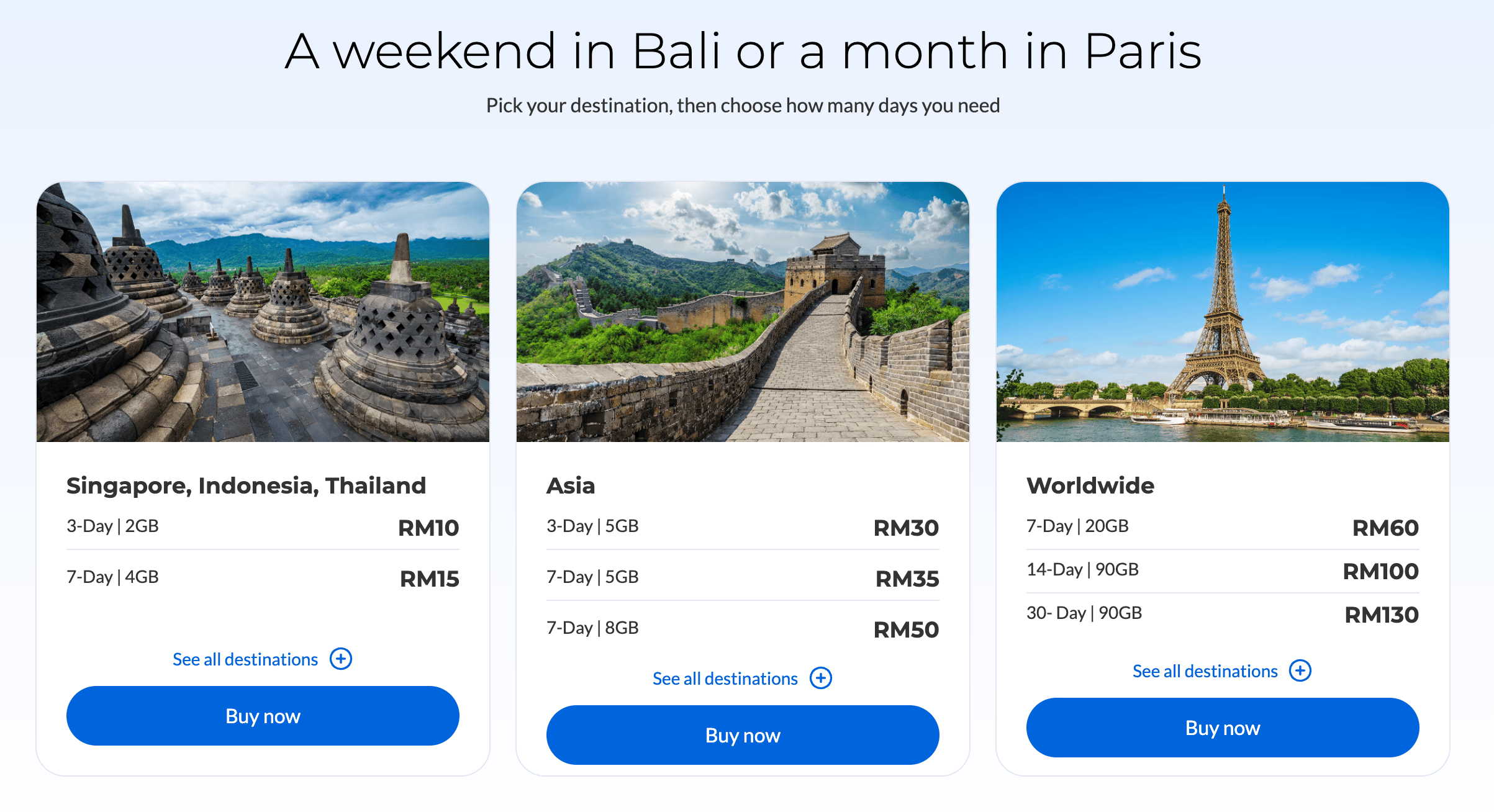
However, back at the beginning of 2025, I used a Malaysian CelcomDigi prepaid plan. Like many other Malaysian telcos, they offer affordable roaming plans. For 130 MYR (approx. 32 USD), we got 90 GB of data for 30 days. Therefore, we relied on it for most of our trip.
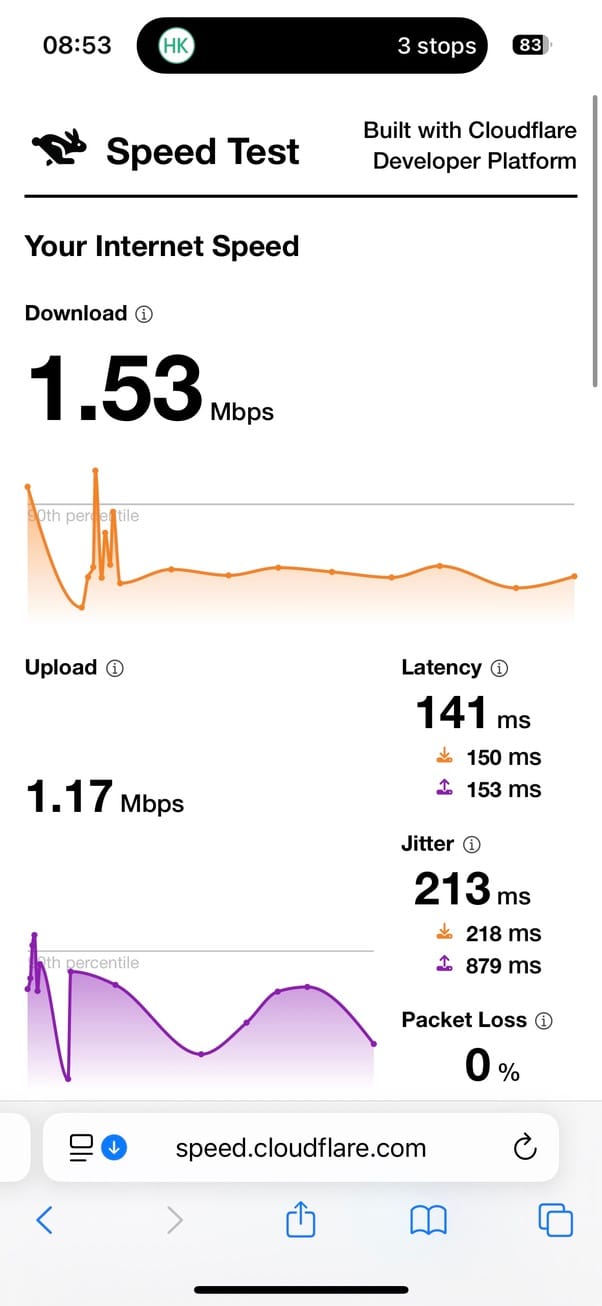
Due to the breakout point in Malaysia, the latency is high, around 200 ms for uploads and downloads. But it didn’t affect us as much as on the trips to China, India, and Thailand. The download and upload speeds were around 1.5 Mbps on the 5G SoftBank network in Osaka. That's slow, yet sufficient for most mobile tasks I do.
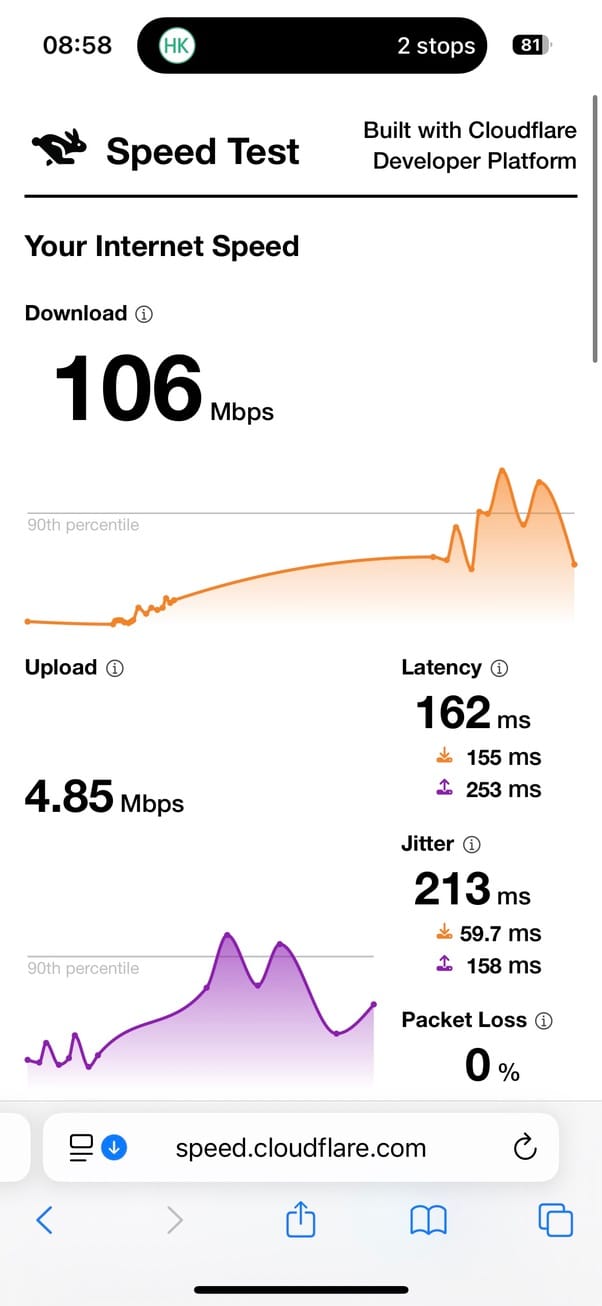
In comparison, residential WiFi in Japan offered over 80 Mbps. And the Microsim travel eSIM I found via esimDB offered over 100 Mbps on 5G in Osaka.
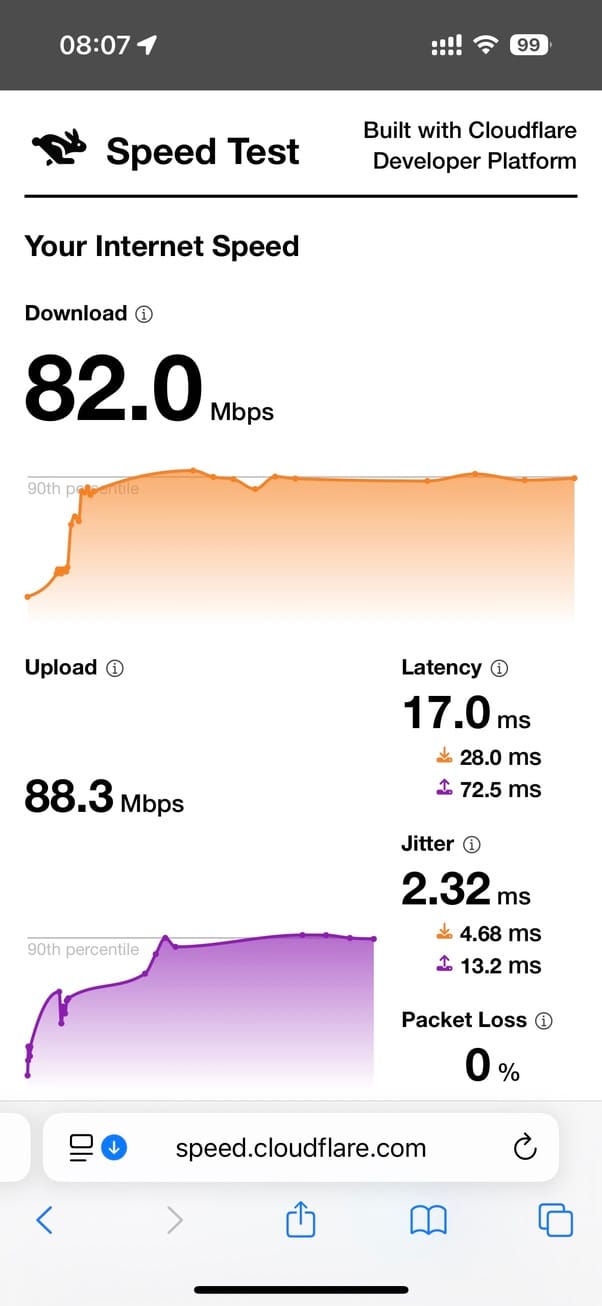
| Network | Download (Mbps) | Upload (Mbps) | Latency down / up (ms) |
|---|---|---|---|
| Residential WiFi | 82.0 | 88.3 | 28.0 / 72.5 |
| CelcomDigi prepaid roaming | 1.53 | 1.17 | 150 / 153 |
| Microsim travel eSIM | 106 | 4.85 | 155 / 253 |
How to find an eSIM for Japan that suits your needs?
I recommend following this order:
- If you work primarily on WiFi, and mobile internet is just a backup, then use roaming. Either from Revolut, Wise, or your current provider
- If you require high speed, low latency, and low battery consumption, then pick a travel eSIM from esimDB. Buying and registering the eSIM is usually smooth. Ensure that you filter an eSIM that has:
- hotspot support
- no daily data caps
- no throttling
- local internet breakout
- To widen your research, check offers on the ground. Ask fellow nomads or expats what they use and why
- Switch to another eSIM when the current one underperforms
Over to you
What's your eSIM experience in Japan? How does it compare to the rest of Asia? Do you use WiFi Max or other alternative networks in Japan?
Reply and tell me what you think. I strive to respond to every comment, and I'd love hearing from you.
See you next Tuesday.
Discussion