


Who is Ana Baute from Bencomo Coliving?
Ana Baute is Canarian with Irish roots, born and raised in Tenerife. She studied advertising, then cinematography, and got a local guide license. The kind that involves real physical tests, first aid simulations, and navigating with paper maps in the field. She's also a photographer and a pole dancer, which tells you a lot about her varied passions. Together with her brother, she converted their family's large ancestral home in Santa Úrsula into Bencomo Coliving. The place built around genuine community, Canarian culture, and the belief that a shared arepa night does more for human connection than any hotel loyalty program ever could.
What is Bencomo Coliving?
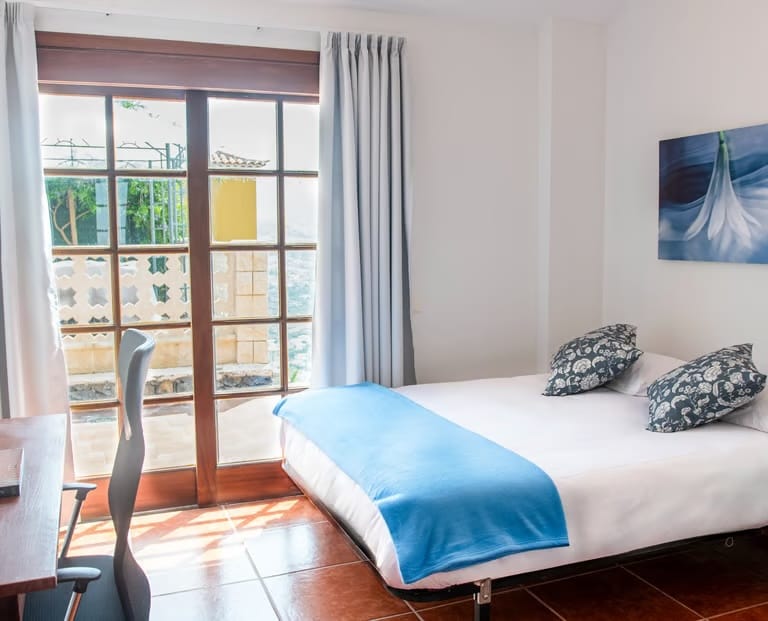
Bencomo Coliving is a community coliving space in Santa Úrsula, in the north of Tenerife. Named after a famous Guanche figure whose cave sits right next to the property. The house itself is large, renovated, and designed specifically around community. It features a shared kitchen, co-working space, sauna, a small pool, a terrace for yoga, and a garden.
Each room carries a name from Canarian nature — a beach, a lizard, an endemic plant. It takes a maximum of 10 guests, and Ana and her brother run the whole thing.
What makes it different from a guesthouse is what happens between the working hours. Dinners cooked together, stargazing trips on Teide, forest hikes, and wine nights. The name is deliberate; the culture is local, and the goal is simple — to make great new nomad friends.
Use the code "nerdontour" to get 10% off your next stay at Bencomo Coliving.
Excellent Instagram drone video showing Bencomo Coliving
Connect with Bencomo Coliving
bencomocoliving.com — the official website of Bencomo Coliving
@bencomocoliving — check their community on Instagram account
WhatsApp — ask questions regarding your stay
Places on Tenerife
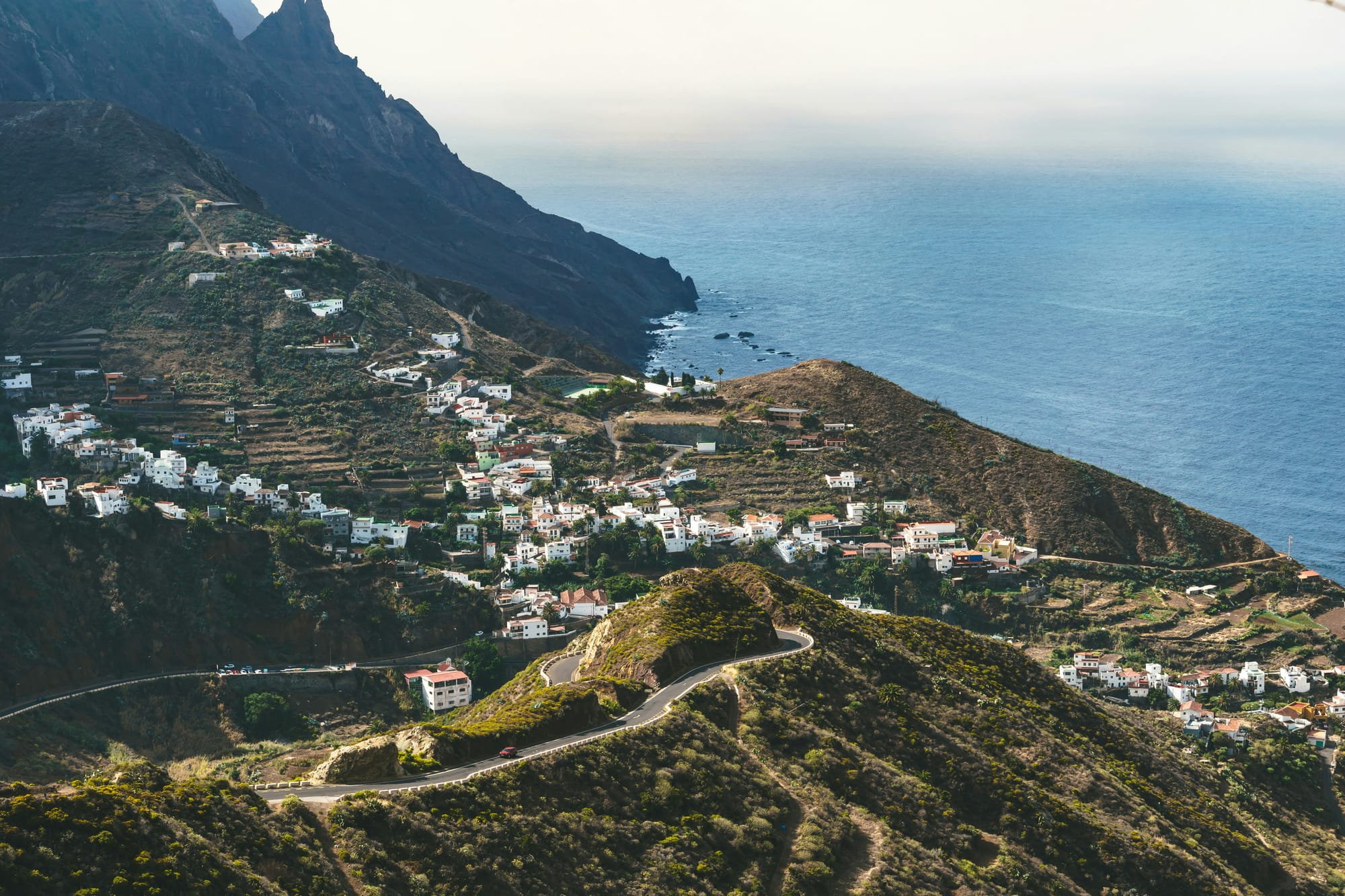
- Santa Úrsula — quiet northern municipality where Bencomo is located; authentic local vibe, elevated views, and famous sunsets — even higher than La Orotava, where I spent a lot of time.
- Anaga Rural Park — UNESCO Biosphere Reserve in northeast Tenerife. Home to the ancient Laurisilva laurel forest, Ana's favorite place on the island.
- Teide National Park — UNESCO World Heritage Site around Mount Teide (3,718m), where stargazing nights from Bencomo head. The landscape near Las Cañadas looks like a desert.
- Icod de los Vinos / Parque del Drago — botanical garden in the northwest with a famous thousand-year-old dragon tree; the educational board there shows Tenerife's different climate layers better than anything else I've seen.
- La Orotava — historic town in north Tenerife; I spent a lot of time here.
- Santa Cruz de Tenerife — capital of the island. Morning traffic jams into the city are among the worst in the world — a visible symptom of overtourism.
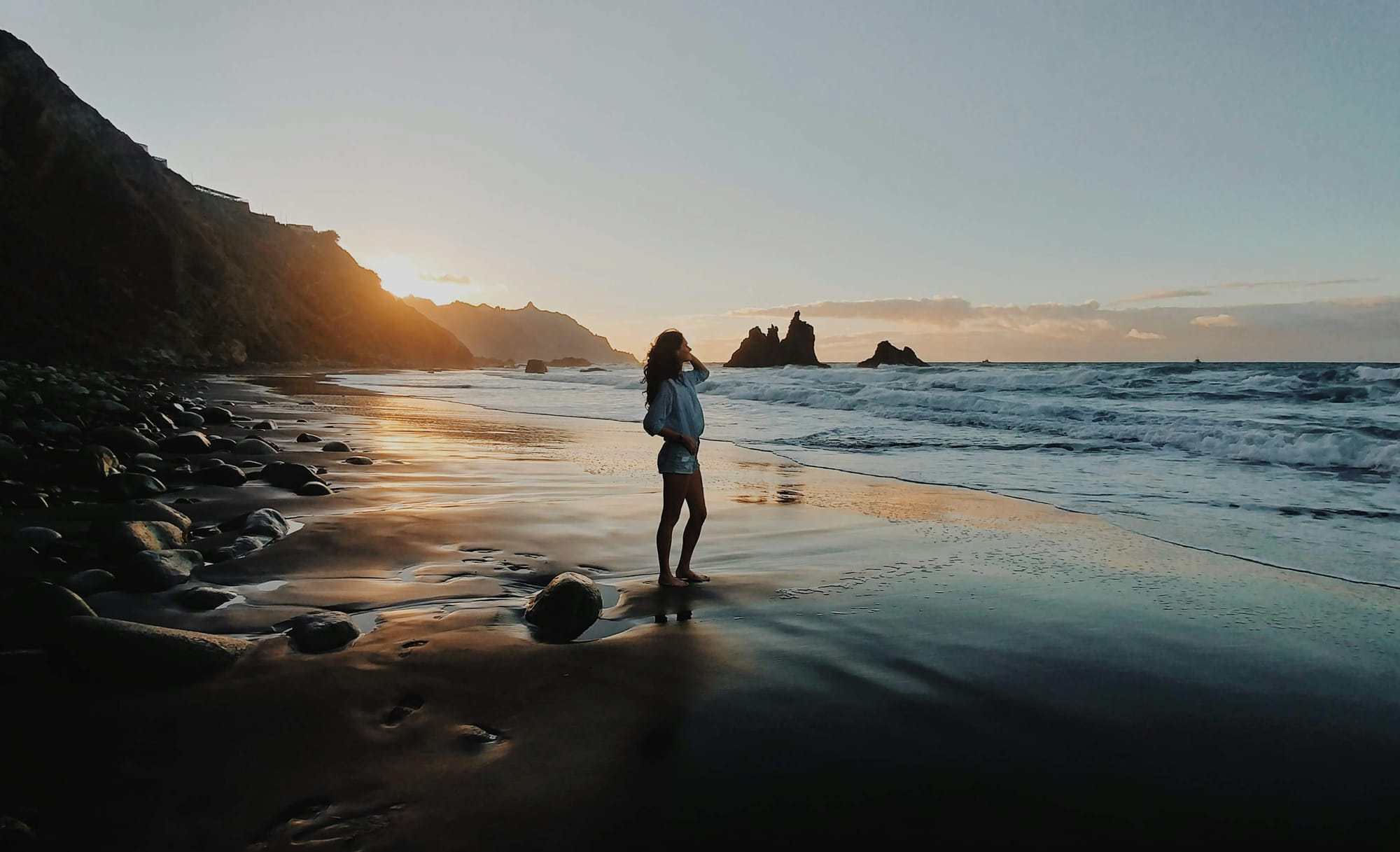
- Benijo Beach — black volcanic sand beach in the north; also the name of the room at Bencomo.
Nature & Science Concepts
- Laurisilva — an ancient subtropical laurel forest preserved in Tenerife's Anaga massif. It stands as a UNESCO Biosphere Reserve, sheltering one of this ecosystem's final worldwide sanctuaries.
- Alisio Trade Winds — The constant north-easterly winds that create Tenerife's stable, mild temperature year-round. They also make laurisilva possible.
- Tajinaste (Echium wildpretii) — a spectacular endemic plant found at Las Cañadas del Teide. And name of the room at Bencomo.
- Climate Zones of Tenerife — The island is sometimes called a "small continent" because of its incredible biodiversity across altitude layers: coastal tropics, cloud forest, alpine desert — all within a few kilometers.
Canarian Food & Drink
- Barraquito (Zaperoco) — Tenerife's iconic layered coffee drink. Featuring condensed milk, Licor 43, espresso, frothed milk, cinnamon, and lemon. I prefer a straight espresso, but this one is a yummy dessert in a glass.
- Gofio — an ancient Canarian toasted cereal flour (corn or wheat). Served sweet as pella de gofio — mixed with banana, honey, nuts. Or savory; a staple since Guanche times.
- Papas Arrugadas con Mojo — Canarian wrinkly potatoes served with sauces: mojo picon (red) or mojo verde (green). The most iconic dish tourists actually know about.
- Arepa — Venezuelan cornmeal patty. Ana and her brother organize arepa nights at Bencomo. Reflecting the strong Venezuelan community connection through their family history.
The famous arepa nights at Bencomo Coliving
History & Culture
- Guanches — The indigenous people of Tenerife before the Spanish conquest; Bencomo is named after a famous Guanche leader from this region who fought against the Castilians.
- Bencomo (Guanche leader) — mencey (chief) of Taoro kingdom in north Tenerife. Led Guanche resistance against the Spanish. A cave near the coliving property bears his name.
- Spanish Conquest of the Canary Islands — the Guanches of Tenerife resisted until 1496. Their culture and language were largely absorbed, but landmarks and local identity still carry their legacy.
Coliving & Digital Nomad Concepts
- Coliving — a shared living model designed for community. Private rooms combined with communal spaces, shared meals, activities, and co-working.
- The Third Place — Sociologist Ray Oldenburg's concept of a social space outside home and work.
- Pandemic of Loneliness — The global loneliness crisis; something I've felt on the road and why coliving matters. You can meet great people everywhere, but in colivings you can create long-lasting bonds.
- Mangobeds — a booking and property management platform built specifically for colivings; created by Ramón, a friend I met at another coliving on Tenerife during his first nomad trip.
- WeWork — a premium coworking chain; the opposite of the coliving experience — you pay for desk access, but there's no community glue.
 Piotrek Bodera
Sustainable Tourism
- Overtourism — the problem Ana describes in the south of Tenerife. Massive hotels, Airbnb takeovers, unaffordable housing for locals, and huge traffic jams.
- Tourism in Iceland — example of capping tourist numbers to protect nature. Game of Thrones popularized Iceland's volcanic landscapes as filming locations.
- All-inclusive Tourism Model — The model Ana criticizes: cheap flights + cheap all-inclusive hotel = tourists who never leave the resort, don't spend locally, and contribute nothing to the island's real economy.
- Digital Nomad Visa (Spain) — Spain introduced a digital nomad visa; the type of traveler Ana sees as a more sustainable alternative to mass tourism — they stay longer, spend locally, and respect the environment.
Timestamps
[00:00] Teaser.
[00:26] Intro & podcast welcome.
[01:09] Meet Ana Baute: Canarian heart, Irish roots.
[02:33] What came before Bencomo? From advertising to cinematography.
[04:21] Earning the local guide certificate: the hard way.
[06:41] Guiding teenagers, hiking with locals, and the Guanche culture.
[08:39] Tenerife's Laurisilva: the island's most magical forest.
[09:41] Tenerife as a small continent: layers of nature and biodiversity.
[11:17] How Ana discovered co-living — and decided to start her own.
[13:10] The pandemic of loneliness and why co-living matters.
[15:04] What makes a true co-living (not just a rebranded hotel).
[16:18] Community dinners, Arepa nights, and stargazing at Teide.
[18:19] Guest activities: yoga, cycling, art nights, and dog walks.
[20:23] Family house turned co-living: one year of building the dream.
[22:20] The name "Bencomo" and why every room is named after the island.
[26:42] Building a reputation from scratch — October launch and early guests.
[28:00] Why podcasting beats Instagram for authentic storytelling.
[29:18] Who stays at Bencomo? 25–45, remote workers, full of diversity.
[30:46] Avoiding tourist traps: eat local, spend local.
[32:11] Canarian food: papas con mojo, gofio, rabbit, shark, and barraquito.
[34:48] Cooking together as a community — and a Lithuanian cake for Three Kings.
[37:10] Day-to-day life at Bencomo: work, sport, and spontaneous moments.
[38:10] Operational challenges: from fridge overflow to dodgy Wi-Fi — solved.
[43:34] Coffee break connections: how real friendships form at co-living.
[45:01] Memorable guests: an Argentine guitarist and a Lithuanian wine-and-draw night.
[47:23] North vs. South Tenerife: local life, black sand, and slower pace.
[49:32] The climate zones of Tenerife — from coast to volcano.
[51:12] Mass tourism crisis: overcrowded hospitals, traffic jams, and unaffordable housing.
[54:36] What Tenerife needs: fewer tourists, more quality.
[58:12] Is co-living part of the sustainable tourism solution?
[01:01:07] Digital nomads vs. party tourists: a different mindset entirely.
[01:04:20] How to reach Ana: Instagram, WhatsApp, or bencomocoliving.com.
[01:05:47] Booking via Mangobeds and the drone video that shows it all.
[01:07:21] Ana's wellness routine: pole dance, hiking, running, and meditation.
[01:09:26] Ana's final message: you are welcome here.
[01:10:43] Outro & subscribe to Nomad Tuesday.
Quotes
"When you are a nomad, digital nomad, you always are alone, like working. You can go to co-working, things like that. But I think it's a way to create a community — because you are alone, the other one alone, and they want to connect. I think it's really important for every person in the world to connect with other ones, and especially if you are traveling, it's like more difficult to connect. So I think a natural way to connect is you stay in the same place, so you have to talk."
— Ana Baute
"You can stay in every place, but the difference of co-living is you do things with the guests. So you try to create a community. If not, it's not — that is the main thing to do, to connect with them. And also listen, because someone has different hobbies, so we do whatever they want to."
— Ana Baute
"We need less tourists and more quality. People that come here, they stay here, they go to local places, they want to know the culture about the place — not just to have sun and swim in the swimming pool."
— Ana Baute
"I think co-living is kind of a solution. It's a house that at maximum 10 people can stay, so it's not the same like 10 people in different houses. And you are staying with us — we are local — so you contribute to a local business as well."
— Ana Baute
"When you go like to work, you are more chill. You have a routine, and also you have the weekends for the island. During the week you are really chill, so you don't have any problems with the neighbors — you are really respectful. And if you go to a coliving, you want to be part of the community and part of the island, so you try a different way. You want to explore more, you are more open."
— Ana Baute
Transcript of the Bencomo Coliving Podcast
Read the full transcript
Ana Baute 0:00
Like when you are a nomad, digital nomad, you always are alone, like working, you can go to co-working or things like that. But I think like it's a way like to create a community because you are alone, the other one alone and they want like to connect. It's really important for every person in the world, like to connect with other ones. And especially if you're traveling, it's like more difficult to connect.
Piotrek Bodera 0:26
All episodes of this podcast are available for free, and to listen more, I encourage you to subscribe on your preferred podcast app. Nerdontour.net is a specialized blog designed for digital nomads, combining the best bits of the internet, long-term traveling, and decentralization. Support the show by using Nerd on Tour services and recommendations at nerdontour.net. And now, let's start the show.
Hello and welcome to Nerd on Tour podcast. I am Piotr Bodera and today my guest is Anna Baute from Bencomo Coliving. Hi Anna.
Ana Baute 1:06
Hello Piotrek, thank you very much for inviting me.
Piotrek Bodera 1:09
I would like to start from your background because I find it fascinating when people have interesting stories of their life and you told me that your family is Irish, But you are Canarian and you are living in Tenerife. Could you tell me more about those roots?
Ana Baute 1:29
Yeah, of course. I born and raised here in Tenerife, so I really know well the island. My family is Irish, but my mom came here when she was four years old, so she's more Spanish than Irish. But I also share both culture like in Christmas, some meals, some things like that. So I have a mix of both that I think is like nice to have different cultures so you can see more. So you will not concentrate in one point. Like you can see how Canarian people are here, how Irish are here. And I see that we have a lot of things in common, because Irish and Canarian, they are really welcome. They are warm. They like to socialize with people. We are on an island, but I mean, the sense is more or less the same.
Piotrek Bodera 2:20
Do you still have some relatives in Ireland, and do you visit them?
Ana Baute 2:24
No, I don't go to Ireland to visit them. We don't have like too much relatives now. I was in the past going more, but now no.
Piotrek Bodera 2:33
I also think that the island culture is more unique and more intriguing. This is one of the reasons we'll be talking about Tenerife a lot. But before we go there, I would like to know a bit more about you and your brother, because you both started the co-living. What did you do before Bencomo?
Ana Baute 2:53
Before Bencomo, it was from a family, the house, so it was living there, a family. And after that came like a couple as well, that it was living like for 20 years. But they have to go again to their country. So we decided to do some changes to the house, and we see like a good opportunity to this house that is really big. So I think that co-living makes sense, because I see like there is a lot of nomad co-living coming now, and also a lot of people from here that work like digital. So I think it's a good point for the place that is big and it's a nice place to share and to create a good community. So we were decided that this was the best option for this nice house.
Piotrek Bodera 3:41
Sure. Like it sounds really nice that there is more to the story. But I'm curious, like what was your life, yours and your brother's, before you started co-living? What did you do before?
Ana Baute 3:53
I studied different kinds of things. First, I studied advertising, like in the university. Then I studied like cinematography. After that, hiking. So I have a mix of things because I really like different things. Also, I am a photographer. My brother does cooking. So he is a good cook. And he really likes to put like brunches and some dinners. I think a meal is a good point to share.
Piotrek Bodera 4:21
Yeah, but it's nice to hear about the diverse experience of yours and the passion for cooking of your brother. And could you tell me a bit more about your process of getting the local guy certificate?
Ana Baute 4:37
It was a really hard process. You have to do like proof, like physical proof to get to there. So I passed them. And then during the hiking lessons, it was like a mix of going out and doing like walking and hiking and discovering the island. And the other part was like more theoretical. I prefer, of course, the part like in the nature that you like explore the nature. And it was like one year. And the hard part was like the final test that you have to pass as well, that it was physics, that you have to go with a map. And then they tell you like, OK, give me this point. Where is this point in the map? So you have to find it. Also, if some problem happens, you have to do like a test with the first aid. So simulating that someone gets hurt. So we have to fix the hurt. And also when we have to sleep in the land and how to prepare for sleep in the land. And it was really hard. It was like two days. So it was really hard. But I'm glad that I passed it. And I'm glad of the speed as well.
Piotrek Bodera 5:44
Yeah, yeah, yeah. I have sort of a similar experience back in the day in Poland. In my country, I did the tour manager license. It wasn't the local guide. That was like a separate thing. In my case, it was the allowance to go abroad. Yeah, also within my country. But in general, to take care of the tourists. So I hear the similarities that there was a lot of steps. Yeah, like you have to pass the written test, test with the judges. Yeah, like the conversation. And then you are like in the field, yeah, in the bus or in some sort of other situation to recreate the tour. And only once you prove all of those steps, then yeah, you are awarded the license and to be able to work with the people for doing the co-living, for starting the co-living. Did you work as a local guide with tourists?
Ana Baute 6:41
No, I work also with teenagers in a summer camp. So I was doing like some hiking with them and some different activities related to nature. And also right now, I'm like working once a week. Well, I already finished the contract, but I will do it again. And it's like with local people, like once a week I was doing going like different part of the island. So I show them different parts, playing what happens. Also, our origin, like the branches that was like the original people that lived here before. Also about the plans. So I was doing that. And I was, I think I'm going to continue next month as well doing this contract. So yeah, I am still doing this thing.
Piotrek Bodera 7:23
I worked a lot with the local guides. So I really appreciate the work that you're doing. Back in the day when I was traveling mostly to Italy, Polish people love going there and exploring the beautiful sights. And we are fortunate to have a lot of local Polish speaking guides. So the Polish people that are living in Rome, in Napoli, in other popular places, and they learned about the history. They passed the local tests. And now, yeah, they are helping the tourists to understand the history, the beauty, the cultural aspects of different kingdoms of the past of Italy. So it's really great to hear that in Spain or specifically in Tenerife, it's also the case. And also, from my understanding, you focus more on nature. Yeah. So you go on hikes, you explore not only like the city or the history of Guanche, but also like explaining the trees, the plants, the climates that are in the island. Could you say a bit more about this part of Tenerife or your focus? And what is your favorite thing from the perspective of the diverse nature of Tenerife?
Ana Baute 8:39
I think like the most that I love more here in Canary Islands, when it's specific in Tenerife, we have Laurisilva. You can find it in Anaga. That is the most famous place that you can find it. That is like really historic trees. And I really love these kind of trees and plants because also they exist because they have this temperature all the year because of this wind. So we have like more stable temperature. Well, nowadays with the climate change, I really all change it. But it's really important for the Laurisilva. And it's like the most impressive thing of the island. Also, all the different plants. All are really special. But for me, my favorite is, yeah, Laurisilva for sure. Also, you can find a lot of birds in the flowers when there is a season. You can see it. So it's really special. And also, always when you go there, it's like cold because of the humidity. So you can find it like more cold.
Piotrek Bodera 9:41
Would you like to regularly receive intriguing content like this? Subscribe to Nomad Tuesday. Every week, you will get an email from me with fresh podcast episodes, practical tools, or fascinating travel destinations. Subscribe at nerdontour.net.
I still remember one of my favorite places to try to grasp the diversity of the island is actually in Eco de los Vinos, the botanical garden that surrounds the famous dragon tree. They have this one board, like educational board, where the image shows the different layers. We have those tropical, hot weather, very close to the ocean. Then it goes up. And then every hundred, a few hundred meters, it changes. Because the amount of sun is different. Climate changes. Then you would have more rain, as you're saying. Also, going towards Teide, the volcano, you would have some parts that look like desert, which are really amazing, especially around the national park of Teide. So, I do agree that Teide, the Tenerife is often called a small continent, isn't it?
Ana Baute 11:00
Yeah, we have like a lot of biodiversity, like more than England. If you compare England with a Tenerife, we have like really more. But the good thing is because we don't have nothing else. So, that is the good part where we can conserve better the nature.
Piotrek Bodera 11:17
Yeah. And we will be talking further about what we can do to preserve the islands. But before we do that, let's focus on the most important part, which is the Ben Calmo co-living. And first of all, I want to understand what's your relationship with the digital nomadic. How did you discover it? Did you work remotely with some companies in the past?
Ana Baute 11:46
I started because I see here, like in Tenerife, like a lot of co-living was like growing. So, I didn't know what it was like co-living like before. So, I was checking like, oh, okay, this can assist. And I saw that it was like really interesting, like people come here and stay here and see the island. Because I think like a lot of people come here and they don't preserve the island. But with this kind of co-living, it's like really different because me and my brother, we are locals. So, we want to share with them like what is their reality, what is Tenerife, like for real. And I think this kind of co-living, you have this opportunity to see what is the co-living and also to create a community. Because when you are a nomad, digital nomad, you always are alone, like working. You can go to co-workings or things like that. But I think like it's a way like to create a community because you are alone, the other one alone and they want like to connect. It's really important for every person in the world, like to connect with other ones. And especially if you are traveling, it's like more difficult to connect if you don't do like some activities together. Nowadays, we have a lot of technology, but in the same time, it's a bit hard to connect. So, I think a natural way to connect is you stay in the same place, so you have to talk.
Piotrek Bodera 13:10
Yeah, yeah, yeah. I appreciate what you're saying regarding the pandemic of loneliness. Yeah, that's really a thing that every person who starts traveling and who starts digital nomading, either full-time or even in the beginning, yeah, you are two weeks really hyped of discovering new places and meeting new people. But then there is always this moment when you break, yeah, when you start to feel that, oh, it's unsustainable because everyone that I meet, I would love to become friends with them, but they are going away, yeah, because they are also nomads. So, it's really hard to create the moment, establish those bonds to keep them growing and thriving together. So, I do believe that the co-living concept is a cornerstone, is a very important third place, you could say, outside of home and work. But it's the one that allows all of us, all of the nomads, to create something new, to create the friendships that can really last a long time. And you mentioned that you saw that the other co-living on the island were popping up, they start to be very popular. Do you have any particular place that maybe you know the owners or you know the community that you are, like, somehow involved with the place and this gave you the idea to start your own?
Ana Baute 14:35
No, like, no, especially, like, one, like, around there is, like, a lot in Ottawa. Here, we say, we have another one. So, we was, like, looking out and checking how is co-living working. Also, I know a girl that she had one and I was starting to talk with her a bit to understand what is a co-living. I was like, yeah, we have the place, we have the possibility to do it. And I think it's a good way to the people connect here and share.
Piotrek Bodera 15:04
Usually, when I would talk with digital nomads or, like, the owners of co-living, they share their experiences of, they try a lot of different things or they come from, like, a corporate world and they are, like, very, very burned out. Yeah, they want really something different. And this is their way to give to community, to create their own community. You already shared that your mission is to create a nice, safe place, yeah, for the nomads that are coming to the island. But then, what's your idea of creating it in a way that it actually attracts people? Co-living is a complete new thing. Not many people know how to run one. Unfortunately, it's not a trademark, yeah? Anyone can use this name. And I've seen a lot of places, like, a hotel is changing their name and they are now a co-living, yeah? Airbnb also wants to be super popular and they change it to, like, oh, yeah, we are Airbnb co-living. It's not true, yeah? Because they don't focus on community. They don't provide anything for people to stick together, to do stuff together. So, I'm curious. What is your concept, yeah? How do you think the co-living should look like?
Ana Baute 16:18
Yeah, for me, like, you can stay in every place, but the difference is of the co-living. We do, like, a community dinner. So, I think this is, like, one of our best options to do. Also, my brother is a cook. So, we try, like, also here we have a lot of connection with Venezuela because our grandfather have to immigrate in the past because of the poverty to get money. And now happens the opposite. So, we have a lot of connection with them. So, we try to do Arepas night. So, to create this Arepa, that's really handy to do. And the other day, Irish guy that is staying with us, he was saying, like, oh, that is really easy. I'm going to do one when I go home. And also, we do activities, like, we go stargazing. Like, that is our best activities that we go to Teire. And my brother knows a lot of constellations. So, we go with them. We talk about the constellation. Also, we bring some food, some snacks. And I take some photographs. And also, yeah, we do walks together, like a community. And they propose, okay, let's go here. So, we do here, like friends. So, that was our point, that also they propose things to do the other day, like go running or play some cards. So, I think, yeah, like you can stay in whatever you want to stay. But the difference of co-living is you do things with the guests. So, you try to create a community. If not, it's not a co-living. That is the main thing to do, like to connect with them. And also, listen to them because someone has different hobbies. So, we do whatever they want to. Also, once we went, like, walking with dogs, like in a refugee. So, we was walking with them because they really like dogs. So, I listen to what they want. So, I want to do as well. But I also like, of course. So, we can get to the same point.
Piotrek Bodera 18:19
It feels like every night, you have something different to do. Or the diversity of activities is also important. Because from my time in different co-living, I also noticed that some people are more into artistry things. Yeah. And they want to do some crafts and arts. Some other people would love to have a dog, just to walk with them. To do the walking, as you said, just to go to a shelter and then ask them to help out and to do some voluntary with the community that you do this all together. It's really amazing. And I also feel that it's this element that I mentioned that some places, some hotels would put like, oh, we are co-living because we have yoga once a week. Yeah. Because they hired like an instructor that comes. And then like on the rooftop, they have one activity and like, oh, it's covered. Yeah. Like the community is completely fine because we provide them something extra. I'm really happy to hear that you have so many of those things. What is the experience of the guests? The feedback that you are hearing and what do they love the most about Bencomo?
Ana Baute 19:33
The feedback that I received like is really good, like for now. So I'm really happy because they are saying that it's not only like the house, it's like our energy as well, that they have a good energy so they can receive it when they come. They feel like at home. And of course, we are new, so we are improving some new things that, okay, you need whatever. So we try to put new things, but I think we have everything right now. Like we are listening to what they want. And I think we have a really good feedback. So yeah, I'm really happy with the community. Also, they share a lot of experience with us. I feel really grateful because it's not only like their side, it's like my side too. So I can create like new friends. So it's really nice.
Piotrek Bodera 20:23
It's great to hear that it's not a very heavy type of job. Yeah, because when you decide to create a new business, there are a lot of different challenges and you have to have a passion. As you were saying, and I hear it in this conversation and I'm really happy that this unusual setup, yeah, like the family house that was converted into a co-living, then you and your brother are now running it. And then you have those positive reviews and people are giving you the five stars on Google Maps. This really helps for other people to come, to see, to experience it. And I'm actually curious about the setup of the house. Did you need to convince your family members to this new brave idea of co-living or was it actually easy and they give you full freedom?
Ana Baute 21:17
Yeah, it was like easy because they saw also the idea to do it. So they think that was a good point. So they was really happy with the idea. So it was really easy in this point. I didn't have to like really need them. So they were in the board.
Piotrek Bodera 21:33
Excellent. I think maybe older generations that perceive that property when you already have some real estate. It's easier, as you said, to rent it out. Yeah. And you mentioned that there was someone living for 20 years in the house. It would be a natural thing to put it on the market and find, again, someone for the next 20 years. And then like, jump down. Yeah. I don't need to do anything more because I just collect rent. But here, co-living requires much more work, much more investment of your energy, of your time, of your focus. Yeah. It's really great to hear that your family is supporting you in that. And how the name was created. Why Bencomo?
Ana Baute 22:20
My father gives the name because here, besides, we have the cave that is really famous from the guanches that are from Bencomo Colimien. So we want to put something from here. So that was the name, Bencomo, from the guanches. And also, each bedroom has a name of this place, of Tenerife. That is a beach. Boyuyo, another beach. Also, we have a kind of bird. We have Tison Azul, that is a lizard. Nice. And Tajinace, that is a plant you can see in Teire, in Las Calñadas.
Piotrek Bodera 22:53
It's an endemic plant, isn't it?
Ana Baute 22:55
Yeah, endemic one. Yeah. So, yeah, we try to put like names from here. I know, I want to do it like more from here. My part, like put like on a Canary seat.
Piotrek Bodera 23:09
Usually when you would go to a typical tourist resort, the hotel is called Las Vegas. And the best room would be called Monte Carlo or something, yeah? And here, yeah, I was glad that you're focusing on the Canarian culture. And you're saying that Bencomo, is it the name of a cave?
Ana Baute 23:30
Yeah, we have beside our Deculivin, there is like a canyon. So there you can find a famous cave from Bencomo that it was a guanche from this part.
Piotrek Bodera 23:41
So that was like a tribe of guanche? You mean Bencomo?
Ana Baute 23:45
It was the name of a guy.
Piotrek Bodera 23:47
Ah, of a specific person. Nice, nice. Yeah, this is something worth emphasizing because the name, if it's unfamiliar, then people would not know how to even spell it or how to connect it to something. But yeah, if we have more history, more culture, more context, then it's easier to associate. And I do recommend if someone comes to the island to definitely go with you and talk about a bunch of culture and to understand it better. Because there is like a rich history before the Spaniards came and changed the vibe of the islands. But getting back to the house, I also noticed on your website that you are showcasing the great elements of the quality. Yeah, like you have a sauna, you have a small swimming pool, you have a nice terrace for yoga. There is also a co-working space, obviously, to work remotely. You have a communal kitchen and like a chill-out area. Was it all already in the house or did you need to build up some new infrastructure specifically for the collating?
Ana Baute 24:53
Yeah, like all the plants like downstairs, it was not in there. So we have to create all these, like the first plant, it was all do it. But then we have to create all, so it was a long time, one year to build all this house.
Piotrek Bodera 25:11
Oh, okay. So you were like expanding and building the new elements for one year before you opened the co-living.
Ana Baute 25:19
Yeah, because we have the idea, but we only have the three bedrooms like was in the top part. So we have to like for create a co-living have to be a big So we plan to do the downstairs floor. So we create all this new.
Piotrek Bodera 25:36
It's also interesting to hear that you are actually like focusing. You have this long-term vision that it's not a guest house. Yeah. But because that's what I think about when someone doesn't want to create like a five-star hotel or even some smaller two-star hotel, they just get their family house, they put the locks in the doors and they call it a guest house. Yeah. The minimum effort is possible to house as many people as possible. But in the co-living, yeah, it's the infrastructure has to be different. And all of those things that we mentioned, they have to be created. You need to really have the spaces for people to come, to enjoy, to stay and to spread the word to other nomads. Yeah. Speaking about this, do you already feel that people are recommending to their friends to come to Bencomo? Is this a way for you to get your guests or how are you attracting the nomads to your clinic?
Ana Baute 26:42
That is really hard point. I think in the beginning was going to be more easy to attract people. But yeah, I see like some of them are recommending to some friends, but we start like in October. So we are brand new. So we like didn't receive these friends yet if they are recommended. But yeah, one girl came with another friend. So they two came together. So I was a guy staying right now here and he told me like, can I bring a friend? And I was like, yeah, of course. So he bring a friend. So bit by bit, I'm getting good feedback from the people, but it's getting hard. It's new. So I know that you have to build a name so the people can know you. So it's complicated to everyone have great and their own business. They know that to have a name is like really complicated and takes really time. The best part is like someone tell you, but it's like long, like maybe have to be like years. So we can have these friends coming back. But I think, yeah, we have internet. So the best thing is putting in Instagram, in Google ads, but it takes time, really long time.
Piotrek Bodera 28:00
Of course, like it's not easy and we all need to try different things. I believe this is one of the best ways, at least for me and people like me who love to listen to podcasts and love to listen to this kind of conversations. Because you have the time to hear the other person, yeah? The listeners who are now listening, I thank you for that. And they can learn about you, about your story, about your passion, about your vision of what is the co-living for you. What do you provide? What is the vibe of the community? And then, of course, we can slice it into some small clips on whatever and then share them on social media. But the most important, the core content in this conversation that we are now having. And that's why I am getting more and more into detail, asking more questions to have a better picture of what has been common, what is the history behind it. And I'm interested, what is the type of people that are now coming to the colleague? You said you started in October, but already there were some people that you managed to connect with and they stayed for a while. It's also worth mentioning that you aim for long term, yeah? So, what is the minimum stay for the guests and what are the types of guests that are coming to Moncomo?
Ana Baute 29:18
We are putting like 15 days because someone, they cannot come one month. But for us, the best option is one month because also I think it's the best way to connect with people because you are only 15 days. You don't have the chance to create a community, to do plans together. So, I think the minimum will be one month. For that, like for greater really community. And our type of people, really diversity people are coming, like a lot of nomad digital, of course, or self-employed that they work remotely.
And we have like from, I think, 25 years old until 45, more or less. This is our guest. And they're really different. There are people like, they really love like hiking, running. There are people like to do art stuff or more dinners, like more chill activities. But all of them want to discover the island for sure. They come here. They tell me like, what is the best place to go? What I recommend them. So, we try also like, they go to local places. So, local restaurants and local bakeries and things like that. Because I think it's really important. Let the money stay here in the island and stay from the local people. That was one of our points as well. Don't go to tourist places. Go here to our real place.
Piotrek Bodera 30:46
I'm glad that you mentioned it. Because back in the day when I was working in the mass tourism, I saw the pattern that people are so familiar with their favorite brands or favorite places, that it's unfortunate that so many of the tourists come to new countries, new destinations, and they still go for coffee to Starbucks, for lunch to McDonald's, and then they stay a night in Hilton Hotel. Which is like all the American brands that you already know, either from your own country, if you're American. You never even try to taste something that is more local, that is more original. And it honestly doesn't count if you go to like McDonald's in India and order, you know, a paneer burger. Yeah, like something that I just experienced on my trip in India. And it's not regional enough, not true enough. So, I would like to get a bit more from your perspective. What would be the taste or what would be the type of cafes or I mentioned the barraquito earlier? So, maybe you could say a bit more about this. But how would you define the Canarian or the Tenerife vibe that is very unique and that your guests can try when they are staying at York Liggy?
Ana Baute 32:11
I don't really drink coffee, but yeah, I know that this barraquito is like really typical from here. I mean, there is another name of, it's barraquito or I forget the other name. It's a peroco. It's a peroco. So, it depends on the place, without alcohol or without alcohol. But yeah, it's like really typical from here. But I also think the most important here is our food. It is like really unique. We have like a lot of potatoes with mojo. That is like the typical thing in the health of tourists, you know, like mojo pico or mojo verde. And yeah, we have a lot of different meats as well. We eat here a lot of rabbit or goat as well. Also, they eat a kind of shark as well. That is typical from here. So, yeah, the coffee, of course, the most important, like I really love coffee. I think have a lot of energy here. Also in the ranch, my brother makes like a pelota de gofio. It's like a bowl of gofio. So, you can have it like sweet or you can have it with vegetables or with meat. So, we do like the sweet thing that can be with banana, can be with nuts, with honey, with salt, with whatever you want. So, you create like a different bowl of gofio. That name is pella de gofio.
Piotrek Bodera 33:40
What are the main ingredients of gofio?
Ana Baute 33:44
Different kind of flour can be from corn. If you are gluten-free, you can have this with corn. So, yeah, it's really like tasty. I think it's a good complement for energy, for training. So, it's really good.
Piotrek Bodera 33:59
It's definitely one of those things that I also enjoyed while I was staying in Tenerife. I do drink coffee, but I actually prefer like espresso or americano, like the straight black instead of the barraquito, which is more like a dessert. Because there are layers of different elements inside it, usually in a tall grass with condensed milk, coffee, regular milk, foam, cinnamon, and then lemon. So, it's really rich. And then the alcohol version is with liquor. If someone likes something very sweet and also like energizing, then definitely they could try this. And when you do the community, dearest, is it always your brother that is preparing it? Or like maybe one of the guests can prepare it for the rest of the house?
Ana Baute 34:48
We do it all together. Like my brother is like the cook. He gives orders. So, we all know what to do, but we do community. Once also again, we do gnocchis. And so, she was like the cook. She was telling us what to do. There was like baghettis or also barbecues. What the guests want, we can do. And if they know how to cook and they want to cook for everyone, always welcome.
Piotrek Bodera 35:17
I recall it from some of the movies specifically about the Italian culture because I spent a lot of time there. That was like the first country where I was working as the tour manager. And part of my job was to explain the Italian culture to others. Cooking is such a big thing for them. And I love when it can be recreated because I believe it's a universal thing that people like to gather in the kitchen and especially in the co-leaving when they can all prepare their own meal. So, it's a simple type of activity, yet it creates this unique flavor. It creates this unique vibe that, oh, we did something together and now we'll be sitting all together around the table and having the dinner with the stuff that we made ourselves. Is that the feeling that your guests are getting from these kind of activities?
Ana Baute 36:26
Yeah, I think, yeah, because eating is like the best thing of the world, I think so. So, if you create it, it's like more tasty because you create it. So, I think, yeah, it's kind of connecting people. Also, yeah, the people start talking about maybe some recipes. Oh, okay, my country is this kind of thing is similar, but in this way. So, we see like we don't have like unique things because I don't know. The other day, I think it was milk with rice. That is a special dessert here. And also, it was similar, I think, in Romania or Hungary. I don't remember the countries, but the guest was saying, oh, it tastes like my grandma's dessert. And it was like, oh, okay, so food connects people in different ways.
Piotrek Bodera 37:10
It does, it does. And especially, I would say, like the European countries, we feel like very united in a way, thanks to the European Union. And also, Canary Islands, being part of Spain, have the freedom of movement. Yeah, it's very easy to fly in and out or ferry between the islands or between the continent and the islands. So, there is like this harmony. Yet, as you were saying, cooking or flavors or like the ways that all my grandma prepared it in that way or this it can really create those unique connections between people and discovering the other cultures. We talked a lot about the nice things, the vibes that are in the house. You also mentioned that finding the guests is quite a challenge. Could you tell more about running the Colleen Vink day to day? What is the challenge there from your perspective?
Ana Baute 38:10
Right now, I don't see a challenge, but in the beginning, of course, because maybe we only have a fridge and we see that it was like too much people. So, we have to get another fridge. So, in the beginning, it was a bit like, yeah, a challenge, of course, because it was the first time that we have packed the house. So, that was the real challenge, like when the problems happens. But like problems that we can fix, of course, like, yeah, or maybe the internet wasn't going like really fast. So, we fixed that. Or maybe, yeah, off the fridge. Or maybe it was like really hard that day. So, we have to buy the fans. Or maybe it was too cold. So, we have to get a heater. So, it was like every day is like different. But now, we are like more stable. We don't have any complaints. So, we try to maintain the living, to maintain the garden, to do things with them, to check the house is okay, if it's clean. So, we check every day how it's going, how is the feeling of them, or if they have any complaint, they can ask. We live like near. So, we can go if any problem happens. We are always there. They have our phone. Also, we have the group. WhatsApp group. So, they can share everything. Right now, the day by day is more easy. In the beginning, of course, everything is like a challenge. But now, we are more resolutive. So, we know what to do. In the beginning, it was like all new. We don't know what to do. But now, yeah, we have more control of everything.
Piotrek Bodera 39:38
I can imagine, yeah, that you cannot predict some details because, yeah, like it all depends on the people just coming and then giving you feedback. And then, you can adapt to the situation. So, the guests have like the space on their own. They also need to take care of the place. I think it's also quite unique in comparison, yeah, to a hotel or to a guest house. That they feel a bit of responsibility, yeah. Or like they need to be given some sort of responsibility. So, I can imagine that after a dinner, yeah, you cook together, you eat together. But then, you bring the dishes, yeah, back to the kitchen. Do you also wash the dishes together or do you use a dishwasher?
Ana Baute 40:23
No, we have a dishwasher. But, of course, you have to clean a bit to put in the dishwasher. Yeah, like friends, like when you go to a friend's house, you have to clean back everything. And we try to do everything together. So, like a community for the good things and for the bad things.
Piotrek Bodera 40:41
Honestly, I don't see it as like a bad thing. Yeah, it's more like when you are at your extended family house, yeah, you are invited to your cousin. Then, it's expected, yeah, that you behave as part of the community, yeah. Like if you use a plate, then you bring it, wash the plate or at least sit and then put it in the dishwasher. Because creating an expectation that, oh, there is a staff, yeah. There is like a butler going around and pouring you a drink to your glass or taking your fork when you just used it and bring you a new one. No, like it creates a nice type of system, yeah. Like relationships where people need to balance each other because there is no full type service, yeah. Because it's also not like an all-inclusive hotel. You do not have a buffet with 20 different dishes and every morning you can eat how much you want and then lay down in the pool the whole day. Oh, so like thinking about like the daily routines. We talked a lot about the food, but then how does it look during the day? Could you tell, you know, what time people wake up? Do they do something before they start working? And then how the day looks and progresses and then what's the usual routine in the evening?
Ana Baute 42:04
Yeah, they usually work during the morning. So I think someone, depends on the hour, they have to wake up really early because we have a different hour here. So maybe they have to wake up like at six to start working at seven. So I don't know, there is difference. So there is someone that works like a lot, maybe 12 hours like remotely. There are others like work less, like eight hours. There are others that are self-employed. So they have, maybe they have a bit in the morning, a bit in the afternoon, a bit in the night. So it's really different. They have their co-working there. They manage themselves, like if they have meetings or they do meetings there or there is some rooms that they have their own desk so they can do like private meetings. A lot of them do sports, like once a week, they do yoga. Also, I have a guy now that do a lot of cycling. Other ones like go running, another one hiking. They go to the gym. They, yeah, they are like that late. They work and do exercise. I saw the other day they was doing dinner together. So someone's plan to do dinner together or the meal together. Or I have another one that she was really nice and she was like making breakfast for someone. So she makes breakfast. So it depends on the personality. So each group is like really different and really special. So they have their own routines between them.
Piotrek Bodera 43:34
I like to hear about this because it's also something I experienced during my time in different co-living that the schedules can vary. Specifically because people come from different places. Yeah, there could be some Americans. So they need to then align more with their business hours. Yeah. And then some people could work for like Asian companies. Yeah. So then again, they would need to adjust and maybe start earlier in the morning or later in the evening. Yet there is always some overlap. Yeah. There is always like a time in the day when you can see most of the people are in the co-working. Most of them, they are really focusing on their computers and doing their important activities. Yet then you have those magical impromptu moments when they come on a coffee break. And this is when they start the conversation. This is when like, oh, hi, how are you? Yeah. Like, where do you come from? What's your name? And then this is the great way, like a natural space when they create those bonds. And could you tell more about those connections? You mentioned that you also make friends. Yeah. Just by running the co-living, you feel like people really enjoy this day. So could you share a few people that you remember the most and that they are a nice example of the members of your community?
Ana Baute 45:01
Yeah. There was an Argentina girl that she was really nice. She also played the guitar and sing. So she like create this co-living like more nice. No, when you go there and you see someone playing or something. My brother plays the piano. So he was playing the piano. She was playing the guitar and singing. So it was like really nice creating this environment. Also, Canadi people and Latin people, we have the same vibe. So it was really nice to have this Latin vibe that really close. And she was like really into everything and proposing a lot of things. Also, we have another girl that she's really nice. She's from Lithuania. And she was really cute. She was planning to do like drawing and wine. So she prepared everything. So they were drawing and drinking wine and snacks. And it was really nice. It was also like really clean. Everything was like really perfect. It was like just sharing with the other ones the breakfast. And this girl, the Argentina and the Lithuanian, was together. So they cook things together. Once they do like a cake, a special cake for the Three Kings. She make it. The Argentina girl said it was like really nice. And really special to have this hand made. And I don't know. The other guy was doing mostly for everyone like to share things. I don't know. It was like really good things like to share and do things together. Yeah.
Piotrek Bodera 46:35
Yeah. That sounds really And just you mentioning the different countries, the different cultures that people come from really touches my heart. Because that's the beauty. I met my best friends. And they are from so many different places around the world. And the one common thing for us is that we spend time in co-living. Because there are a lot of digital nomads in the world. And all of them have their own vision and way of doing that. Some of them only stay in Airbnbs and then work in WeWork or some other premium co-working space. Which is totally fine. But then people who are coming to a co-living and then staying and then returning and then love to be part of this community. They represent a different type of mindset. And they really love the time of spending in the co-living and doing all of those activities that you are saying and sharing. Because that's the beauty. When you can play a guitar for someone. When you can cook something. When you can surprise others with your skills. This is really beautiful. And like zooming out a bit. Your co-living is placed in the north of Tenerife. Which is a bit different from the south of Tenerife. Which is much more popular. All of the big hotels and resorts and party is in the south. So if anyone heard about the island, they would connect like, oh yeah, we fly there only for like a week to go party hard and then come back. And they probably never saw a true Canarian culture. So what can you say about North Tenerife?
Ana Baute 48:23
Yeah, it's like really different. Like it's like the real alternative for me. Like the local park is like more green as well. It's more cold. I mean cold for me. Like for people from Europe. It's like really warm. Also for me, it's beauty. Like it's like the really Canarian lifestyle. Like it's like more slow. Because here we have like, we say that the people are really slow. Like in a way, like we are more calm. That noise they buy both the cities. And we are like really close to the people. Here the people doesn't speak too much English. So sometimes it's more hard to speak with them. But we try. I see the people there. I really try that. We sign us with the hands. They do signs. Because if you want to talk with them, they will find a way to talk with you. Like it's not an issue. The coast as well is really nice because we have like black sand. Like it's really like different from other parts. And yeah, the beauty of the forest and the really real life.
Piotrek Bodera 49:32
Yeah. Yeah. Honestly, that's a huge difference. I still remember my first day on the island when I landed in the south. And then I traveled by bus and just going through those different climate zones. You could really feel that you are entering this lush, green, more mountainous part of the island, which attracts more. Especially if you enjoy going into the forest, going for a hike. Those are the type of activities. Those are the vibes of the northern parts of the island. And also, as you mentioned, the black sand, which is unique because it's actually the volcanic type of sand. It's not the yellow one that like typical, that most people associate, or beach has to look like a yellow thing. This one is actually imported from Sahara, yeah, from like Africa that is next door. And like the famous beach in Santa Cruz, the capital of the island. This is created for leisure and it was not made with the black sand. Thinking about the vibes of the northern reef and also like the differences between the south and the north. When we're preparing for this conversation, you mentioned that you would like. To spend some time to focus on the problem with the mass tourism on the island. So, I would like to give you now as much time as you want to say about your vision. And say, how would you like to address or what is your idea of addressing this problem?
Ana Baute 51:12
I mean, the solution is the government, of course, but the government here is not good. They want more people coming and coming and coming and it's like, you see the side of the island. We cannot afford it because we are not Middle Spain that is huge that you can attract a lot of people. Like here, there are coming millions of people and millions of people are staying. So, the problem here is like you see insanity. If you have a problem and you have to go to the doctor, you have to wait. Maybe you have to wait 24 hours or more in Urgent. Also, the queues. We have the worst traffic jam. It's like half an hour to go into Santa Cruz like normal. But in the mornings, you have to get really early. Like the people are getting at 5, 6 in the morning to get there at 8 at a time. So, it's really crazy. And also, in the south part, I don't feel like it's like Alternative because you go there and no one speaks Spanish. The hotels are like massive. They are like creating and creating and creating like more hotels, more houses for Airbnb, for like villas than the people from here. They cannot afford. The people from outside, of course, they cannot afford it. So, when this is happening, not only here, it's happening around the world. And every place that I see that is happening, these things, because also when I talk with the guests, they tell me, I was talking with one from Austria and he was telling me, yeah, this happened in Austria. They put in a lot of ski places and resort for nothing. And maybe they are protecting this land and they create it. So, here it's happening the same. There are a lot of parks that are really protected because they are unique in the world. Unique because you cannot find it in another place on the world. So, I think the best way to have here the tourists is to change the model of tourists. Of course, we need tourism. That is absolutely true. But not this kind of tourist because the government is attracting the tourists that go to the south, stay in the hotel and don't know everything about the island. So, we need less tourists and more quality. People that come from, they come here, they stay here, they go to local places. They want to know the culture about the place, like not to have sun, swim in the swimming pool. So, I think, yeah, this is a huge problem that the people need to know. I think the solution is to reduce like the tourists are coming and for high quality because in the past, I remember that it was like less tourists, but tourists with money, like more money because here is like cheap flight to come here. So, cheap to stay in the hotel. Most of the hotels, they are not from people from here. The owners, they are from outside and also went by to an intermediary and the intermediary is not from here, from outside. So, the people here are really bad paid that the people that work in the hotel. So, it's like really a huge, huge, huge problem that's happening and no one is controlling it. And I don't know when they're going to control. There was, years ago, a massive concentration against the government. Please stop. We have a limit.
Piotrek Bodera 54:36
Like protests, yeah.
Ana Baute 54:38
Yeah, we say, yeah, Canada has a limit and we have a limit. You see the dimensions. So, if everyone in the world lives here, like no, of course, no, we don't have like enough land for everyone. So, I think, of course, also as tourists, I want to go around. But if it's maybe not the time, I don't go. Maybe put it like, I think in other places, you have like a limit of people, how much are visiting to that year. So, put it like kind of a limit. And also like for tourists, if you go to a place that is really massive, that is not nice. Like for the tourists themselves, like I go to a place and it's a lot of people looking the same. Or maybe it's all dirty or I don't see like for that, I don't go. I prefer to a place like it's like more nice, more unique and I don't know, respect more like the people. And yeah, that is like my point of view of how the island is going. Of course, it's really nice. But of course, I have to control what is happening.
Piotrek Bodera 55:42
Yeah, yeah, yeah. I'm totally with you on this point. I heard about it sometime ago that Iceland have a similar situation where they are physically limited. Yeah, because it's a country on a small volcanic island on the Atlantic Ocean. And there is a limit of people that can come over here. Yeah. They are all fascinated by the amazing sights popularized by Game of Thrones or other movies when they are shooting. And then they're showing those amazing glaciers or the eruptions, also the Northern Lights. Yeah. All of those things attract people. Yeah. We all want to see it. But you can do this in a more sustainable way where you limit the amount of people that then come every year. And that's, in my view, it's very functional. Yeah. Like it's a number, let's say, I don't know, 100,000 people can come every year. And then you incentivize the guests who actually think about it and plan it in advance. Because if I really want to go to Iceland, then I would think, okay, this year I cannot go because the cap is already limited. But I love it so much. I love this concept. I have to be there that I can go next year or in two years. And I'm ready to wait. I'm happy to pay the fee for my flight or for hotel or something. But I know that, okay, my window, my opportunity is in a specific time because the goal is to preserve To keep the nature as much intact as possible and then also to have the space for the locals, for the residents. And the residents of the Canary Islands, when they have their own IDEs, they have cheaper flights and cheaper ferry to go between the islands. And that's already a system that works. If you are the resident of the island, then you are not like part of the cup, yeah, because your home is there. You should be allowed to come and go as much as needed. But then if you're a tourist, if you just come here for the very first time, then yeah, a number would be better and create more sustainable tourism on the island. But specifically then looking on Bencomo or like co-living in general as an industry, as a way of a different type of traveling. Do you believe that at least two weeks or one month staying in a co-living is part of the solution?
Ana Baute 58:12
I think, yeah, it's a bit more sustainable than staying in a hotel or in a rental house or something like that. because I think it's a house that in the maximum is 10 people that can stay here. So it's not the same like 10 people in different houses, like 10 people in a house. So I think it's also a better solution because you don't get in like land for another person. And also, yeah, you are staying with us like we are local. So you are like contributing to local business as well. So I think, yeah, co-living is kind of solution. Of course, like we are not going to create all the island of co-living. It's not the solution either. Of course, no, we have a balance, of course. But a good way to be a tourist and a digital nomad and to contribute to the island.
Piotrek Bodera 59:05
So besides the numbers, yeah, the specific cup of tourism that could come every year and the length of the stay, which would also contribute to like more sustainable tourism on the island. I believe incentivizing people to come for at least two weeks is a good way of creating it better. Do you think that the type of traveling, yeah, because we were talking about what people do in the co-living and what is the way of doing that? You can actually combine your working if you already work remotely. If not, then convince your boss or set up your own company and start doing that because you can see more and experience more and travel to more places. How do you feel about it? Because for me, it's clear that we, the co-livings, are incentivizing a new type of traveling. Because when we talk about tourists, it's usually just people on holiday. People who do not work. People who, okay, I have a week or two weeks of vacation. I want to go somewhere where it's sunny and nice and I want to relax. And their first thing or like the obvious choice is, okay, I'm searching online. There are those nice hotels and we have the bands for all inclusive. Let's go south of Tenerife because it's popular and people recommending it's good. But this is only one type of tourists, yeah? So that's why I'm trying to think about if, for example, the local government could incentivize digital nomads or remote workers to come to the island because it's not a type of tourist that would like spend their whole day just partying and not contributing to the local economy because they have the band or they don't go outside of their hotel. So this is my vision. And do you agree that this type of traveling or this type of tourist, the digital nomads, is something that could be a part of solution to address and make it more sustainable?
Ana Baute 1:01:07
I think yes, because what are you saying? Like the people come to parties and they destroy a lot of the south part of the island. So that is a lot of money that the government have to fix it. So here the people go in a different way. When you go like to work, you are like more chill. So you have like a routine. And also like you have the weekends, of course, for joining the island. But during the week, like you are really chill. So you don't have any problems with the neighbors or you are really respectful. So I think it's a good kind of way. Like also the same, like controlling and not massive remote people coming here. Like also controlling how much people are coming here. But it's a good solution because if you go to a Koli event, you want to be part of the community and part of the island. So you try a different way. So you don't go like to have a crepe because you are from France and you ate like crepes. You want like maybe to eat like more things from here. So you want to explore more. I think you are more open to these things. In the other way, you are like more open to your routine. Like you eat what you eat in your country and don't contribute a lot. But I see here that the people are like more open to listen to me. Also, they ask me things. So I'm really clear how is the island. So I don't have any problems to explain them. Like this is a reality. But I see like the problem is not only here. It is in the world.
Piotrek Bodera 1:02:37
I totally agree with you. And I'm happy to hear that you're mentioning about the mindset. The people who are coming to a co-living, the remote workers, the digital nomads, the people who want to try something different. Even if in the past they were in the south of Tenerife. They were in some other resorts. Yeah. And they know this type of traveling. I spend a lot of time working in those places. Yeah. So I know the mass tourism from the backside. And that was one of the reasons why I decided that I don't want to do it my whole life. Yeah. It was a nice adventure. It was a good experience for me to see the world, to get my career going. But now I am definitely this type of person who's seeking something more, who wants to be connected to the local culture more, to spend more time with like you, like the local who knows the island, who can show me around, can tell me stories about Guanche and Gofio, some other things. So yeah, I'm really happy that we have this opportunity. And I would like to also emphasize that to book a stay in Benkomo, to like start even asking you questions is a different thing than just going to booking.com or Airbnb, where you have the marketplace. Yeah. Like people are searching because they have different preferences and filters and price, blah, blah, blah. Here, you are very conscious. You hear this story, you listen to this podcast and you are thinking, oh, I would like to learn more. I have some additional questions here and I want to reach out to Anna. Would you say that Instagram is like the best connection to the best way to start the conversation and to talk to you?
Ana Baute 1:04:20
Yeah. Instagram or WhatsApp as well. The people or email depends. Depends on the people. They have some questions like how much people are staying, how's the community, how I have to go there. Like, is I need a card or no? I don't know. This is like, how is my room type. I have a desk or no, because I need a private meeting. So I really need a desk in my room. Yeah. They mostly ask me these things.
Piotrek Bodera 1:04:47
And I'm happy that there is a direct connection to the person who's running it because they can really see that this is something for them. And it's already different than booking a hotel that they know nothing about. Like it's some organization with like faceless thing that they book, they pay the money and they fly and they come, they get a room, the key to the room. And there is not even one moment when they have an interaction with a human being. So I'm really glad and really happy that the co-living from the start is a different experience because they can go to your website, bencomocolliving.com. They can find you on Instagram and see the vibe of the community. Recently, the video that you shared with the drone that is like flying around the house. It was great. I love it because it's really showing the faces and how much there is to the house and the amazing view. It's actually one of my favorite things. I was spending a lot of time in La Orotava, but then Santa Ursula where you are, it's even higher. So the view for the whole west side of the island is just beautiful. It's just amazing sunsets and just observing the whole thing. Also something you can see on the Instagram. And then once you are sure about, okay, let's book my stay, they can do this directly on your website. And I'm glad that you are using Mangobets, which is the tool from my previous guest, Ramon. My good friend who created the platform. Him actually, we met in the other colleagues on Tenerife. I spent a lot of time and for him, it was the first experience. He just started the digital nomad journey. He saw like, oh my God, colleagues are the best in the world. I need to help them. I need to help other nomads and create the platform for easy booking and spending time in those places around the world. So we are slowly coming to the end of our conversation. But I would like to ask you a few more things about you specifically. How do you keep yourself healthy and calm? Because there's a lot of challenges, a lot of stress. Running a new thing, getting the clients, fixing stuff, addressing the concerns when your guests are asking about new things. What do you do usually? Do you do yoga or some other type of sports?
Ana Baute 1:07:21
I do pole dance. Okay. And I start running as well. Not that much, but I try and hiking, of course. I love hiking.
Piotrek Bodera 1:07:30
Yes. Island is like one of the best hiking hub in the world. There are so many paths that you can go every week and discover something new. The pole dancing. Do you have the pole at home to actually like spin around? Or do you go to like a specific studio?
Ana Baute 1:07:47
I had in the past, I have a pole in my house, but not right now. I go to a place to train and also have a lot of friends there. So I like more to train with them to get more energy.
Piotrek Bodera 1:07:58
Yeah, yeah, with more people. That's very original. Yeah. Not many people do this, but I can imagine that you can really get fit by doing the acrobatics on the metal pole and kind of release the daily stress. Do you also do any kind of mental activities like meditating or journaling?
Ana Baute 1:08:19
I do it like sometimes like when I really stress, I meditate. But yeah, I don't want to get to that point to meditate. I need to get a routine to my self-care, to do meditation, to a bit of stress and yoga. Because of course, you need mental health. It's a more important thing.
Piotrek Bodera 1:08:39
It is quite an important aspect of the digital nomad life. I like to ask this type of questions to my guests because for me, it's a fundamental core routine. I do my yoga every day and it allows me to keep my spine strong. And then especially in like cramped flights or other spaces that are not designed for tall people like me, it's really important. And then I discovered that many people have similar problems. They like to share their journey or their ways to address it. So yeah, I'm glad that you also think about those kind of things. Before we finish, are there any other recommendations or like a message that you would like to send the listeners and to the guests of Bencomo?
Ana Baute 1:09:26
I want to say that you are really, really welcome to come and enjoy the experience by yourself. I hope so. Like you like the podcast and you have any questions about your coming here with us and you're really welcome, like for everything. And I'm really excited to have like more international people and meet new people to talk with them and experience the co-living and have more challenge. I open to all these things.
Piotrek Bodera 1:09:56
Excellent. Excellent. Thank you very much, Anna. It was a pleasure. I'm really happy to cover so many topics and to share your story, to share the story of Bencomo. And I highly recommend to everyone to try. Yeah, if you've never been to any co-living, this could be your first adventure and really feel that the digital nomad journey doesn't have to be lonely. You can find your true friends and your long-term friends, but co-living is a place to do so. So thank you, Ossingen, Anna.
Ana Baute 1:10:29
Thank you very much to you, Petr. And thank you for reminding me. I think I didn't say right your name, no?
Piotrek Bodera 1:10:36
It's fine. It's fine. It's Piotrek.
Ana Baute 1:10:39
Piotrek. Thank you very much, Piotrek.
Piotrek Bodera 1:10:43
Thank you very much for listening. The best way to support the Nerds on Tour podcast is to subscribe, review and share it with friends. Go ahead and do it directly in your podcast app. For more digital nomad stories, follow me on social media and check my blog, where you can ask questions and comment on each episode. Most importantly, please subscribe to Nomad Tuesday. It's my weekly newsletter about all things digital nomad. Each Tuesday, you will get an intriguing email from me with fascinating travel destinations, practical tools or fresh podcast episodes. Subscribe at nerdontour.net.


Discussion