


Who is Dima Pashutskii?
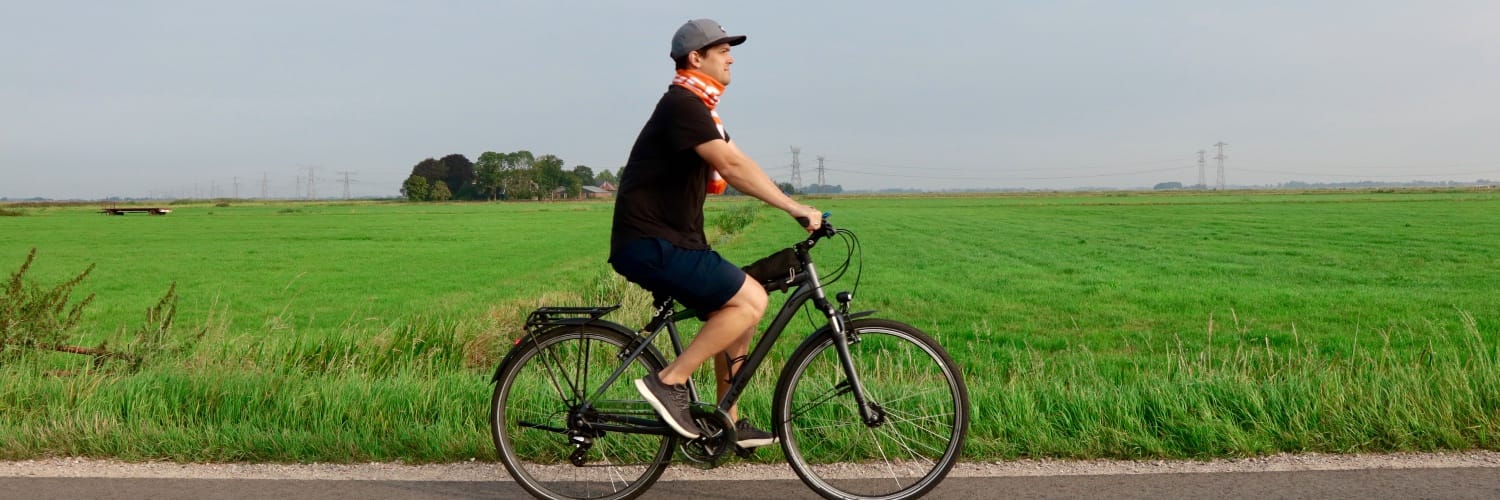
Dima is a Russian software engineer who turned a career switch into a passport. He progressed from phone support to network engineering and server administration, then taught himself to code.
In 2018, he and his wife Nika left home to travel full time. They spent four years as digital nomads across Southeast Asia, with long stays in Chiang Mai, Bali, Penang, and Tbilisi. That is where we met, in George Town in Penang.
When Russia escalated the war in Ukraine in 2022, they settled in the Netherlands and moved to Amsterdam in June 2026. These days he calls himself an indie maker rather than a contractor or an employee.
He quit his job in 2024 to build his own products, including Influesque and Search to Play, and he publishes on his YouTube channel about freedom, money, and intentional living. Check his blog to follow where he is now.
Dima's projects and links
- dpashutskii.com — Dima's personal blog
- Dima on YouTube — his main creative outlet since 2018 and still the place he posts most
- Dima on GitHub — his public repositories
- Dima on X — the account he was tweeting from as @guar47 during the nomad years
- Influesque — the YouTube influencer marketing platform he is focused on right now
- Search to Play — his database for video games, born out of a childhood spent reading Russian gaming magazines
- Taco Digest — his tool for turning newsletters into personal email digests instead of algorithmic feeds
- Guide to Buying a House in the Netherlands — the ebook he wrote for expats after going through it himself
- Dima's projects page — the full archive
- Dima's Nomads.com profile — his public trip history and future plans

Freelancing, platforms, and how remote pay works
- Upwork — where Dima found his first client and where he wants you to know the first review matters more than the first fee
- Fiverr — I brought this one up as the opposite end of the marketplace spectrum
- Toptal — the vetted network I mentioned. Dima explains why its location-based rates work against people from lower-cost countries
- Automattic — the company behind WordPress. I quoted Matt Mullenweg on paying distributed teams the same wherever they choose to live
- Facebook's pandemic-era remote pay policy — the decision to adjust salaries down for staff who moved somewhere cheaper
Learning to code from scratch
- Hexlet — the Russian-language platform Dima learned on, built on SICP examples rewritten in JavaScript
- Structure and Interpretation of Computer Programs — the MIT book underneath that course
- Lisp — the language SICP uses, stripped back to logic and fundamentals
- Ruby — his main server language today, after PHP and JavaScript
- Node.js — not popular enough yet when he picked PHP for his first full-stack job
- 100DaysOfCode — the public accountability challenge that gave him the idea for Learning Story
The maker and indie hacker communities
- Indie Hackers — where he started reading founder stories and decided to build his own products
- MakerLog — the daily shipping log he used every day and names as his main inspiration
- WIP — the other maker community we both follow
- Duolingo — his example of a learning platform with its own walled-off community
- Smart Progress — the Russian-only goal tracking site closest to his idea, which by then looked abandoned
Cities and destinations
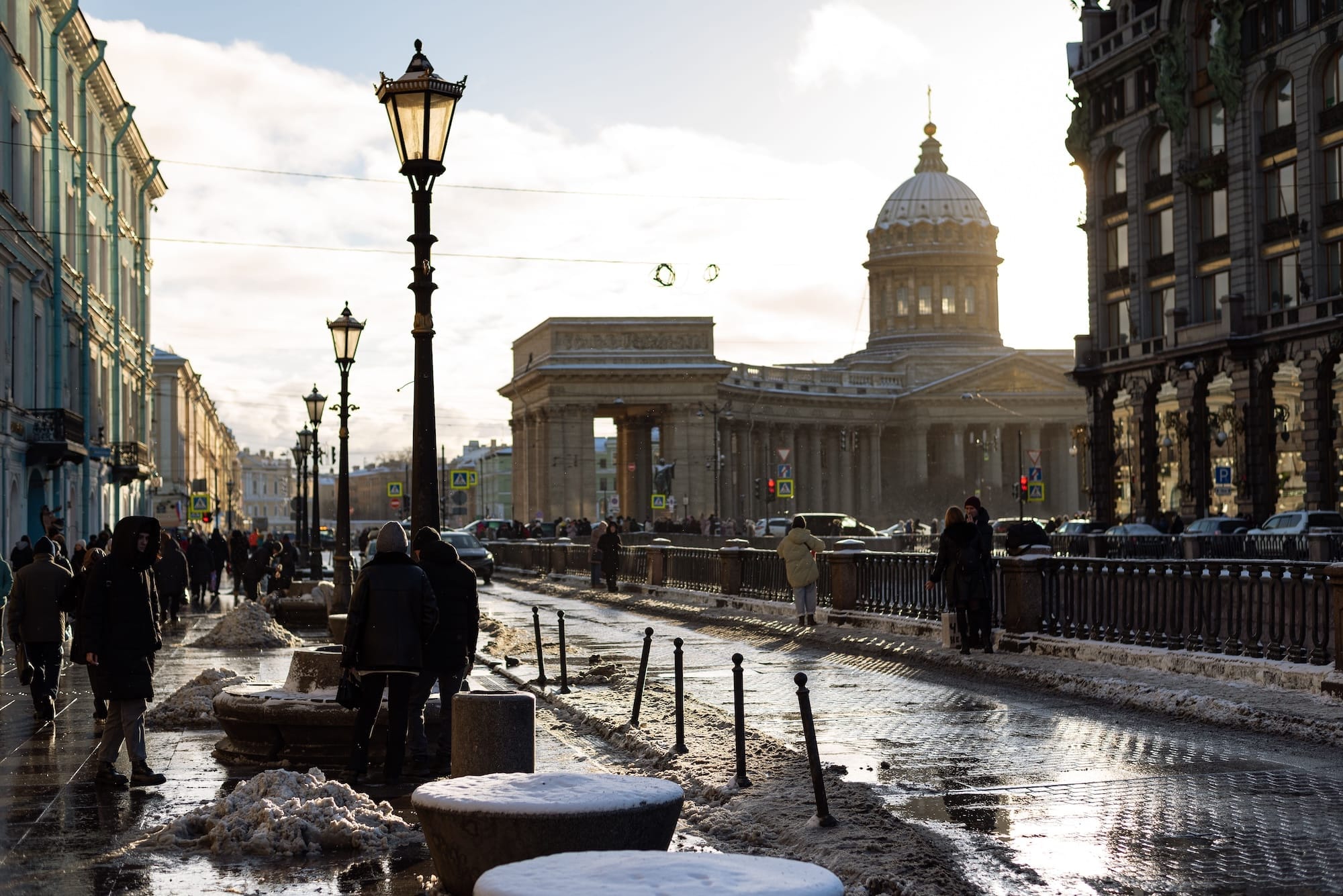
- Saint Petersburg — where Dima grew up, and the city I was reading about at the time of recording
- Gatchina — the small city in the Saint Petersburg region where he spent much of his childhood
- Karelia — the nature escape about five hours away
- Moscow — Nika's home city, and still Dima's favorite in Russia
- Vienna — where he first noticed how much Peter the Great borrowed from Europe
- Lisbon — Nika's exchange semester, and the three months where Dima learned to code and fell in love with travel
- Hua Hin — the small Thai town where their nomad life actually started, with no plan at all
- Chiang Mai — the original nomad hub, popular before Bali took over
- Canggu, Bali — where Dima was based when we recorded, and where he says people arrive and simply never leave
- George Town, Penang — where we met in person
- Taipei — the capital of his favorite country in the region
- Taichung, Tainan, and Kaohsiung — the west coast cities they reached by bullet train, each with its own character
- Singapore — great for a few days, expensive as a base
- Da Nang — one of the settle-down cities in their travel
 Piotrek Bodera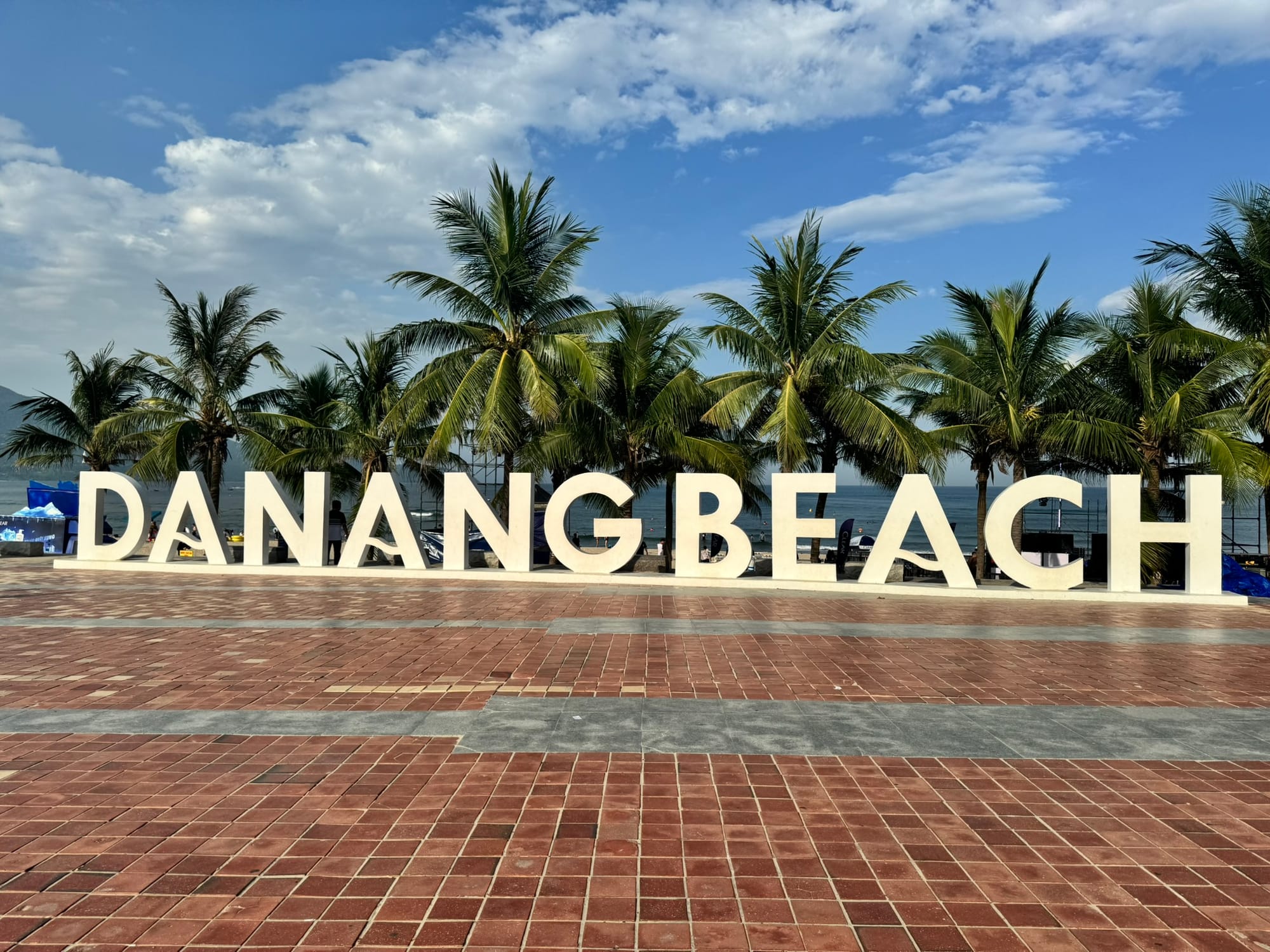
Food, health, and daily routine
- HappyCow — the purple cow app, effectively Google Maps for vegans and vegetarians
- Vitamin B12 — the one supplement he flags for anyone cutting out meat and dairy
- Insight Timer — his current meditation setup, which is a timer and silence
- Headspace and Calm — the guided apps most people start with, including him
- Down Dog — the yoga app I asked him about. They were using a YouTube-based app instead
Odds and ends
- Peter the Great — I was reading a history book about him and the founding of Saint Petersburg while we recorded
- Skype — we recorded this on it in July 2020. It has since been shut down, and my producer rescued the audio
- TikTok — my example of a non-Western platform beating the incumbents at their own game
- Nomads.com — formerly Nomad List. I asked whether he used it to pick the next city
Timestamps / Chapters for the Dima Pashutskii episode
00:00 Start.
00:36 Why a Skype recording from 2020 is finally seeing daylight.
03:01 Hello from Canggu: Dima checks in from the Bali hub.
03:40 St Petersburg and Moscow: two cities, one long-distance relationship.
04:28 Fired on a Friday; moved to Moscow the same day.
05:57 Gatchina, Karelia, and why Peter the Great built a European city.
08:09 Moscow's rush as a career accelerator, mental health tax included.
10:16 McDonald's, construction sites, and Dima's stint as a children's clown.
12:01 The case for doing manual work before you do knowledge work.
14:26 Lisbon for three months: the Schengen ninety-day ceiling as a travel plan.
16:02 Learning to code from a Russian site teaching SICP in JavaScript.
19:35 Upwork: sixty applications a month and four months of silence.
20:15 Two days of work for five dollars, and the review that made it worth it.
21:36 Fiverr, Toptal, and where the marketplace race to the bottom starts.
23:03 Location-based pay: your rate decided by your postcode, not your work.
24:32 Automattic versus Facebook on pay parity, six years before everyone else argued about it.
26:08 Off the platform: direct contract, hourly billing, twenty tracked hours a week.
27:53 Learning Story and 100DaysOfCode: building in public before it had a name.
31:52 One community for all your learning, instead of a community per course site.
35:14 Nobody opens an original coffee shop: the case against waiting for an original idea.
36:58 Indie Hackers, MakerLog, and the pull of owning your own products.
37:23 Digital Nomad Journey: writing the visa and banking guide he needed when he started.
40:51 Sixteen cities: Hua Hin by accident, Chiang Mai by reputation.
41:36 Taiwan is underrated: bullet trains, west coast cities, and the friendliest people in Asia.
44:17 Singapore for a week, Penang for months: choosing a base.
45:26 Travel months and settle-down months: slowmadding before it had a hashtag.
48:41 Going vegetarian on the road, and where HappyCow stops helping.
52:15 The pizza fallback, and why nothing actually changed when he quit meat.
54:16 Yoga in the room, meditation without an app, and cities with no pavements to run on.
56:31 Wrap up.
Dima Pashutskii podcast quotes
The routine we took is perfect for nomading, because you can combine a lot of travel months with settle-down months when you can get the job done. It's always a combination of the right ratio for every person.
I actually had to do a really easy job for some guy from Ukraine. It was two days of work for five dollars. But it was my first job and it was my first review.
It took me three or four months to find the first client.
A lot of people, especially when they're starting a new business or side project, they try to be really, really original. Nobody had done this before. In offline business, nobody is thinking about doing a really original coffee shop. They just open a new coffee shop.
Transcript
Read the full transcript
Dima Pashutskii (00:00)
I think that routine we took is perfect for nomading because you can combine a lot of travel months with kind of settle down months when you can make the job done and etc. Because it's always a combination of right ratio for every person. Somebody wants to travel more, somebody... I met a lot of people in Bali, they just came to Bali and they've been staying here indefinitely for years. So for every person it's different but yeah, for me it's more like a...
Mix of these things.
Piotrek Bodera (00:36)
Episodes of this podcast are available for free, and to listen more, I encourage you to subscribe on your preferred podcast app. nerdontour.net is a specialized blog designed for digital nomads, combining the best bits of the internet, long-term traveling, and decentralization. Support the show by using Nerd on Tour services and recommendations at nerdontour.net. And now, let's start the show.
I recorded this conversation with Dima back in july twenty twenty. It was one of my first podcast episodes, and only now with the help of my podcast producer Ted Crag, I am able to resurface it and regularly publish new episodes. So Dima and Nika, his wife, are digital nomads from Russia and in twenty twenty two when Russia escalated the war in
Ukraine, they decided to move to the Netherlands. They were already traveling around the world. We originally met in Malaysia and we recorded this episode online. I acknowledge that anything about Russia is currently a sensitive topic. However, for me, nomading means being open-minded and curious about other cultures. So I firmly believe that the war will end one day.
and we will be able to travel to places that are currently inaccessible. I used now the defunct Skype, where the audio quality was quite poor, but Ted did amazing job to make it nice. Nevertheless, I hope you enjoy it.
Hello and welcome to Nerd on Tour Podcast. I am Piotrek, and today I am talking with Dimitri. I met him over a year ago in Georgetown Penang in Malaysia. He was traveling with his dear wife. They are a lovely couple from Russia. I hope that we could talk more about the digital nomad lifestyle of Dimitri and Nika, his wife, and how they managed to.
create this incredible lifestyle in I think about two years. So welcome here, Dimitri.
Dima Pashutskii (03:01)
Hello Piotrek and thank you for having me today.
Piotrek Bodera (03:05)
It's my pleasure. And right now you are in Bali, Indonesia. How are things there?
Dima Pashutskii (03:12)
Great weather is perfect here as usual.
Piotrek Bodera (03:15)
Nice. Let's start from the beginning. I am really interested from the perspective of you two. If I remember correctly, you are from Moscow and your wife is from Saint Petersburg, is that correct?
Okay, okay. Could you tell me more about those two cities and how did you meet? How do you work?
Dima Pashutskii (03:40)
Well, I grew up in St. Petersburg, not always in the city itself. I lived in the region for a while, then I moved back to St. Petersburg. My wife lived her whole life in Moscow. So we have some common friends and she's been visiting this friends in St. Petersburg and we just meet at one of the parties or something like this. And yeah, we just started talking then.
everything is great. For a long time, I've been still living in St. Petersburg, so we had a remote relationship. Eventually, I moved to Moscow. It was in 2015.
Piotrek Bodera (04:19)
Is it safe to say that you two were traveling and working digitally or online before you met?
Dima Pashutskii (04:28)
No, not really. I've been working in the office. It was probably the reason why I can't move to Moscow faster because I had to go to work every day. But eventually, well, actually, it's funny story. I've been fired from that job and then I moved to Moscow almost the same day.
Piotrek Bodera (04:48)
Nice. Okay. So it was like a typical nine to five corporate job somewhere in a big office in Saint Petersburg.
Dima Pashutskii (04:58)
Yeah, yeah, yeah. I remember we had different schedules. So sometimes I worked two days, then two holidays, then two days again. But yeah, sometimes it was five to two as usual.
Piotrek Bodera (05:09)
Mm-hmm. Getting back to Saint Petersburg, I am interested into the city quite a lot. I'm currently reading a book, a proper history book about the figure of Peter the Great. And he's the most important figure who started the city. And it was like almost nothing. It was maybe some fishing villages, but he decided let's build a proper port and a proper big city that will be even
There were some periods that it was the capital of Russia, was moved to Saint Petersburg. So yeah, those are like those little bits that I'm now understanding and getting more into this world. Could you tell me just from your perspective? How do you view this city and how is it for you to live there?
Dima Pashutskii (05:57)
Well, was pretty good. when I was growing up, for me it was almost the only city I've ever been. I've never traveled when I was a child or even when I was a teenager. So for me it was like my only city I've ever been. So it's fine. But when I started traveling, I started to understand more that this city is actually really beautiful. And especially when I started to travel Europe, I understand how much Peter the Great took.
the influence from Europe and how St. Petersburg is really different from other cities in Russia. It was funny when I was visiting Vienna in Austria, sometimes I just felt, well, I'm at home, it's St. Petersburg. So similar, some of the places, some of the houses, it's really look alike. yeah, it was pretty great. But I spent a lot of my childhood in the region of St. Petersburg, it's really small city called Gatchina.
This city I love as well. if you, for example, traveling around St. Petersburg and you want to see other regions, there's a lot of great places there. You can travel to Karelia, for example. It's more remotely from St. Petersburg, I it's five hours or something, but it's a great place in terms of nature.
Piotrek Bodera (07:14)
Yeah, definitely.
Dima Pashutskii (07:16)
a lot of my friends right now going there because the international traveling is forbidden. yeah, you travel there. And this city, Gatchina, where I grew up is also pretty good. It's like most of the city is a huge park. So you can walk around and yeah, pretty good one. So yeah, I like, should probably add that still I like St. Petersburg a lot, but Moscow is my favorite city in Russia anyway.
Piotrek Bodera (07:43)
Would you like to regularly receive intriguing content like this? Subscribe to Nomad Tuesday. Every week you will get an email from me with fresh podcast episodes, practical tools, or fascinating travel destinations. Subscribe at nerdontour.net Okay, so what can you tell me about Moscow? Like what is the biggest difference that you feel today?
Dima Pashutskii (08:09)
Well, first of all, when you first time move from Petersburg to Moscow, you feel the rush. Everything is so fast. I'm not joking, really people on the street going f****.
Piotrek Bodera (08:20)
Nobody's walking slowly.
Dima Pashutskii (08:23)
When my girlfriend, well, she's right now, but when she visited me in St. Petersburg, she was complaining like, everybody's so slow, you just walk so slow. And then I felt it as well when I moved to Moscow and then I was visiting my parents back in St. Petersburg. was, you're really feeling it. So I know some of the people really prefer St. Petersburg in that way because it's more chilly, it's less people, not so rush, but I probably
I've been looking for this rush probably. It was a great punch for me to, I don't know, make more decisions in my career to look for more job and this rushiness, it helps. It's probably why New York, a lot of people love New York and they also are going there to find a lot of jobs because I don't know, it's some pressure. I can't say it's great. It has its downsides, of course, in terms of mental health, especially. But I don't know, I like it. I like it. It helps.
me and I really like this city. Another thing I like about Moscow is that more in the center of the city where mostly rich people live. It's not so many cars in there and it's a lot of parks so you can walk around the center. It's pretty good. They're trying to rebuild the city and remove the roads from there, from the center. So yeah, I really like the center of Moscow. You probably don't live there usually. It's really expensive if live in the suburbs.
But just to go there and walk around is really good.
Piotrek Bodera (09:53)
Okay. Was there a period where you also managed to find some job, like stationary job in Moscow?
Dima Pashutskii (10:00)
Yeah, right. After I moved there, I found a job in Moscow. I think I had three jobs there. I lived there for four years, almost five, and I had three or four jobs. I don't even remember it.
Piotrek Bodera (10:16)
But everything's connected to what you do today. Yeah. So software development, is that right?
Dima Pashutskii (10:23)
Not really. I've been working... Well, I can tell the proper story. I'm not sure. So when I was a child, pretty early I started working and I've been doing a lot of different and weird jobs. Sometimes I've been like it was hard labor on some construction, McDonald's at some point. Well, a lot of different jobs. Then I started... Well, I've always been interested in computers, but...
for some reason didn't manage to lend it his job. And then I tried to switch my career to more information technology. And I started with probably the easiest one. And a lot of people went to this area from this. It's a technical support. I started from the just simple technical support in the internet provider. know, this, that's me answering the phone. So yeah. And then I started to learn more and more. worked as a network engineer then
I worked as a system administrator, so I've been around this area more, networking, servers, etc. But I wasn't really satisfied with this. So I worked, it was okay, I was in the IT area, but the job itself didn't satisfy me and I started looking for something that really I'm going to be passionate about in the future.
I found the programming and it worked for me. I'm still software engineer and I really like it. It was a great switch. We can say I was looking for my passion for long time and finally found it maybe four years ago.
Piotrek Bodera (12:01)
Nice, nice. I I also did a lot of odd jobs. So that's funny that we can find out some new parts of what we don't know about each other. You probably don't know that I was working for some time as a clown on children. Yeah, yeah. Like on on any kind of activities in that involve children, like birthdays or events on shopping malls. So that was kind of like part of the trick I was doing.
And I think it just all related to the fact that I was having this mentality that it will allow me to to travel more. Because before I was this clown, I was also working on youth camps with teenagers and with kids in many parts of Poland and also abroad. So I wanted to work with people. So the technical support that I also did was like a very short period, but after
a half of the year I I realized that it doesn't work for me. Like I I do like IP, I do like creating websites or other projects, but at the same time it's not completely what I want to do. It took me also quite a lot of time and I'm happy that currently in this very moment I can grow my own company and have my own direct customers. So it is kind of like a combination of what I was doing before.
I think it's quite important part of of life, yeah, to get this experience in what is the labor, yeah, what is the manual work and then you can also appreciate others who are doing that for their life.
Dima Pashutskii (13:43)
Yeah, I completely agree. Sometimes when I heard about the people, like they've been coding their whole life from 10 years old, sometimes I'm jealous, but then I think, well, maybe it's not bad that I went through this pass. First of all, I pressured more. And second of all, I had some other different skills which helped me to be like better person and better.
Piotrek Bodera (14:06)
Exactly. And who knows, maybe in the future when there w won't be any internet, any electricity, we will need to switch back to our manual skills and only you know, those kind of people will survive.
Dima Pashutskii (14:20)
Yeah, yeah, right. I would prefer not to go back to McDonald's, but yeah.
Piotrek Bodera (14:26)
If we don't have internet in the future, we probably don't have McDonald's too, but who knows. Okay. So can you tell me then what was the switch or what were the steps for you and Nika to move from the typical work from office to get this experience and recognition as a person that works remotely for customers that somewhere
abroad or for some companies and that also allows you to travel.
Dima Pashutskii (14:59)
Yeah, so as I mentioned, everything in my life probably went evolutionary. So the digital nomad thing went this way as well, because at first I started looking for my passion and I found it in programming. Then I started learning more about programming. I realized a lot of programs actually work remotely and I always don't really like offices. It was kind of me always, especially if it's like
proper offices, I work in the bank once and you need to have a suit and stuff. I don't like this stuff. It's easier as possible. and remote work when you can sit at home and work. Yeah, it sounds great for me. And I always didn't have a problem with productivity working remotely. And at the same time, my wife, she went to exchange semester to Lisbon, to Portugal.
At the same time, I quit my job as system administrator and started learning to code. Did you work?
Piotrek Bodera (16:02)
We've heard to Lisbon.
Dima Pashutskii (16:03)
Yes, for three months. It's a limit. It's a maximum how I can spend time in Europe. So yeah, I went for them. I've been learning to code there and at the same time we've been traveling a little bit. It was my first proper experience with traveling. Yeah, I fell in love with it. So at the same moment I realized I want to do this.
I didn't know the term digital nomad or any term back in the day, but I really want to travel, really want to do my thing, to do the programming. So how can I combine it? And I started researching and I found the freelance. So the first probably what you're going to find in the internet, remote work and it shouldn't be the nine to five job. So yeah, freelance is a way. At first I wanted to learn the code and just jump into freelance.
But then I decided maybe it's a of a rush decision so maybe I need to land job at office at first and I did it. It was like nine months or ten months at the office as a programmer and then I quit and we just went traveling and I started my freelance.
Piotrek Bodera (17:10)
So how about learning how to code? Because that's a very broad definition. Did you follow some paid course that you found online or just bought some books or some PDFs or some free videos on YouTube? What was your way of learning how to code and which language did you choose?
Dima Pashutskii (17:30)
Well, at first, I've been Googling a lot and at first I faced with not a great website. they either were too complicated or were covering just a little bit. It's not enough to land a job later. It probably was because I was Googling in Russian. I didn't know English back then. In Russia, unfortunately, we don't have much resources, much greater resources compared to English.
Piotrek Bodera (17:56)
That's the same problem in Polish. I always look for English things now. Even if I'm in Poland, I try to find an English language because it's kind of like easier and faster to find
Dima Pashutskii (18:08)
Yeah, everything in English, especially in the software engineer world. So eventually I just completely switched myself on the English internet. Anyway, I found one website, it's called Hexlet. Unfortunately, it's only in Russian, so I can't recommend it to any of the listeners. But it was a great website and it uses as a basis, it uses the book which is called SICP. It's a really famous book among the software engineer, Structure and Interpretation Programming.
It's really hard book. It's kind of like university style book maybe, but it uses the Lisp language, which is old language, but it's pretty good language to learn programming because it don't have much external stuff. has only programming, logic and yeah, the basics, the core. So this website has been using this book, write the courses, recorded the courses in JavaScript. So the same examples, but with JavaScript. So yeah, it was my first language.
I started learning JavaScript, then eventually I decided I want to also cover the server. Probably Node.js was not so popular back then, so I used PHP. My first job was PHP plus JavaScript, which covering full stack. Eventually I switched from PHP to Ruby. Currently Ruby is my main server language and I still use JavaScript a lot.
Piotrek Bodera (19:35)
Nice, nice. So the work that you started with, you said that there were some freelance gigs. Was it like some one off I need to fix that thing, please find the bug and correct it? Or did you just look on portals like Fiverr or somewhere else?
Dima Pashutskii (19:55)
I started with this website. I'm sure you know it's Upwork.com. It's really a freelance platform where you can a job if you're a client and you can find a job if you're a freelancer. So I started to build my portfolio. It's pretty hard when you don't have any project, but yeah, I managed to put some websites from where I've been learning. It was a struggle at first to find a client because there's so many freelancers on that platform.
So I actually had to do a really easy job from some guy from Ukraine, I remember. It was two days of work for $5. But it was my first job and it was my first review. The review is really important on Upwork. And then I already started with...
finding the better jobs, better conditions. it was kinda, but the first job is really hard to find on this platform. It took me three or four months to find the first client.
Piotrek Bodera (20:56)
And was it every day for those three, four months that you were trying to apply for some projects and like talking with customers? Like can you say that it was, you know, actually doing a lot of work without any, you know, getting paid?
Dima Pashutskii (21:12)
Yeah, I was combining to improving as a developer with applying for jobs. They have a limitation on the applications, maybe 60 applications in a month. So yeah, I've been applying a lot and not so many people even answer me. So I wouldn't recommend Upwork to people who really want to go into freelance.
Piotrek Bodera (21:36)
Mm-hmm. Mm-hmm. Yeah, I I I also had similar experiences when I was trying to somehow start on those freelance, you can say marketplaces. Yeah. Because the point is that some of them, like Fiverr, are aiming for the lowest possible denominator. They don't ask too much questions. Like if you can do the job, is it like designing logo or like producing a video or like writing a new PHP?
you know, server for some company and you can do this for five dollars, great. Yeah, like just just do this and maybe we'll give you the the money later. Some of them are like on a very other point of the spectrum, yeah. Like there is Toptal Tal. Do you know about them? They focus only about the 1% of the best programmers and designers in the world. And they probably have some very efficient vetting system.
To find out, yeah, not only about the portfolio but also about the reviews and also about past clients. Yeah, like if you work for Microsoft and Tesla, you are probably one of the best people. But if you work for some like local grocery store and you did a little website for them, you are probably not the best in the world. Yeah. So it could be difficult just to show up. So in your situation, did you eventually switch from freelance to some
full time remote work.
Dima Pashutskii (23:03)
Yeah, correct. Also, I wanted to mention about Toptal just in case anybody considering it. There is a thing which is not great about this website. The rate, the hour rate, which you can't set up by yourself, they decided how much money you're going to earn and it depends on your location. For example, it's really a low rate for Russians. So, from
Piotrek Bodera (23:27)
Yeah.
Dima Pashutskii (23:28)
a country where, well, probably average salary is not so big, you're going to earn
every day not so big money
Piotrek Bodera (23:35)
Yeah, yeah. If I can add to this, I recently follow I do this for quite some time, but recently those two opposite perspectives are showing up. the first one is that Facebook is one of those big companies that said, Okay, because of the pandemic, we are allowed to work remotely. Now we will do this policy. Yeah. So if you are living in a country, in a place that they think is like, you know, low living costs.
If you decide to live in Bali, yeah, or Russia, they will say, Okay, from now on you are earning, you know, thirty percent less because your life costs are lower in this place. Yeah.
Dima Pashutskii (24:19)
I also read about this and it's funny because everybody wanted to leave San Francisco because it's a place but they can't because they started earning less money even if they move to another city in America.
Piotrek Bodera (24:32)
Exactly, exactly. So that's very, very weird way of describing this new policy, how we will compensate other specialists and and how it will all work. But I do think that eventually we will go into direction that it doesn't matter where you live. This is like you know, the global standard of senior developer or junior developer, blah blah blah. The thing is that Automattic, you know, the company behind WordPress.
Their CEO Matt Mullenweg was saying that, actually, we have this for like many, many years now that we do not ask where do you live and how do you live. Yeah, because some people are having a big house and some people are digital nomads and they don't have house at all. And this is one of the costs of living, yeah. And you should be the person to decide if you want to spend some money on this or not. But you should be paid equally, yeah. It doesn't matter where you are.
It's more about what you do, how well you do this and how much money also you bring to the company, which would be one of the key components of of getting paid.
Dima Pashutskii (25:41)
Yeah, absolutely agree with it.
Piotrek Bodera (25:43)
Okay, so st putting these things aside, fortunately neither of us is not a CEO of a big tech company. It's not it's not completely the the problem that we should face or decide how we should solve. So how does it w work for you right now? You said that you switch to the full time remote job. So where do you work?
Dima Pashutskii (26:08)
Eventually I found one client on Upwork which I really liked and it seems they liked me as well. So I started to do more and more jobs for them. At first it was just small tasks, then bigger and bigger, then I started to communicate with the team, etc. And eventually we had a conversation and we decided why we even using Upwork. It's not so convenient for them, it's not so convenient for me because I have to pay the fees for Upwork as well.
So I established a company in Russia and we set the direct contract with mine. So I'm contractor right now. I'm still not working full-time. I'm working 20 hours per week. But yeah, it works pretty good.
Piotrek Bodera (26:53)
Are you aiming to work more or is it a level that you are satisfied with?
Dima Pashutskii (26:59)
I'm completely satisfied with it, especially because when you're working hourly and I'm tracking my hours and sending voice later, so when you're working hourly, it's a little bit different from the working full-time because when you're working full-time, you can spend some time on social media or you just distract
Piotrek Bodera (27:18)
Yes.
Dima Pashutskii (27:20)
a little bit from your computer and you go to vacation and you still pay it, you go to lunch, etc.
For me it's just tracking hours, so all these hours I'm really working. So eventually it's not really 20 hours. It could be even more because of the other distractions. yeah, I'm pretty satisfied and I think it's almost as many hours as I want to work.
Piotrek Bodera (27:45)
And do you also do some other projects, your own things that you build or some freelance gigs for others too?
Dima Pashutskii (27:53)
Not freelance things. I'm building my own projects, but it's still in development. So one project I'm working on, it's called Learning Story. I've been struggling a lot when I've been learning to code and I wanted some community or something to share my learnings, to talk with other people. And eventually I found this kind of challenge on Twitter. It's called 100 days of code.
Piotrek Bodera (28:18)
Seen this hat like yeah.
Dima Pashutskii (28:20)
Yeah.
It's a hashtag indeed. So I'm in this commitment. The next hundred days, I'm going to be learning to code and you tweet every day about what you learned today and maybe found some other people. So I want to the platform around this idea. It's going to be a learning and you're to be learning in public. You have some streaks. It's not going to be like a hundred hours. just is every productivity tool doing this. You have some streaks and it's kind of your accountability to
working every day or learning every day. I'm not sure if it's going to be only for people who learn to code, maybe other learning as well. And of course, you can find some other peers to communicate with these, maybe discuss something. So it's kind of like a learning community, but it's still in development. So I can't even share any website yet. maybe later. Another thing, we started working on it when we started traveling, our common asset with my wife.
It's called DN Journey and it's our kind of travel thing. So we have an Instagram, we had YouTube. Unfortunately, we stopped publishing video, but I'm sure I'm going to come back to this. And right now I'm working on the blog. So it's going to be blog with this name as well. So yeah, it's the other thing I'm working for pleasure and for this side project.
Piotrek Bodera (29:43)
Nice, nice. so let me focus on on a few things that you just mentioned. I do believe that any platforms or any new tools that help you learn better or learn with others, if that's your thing, should be developed. And I do believe that what we have, like our generation of people, is just ten thousand times better than what people had in the past. Yeah, because
the only way of kind of stepping up from what your parents were doing or what your environment was doing was just, you know, read books, yeah, or like go to the library and maybe you will find something that will help you to get new skills and meet new people. But today with the internet, it is showing us so many new ways of learning. Yeah. And I personally feel it on myself that I had always trouble like learning new stuff.
about foreign language. Yeah. English was such a trouble for me when I was in school. But the moment I started traveling and was forced to talk with other people and forced to find my way to not be lost or just, you know, was so interested about a topic or some other people that it was the only thing to use. Yeah. And today I'm very happy to to work in this language primarily, even though that I still
publish in in Polish and I I'm still connected with the culture that I I was growing up. English is just this incredible tool that I only was able to learn thanks to the internet, video games, watching movies, traveling, you know, all of those things that are not part of the traditional schooling. So if you are one of those people that can create this completely new thing of learning, then yeah, I totally
encourage you to do it. It's usually the thing that you cannot find on other places, but you want to build by yourself. So what's your way or what's your alternative way of learning or teaching in this new project?
Dima Pashutskii (31:52)
Well, that's the thing about it. I'm planning to create kind of a website for community and productivity, but it's not going to be a learning website itself because there's plenty of websites around learning how to code, like, for example, FreeCodeCamp. There's a lot of them. And the thing with my website, should be not the learning website itself, but the community of people who want to learn different stuff. Because when usually you have a
website around some courses, they have a community. And then another website where you're learning to draw, for example, they have another community or it's just like comments under YouTube video. another site with learning languages like Duolingo, you have the community there. So what I want to do is kind of combine all these communities and create a new one where people can share their learning from a different platform so they can
talk about learning in general, not like the learning on these exact websites. I was inspired a lot by the similar websites around making. There's a lot of people who do side projects and make some stuff. The one is the WIP chat and another one is MakerLog. I'm a user of MakerLog. I use it every day and I find a lot of great people there. So yeah, this was my inspiration mostly.
Piotrek Bodera (33:17)
Okay, okay. So is it also
Dima Pashutskii (33:19)
So.
Piotrek Bodera (33:19)
some kind of productivity log in your way or you aim for something different?
Dima Pashutskii (33:28)
That's the idea of productivity of some maybe gamification like streaks or achievements and also you probably can add some to-dos there. There is actually one website really similar it's called Smart Progress but as I can see it's a bit abandoned and it's only in Russian so
Piotrek Bodera (33:48)
Okay.
Dima Pashutskii (33:50)
I'm aiming for international.
Piotrek Bodera (33:52)
Yeah, yeah, yeah. That's also one of the things that people usually don't recognize. That sometimes you just need to translate things from one language to another. Of course, adding some original parts from your own. Yeah, like you should not violate any copyrights of someone else's work and do this like a complete copy cut it just in your language. But I think, yeah, it's again this never ending story that
I think China is one of this amazing examples, yeah. That they do have equivalence of Facebook, of YouTube, of Twitter, partially because the country is blocking those sites inside their own version of the internet and they needed to have some version that is in Chinese. But also right now that they are becoming so big and so effective, like you know, TikTok is this amazing example that suddenly
Most of the world is using this new social media platform for some silly dance videos or some other stuff and it is actually working. Yeah, it is actually a big alternative to all of those Western or or American corporations and why not? Yeah, like if we all are in this game and anyone can create anything, then we should be allowed to do that.
Dima Pashutskii (35:14)
Yeah, I'm actually pretty pro for idea not to focus too much on the originality because a lot of people, especially when they're starting the new business or side project or whatever, they're trying to be really, really original. Nobody had done this before. It's not a perfect way to start a business or a side project. You can just do something, you can add your personal view on it or you can fix some problems which you had on these services or
anything and just do it because in offline business nobody is thinking about doing really original coffee shop they just opening new coffee
Piotrek Bodera (35:51)
Exactly.
Dima Pashutskii (35:52)
shop offline business everybody trying to I don't know create new Facebook or Google or whatever yeah just just do the the another way of all the stuff we already had and you probably find the audience
Piotrek Bodera (36:07)
Yeah, yeah, I I I do find a lot of interesting ideas in this whole concept and just watching the makers community wherever it is, yeah, like Indie Hackers or the Maker Log or the WIP community, it's amazing to see. But sometimes something really, really simple is becoming huge, yeah, because you never knew that you need another plugin for your Chrome that will show you the CSS. But yeah.
easier and prettier and it's like super useful if you are a web developer. So why not you know create something like this and then people will give them money to use it and it can be your alternative income. Yeah. So you are not kind of signed into one company or just one source of one industry.
Dima Pashutskii (36:58)
I'm actually really, really interested in six months probably in this whole indie making stuff. And I started to read a lot of indie hackers, different posts from people who had the success stories in it. And I started thinking it's probably going to be my next step. I really want to be involved in this as well. So yeah, that's why I started to make my own project as well.
Piotrek Bodera (37:23)
Excellent, excellent. So how about the the blog on the D N journey? This is funny because w when I first saw it, I was thinking like, they are like, you know, digital nomad journey, but also it's because of your names, is it like Dmitry and Nika?
Dima Pashutskii (37:40)
Right, that was the idea to compare these two things.
Piotrek Bodera (37:43)
Thanks.
So what can I read on your blog that you said that you are planning to publish?
Dima Pashutskii (37:50)
For now, I only have my personal blog. It's dpaschutski.com. It's my surname. And there are mostly a few posts about coding, etc. But on this blog, on the dnjourn.com, it's still in development. I'm planning to post at first the stories about the nomading itself. So, for example, how was the life here in Bali during this?
But also combine it with just the travel stories for people who just only want to travel. For example, I'm planning an article which covering all the stuff to spend the long term here in Bali from the different perspective, from co-working, from the cafes, from the visas, everything. I don't have any much plans for the future, what it's going to be, but yeah, most probably covering all our traveling, all the...
useful stuff we discovered while we were traveling to share with people. The main idea about all my side projects is just to help people to do the same I'm doing. Because when I started I had a lot of questions and it would be great to find some article like do this, do this. I think we're expecting a huge boost on the digital nomad industry after the Covid.
Piotrek Bodera (39:09)
yeah, yeah, yeah.
Dima Pashutskii (39:11)
It's gonna be useful, I hope.
Piotrek Bodera (39:14)
That's honestly one of the reasons why I'm recording this podcast and why I double down on the whole idea of publishing my own articles on my blog and just being useful for for others, because usually it's that my god, this article would be like so much better if they just write more detail about how to apply for the visa or how to, you know, expect some issues with banks if you are
going to set up some account that you need to have to get some you know income from abroad or just sending some money from here to like a local bank, but you do not have the local bank account. There is so many layers of things that are usually not applicable for travelers, yeah, like short term travelers who are just coming for a weekend or a week and they spend time in five star hotel.
Digital nomads are different in the ways that we do spend many months, yeah, or in this period, maybe a year, in just one city or one location. And at the same time, we are not really permanent residents. Yeah, we do not plan to be here for life, but we do would like, you know, have some stability or some other parts of the things that we want to make it better, more efficient, faster, or just
more to integrate with locals, yeah. So I'm looking forward to read what you write about Bali.
Dima Pashutskii (40:47)
Yeah, great, thank you. I will send you the link when it's gonna be ready.
Piotrek Bodera (40:51)
Awesome, Martin. so getting back to the digital nomad as a lifestyle and before the current situation in 2020 year, could you tell me about all of this incredible places that you managed to visit? I just quickly scrolled through your Instagram account and I accounted at least sixteen different locations.
Some of them in Southeast Asia like Bali or Chiang Mai or Taipei, some of them in Europe, like Budapest, you were also in Italy, I saw Milan, Naples. So how do you travel? How do you live the life of the digital nomad?
Dima Pashutskii (41:36)
Well, at first we didn't have any plan at all. just, as I told before, I just quit my job and my wife as well. And we just went traveling and we heard a lot about the southeastern Asia, especially about Thailand. So we just went to Thailand without any plans. It was a Hua Hin the pretty small place, pretty small city. Eventually we ended up in Chiang Mai, which is a huge digital nomad hub. Yeah. It was even a...
digital nomad hub even before Bali started being popular. So most of the time we've been traveling around South Eastern Asia with quick trips back in Europe at summer because we only can spend there three months. So we just went to Russia to meet friends and family and then went to Europe for three months. I suppose we visit probably all the countries we wanted in South Eastern Asia except
Japan and Australia, which definitely on my bucket list, but we didn't manage to visit Australia because they canceled our visa. They didn't issue the visa for us. And Japan, we need to go back to Russia to apply for a visa. But other than that, we visited most of the countries we wanted. If I'm pointing on my favorites, probably Taiwan, it's my favorite country in the southeastern Asia. I really think it's underrated.
not only among the digital nomads but in terms of traveling as well. It's an amazing country, amazing island, not only Taipei, capital, but the whole island. We took a bullet train and we went through the Western coast, Taichung, Kaohsiung, Tainan, and all cities are great. All cities have its own vibe. The people there are one of the nicest in the world I've ever met. The food there is great. And at the same time, you have
the modern vibe. really like modern cities, I like Singapore a lot, but I like this combination in Taiwan. It's like a typical Asian cuisine and atmosphere sometimes on the markets and at the same time the modern technology, the apartment in the modern style, etc. So for me it was perfect. Also, I really like Japan and Japan culture. So it was probably the closest one I visited to Japan culture.
Piotrek Bodera (44:03)
Exactly, exactly. I I also have the same feelings when I was in Taiwan and and Singapore. There is a lot of things that are overlapping in terms of the high technology solutions that are in those places.
Dima Pashutskii (44:17)
Well, we really like Singapore. I'm not sure if it's really a city where you can settle down as a digital nomad because it's kind of expensive. But for several days, it's a great place to visit. probably Penang in Malaysia was an amazing experience where we meet with you, especially when we lived. We lived kind of remote from the Georgetown, which is a kind of capital of Penang. We lived in area where
Mostly only locals live there. It was some great vibe there. We found really amazing restaurants. kind of like a stalls where people are selling food from there. There was no tourists at all. It was great vibe there. But I like Georgetown as well. So, Penang is in my opinion also really amazing place for nomads or for traveling.
Piotrek Bodera (45:11)
Nice, nice. So how did you choose one place after another? Did you just check some info on nomad list or did you did some further research before you decide to switch the place?
Dima Pashutskii (45:26)
I think it's a combination, think. We usually have this kind of routine. We spend some more time in the place where it's perfect to spend, like in Bali, where everything is settled for nomads. Like in Bali, in Da Nang, in Vietnam or in Thailand, in Chiang Mai. We spend there a month and then we took months to travel more. So usually we just choose the closest cities so the flights is going to be more convenient and cheaper.
travel around and just then settle down in one place for more months.
Piotrek Bodera (46:02)
It's really nice when I met you guys in Penang. I can say that I also gaining the experience as the digital nomad. I also didn't use this phrase, this classification before. I did travel quite a lot before in in Asia or other parts of the world with my laptop, but the laptop was kind of like another gadget that I was just packing into my backpack. It has never been this one main
Source of income and just wasn't so focused on this because I also had other job which was too leading. Yeah, I was working with groups going around mostly in Italy. but of course again the situation now has changed and we all need to adapt. And I do believe that digital nomads are one of those people that can adapt or or know how to adapt much better than let's say average traveler.
Who thinks of being in another place as a vacation or only as this exotic, you know, short time of the year where you want to be just to see how different the place is and then come back to home. Yeah, because home is only this you know, home country or the region that you know, kind of like you know, your comfort zone. Well
We are kind of on a mission to always stretch the comfort zone and find ourselves sometimes in some new weird situations and sometimes even decide like not to go. Yeah, like not to rush and come back to our homelands, even though the whole world is burning or something else is happening. we decide to stick and like focus on our work or some other projects that we want to to build. And then wait, yeah, until the
the fire is extinguished and we can move again to to some other location. So yeah
Dima Pashutskii (47:59)
I agree because I think the routine we took is perfect for nomading because you can combine a lot of travel months with a kind of settle down months when you can make the job done and etc. So that's why we're doing it because it's always a combination of right ratio for every person. Somebody wants to travel more. I met a lot of people in Bali. They just came to Bali and they're staying here indefinitely for years.
So it's for every person is different. But yeah, for me, it's more like a mix of these things. we're here for you already. my travel part already itching. So I want to go back in the road.
Piotrek Bodera (48:41)
Yeah. Yeah, yeah.
So just to slowly head to the end of our conversation, I am interested also on the part of how do you strive for the right balance when you are working. Could you tell me more about the diet or like how do you choose what to do when you are in some locations? We met, I remember in Pin Xin,
This great vegan restaurant in Georgetown now in Penang. And I also saw quite a lot of pictures of pretty dishes in Bali recently on your Instagram stories of some vegan and vegetarian dishes. So are you two, you and your wife, vegetarian, vegan? Like how do you view it?
Dima Pashutskii (49:31)
We are vegetarians. When we started traveling, all saw fish, but not anymore. Right now we're vegetarians and we're kind of striving towards a vegan lifestyle. It's not like a special diet, it's more like personal preference and point of view on the world. I can say that. And yeah, we're trying to find some vegan places. If we can't, we're just using regular vegetarian.
food or vegetarian restaurants. It actually works pretty good in Asia, just in case someone worrying that apart from Europe where, of course, the vegan places in Europe is everywhere nowadays. It's not like this here, but no, actually a lot of countries allow you to have a lot of vegetarian food and some of the countries that people are vegetarian because of the religious reason. Of course, it's modern and fancy.
The modern Texas place is opening also with this idea. So yeah, it's pretty easy being here as a vegetarian or vegan.
Piotrek Bodera (50:36)
And how does it work for you when you travel to a completely new place with a language that is completely new for you? Yeah, because when you go for the very first time, let's say to Taipei, to Taiwan, Chinese is this language where most people use, and maybe you cannot find anyone who is willing to help you to translate stuff. Do you have any proven method or just a way to find a dish?
Or do you maybe do some research before you travel to another place to just know how to say in a local language, no meat, please?
Dima Pashutskii (51:14)
Yeah, good one. I never thought about that. It's actually, well, most of the Asian countries and especially big cities, which you're usually choosing for traveling as a nomad, there are some people speak some English. But apart from that, there is an app called App and the website which called Happy Cow.
Piotrek Bodera (51:33)
Yay. The purple cow.
Dima Pashutskii (51:37)
It's kind of Yelp or Google Maps for vegan and vegetarians. They keep all vegetarians and vegan places there. It isn't working everywhere. For example, I remember in Vietnam I just opened the map and it was completely empty in the end. Somehow we just put the vegan or vegetarian word inside the Google and we also find some places. And even if we can't find, we usually just go in the regular restaurant. There is always something
without a meat. If you're completely lost and you can't find anything, just go to pizza, they always have a big pizza.
Piotrek Bodera (52:15)
Excellent advice. Yeah, yeah, that's definitely working, especially if you are a big beginner. Yeah, if you don't know how to live this new life, this new lifestyle, then you should just stick to what you know or what you ate before that's probably doesn't contain any any meat. Yeah. How does it affect you? Like do you feel a difference in a sense of, you know, clarity of your mind or having more or less energy throughout the day? Do you eat
More regularly, like more kills during the day. Do you see the difference from the time that you were eating meat?
Dima Pashutskii (52:51)
Not really. was worried about this actually and then I just decided it was first of January So I decided to start new year with a new
Piotrek Bodera (53:02)
Okay.
Dima Pashutskii (53:03)
I Was worried that I'm gonna feel different or I don't know have some problems But nothing really changed for me and for my wife as well. So we just stopped eating I think changed when we trying to eat more vegan food. There is one thing
I can tell or maybe other people who are considering to be a vegan. It's a B12 vitamin which is contained inside mostly meat, dairy. So if you exclude all dairy and meat from your life, you could be sufficient of B12. So you can just buy a B12 supplement and we have one. You just spray it in your mouth once in a day and that's it.
Piotrek Bodera (53:44)
Okay. Nice, nice. so which year was the new year resolution? Was it twenty nineteen, two thousand eighteen?
Dima Pashutskii (53:53)
I think it was 2017 actually. But I'm already not sure.
Piotrek Bodera (54:00)
So long ago. Cool, cool. Okay. So are there any other healthy habits that you both do? Meditation, yoga, journaling, breathing? Is there any part of this world also in your daily routine?
Dima Pashutskii (54:16)
We're trying to do some physical activity. It's especially important when you're traveling because well, usually if you live your life in your city, you have some gym or I don't know, you can run in the morning. And when you're traveling, it's harder. It's especially harder in Southeast Asia because you... really like jogging. It's really hard to jog in most of the cities, especially in Bali because they don't have a pedestrian area.
Piotrek Bodera (54:42)
Yeah,
exactly.
Dima Pashutskii (54:43)
run on the street and it's not safe sometimes. So yeah, we're using what we have in some cities. We bought a gym membership, it was in Bali. Then the coronavirus started, so we switched on yoga, which we also been doing last year. In Malaysia, for example, in Penang, we had a really great apartment with a pool and the gym itself inside the apartment. So we use that. When we arrived in Bali last year, I've been surfing, so also some
physical activity. So yeah, we're trying to do something. Currently we're doing yoga, but the morning every day, just 15, 20 minutes. It's
Piotrek Bodera (55:23)
Uh-huh.
Dima Pashutskii (55:25)
In terms of meditation, I meditate for the last two years, I think. I'm not being really consistent in this, so I don't have like 600 days streak in my meditation app.
Piotrek Bodera (55:37)
You don't have to
Dima Pashutskii (55:38)
Yeah, yeah, that's right. I stopped worried about this.
a long time ago. yeah, it's usually in the morning, 10 minutes, 15 minutes. I think most of the people started with some guidance meditation with headspace and 100 % calm, I think. But currently I switch just for complete silence. I'm just using the Insight Timer, it's called. You just turn on the timer and with the silence I just meditate. So we're trying to do something. I really miss jogging. I really like running.
But unfortunately, it's not always possible. So yeah, we're trying to change it on something else.
Piotrek Bodera (56:15)
Nice, nice. Do you use Down Dog app maybe for yoga or like YouTube videos?
Dima Pashutskii (56:21)
We're using the app called... I don't really remember, I think it's just the app which collects some YouTube videos. So yeah, it's kind of like YouTube videos.
Piotrek Bodera (56:31)
Sure. Awesome. Thank you very much, Dimitri. It was very nice to talk to you and I really believe that this is important and useful what you do and what we did here to spread this message and to help others to become digital nomads or just to use some bits of it, some tools or some parts of the story in their own journey. So thank you again and see me soon.
Thank you very much for listening. The best way to support the Nerdon Tour Podcast is to subscribe, review and share it with friends. Go ahead and do it directly in your podcast app. For more digital nomad stories, follow me on social media and check my blog, where you can ask questions and comment on each episode. Most importantly, please subscribe to Nomad Tuesday. It's my weekly newsletter about all things digital nomad.
Each Tuesday you will get an intriguing email from me with fascinating travel destinations, practical tools or fresh podcast episodes. Subscribe at nerdontour.net


Discussion