


Accommodation remains the biggest expense for digital nomads. Regardless of our travel style, we all need a place to sleep. Often, it's also our remote office. Also, a spot to chill with friends. It's a temporary home. And the more homey we can hone it, the more it affects our productivity and wellbeing. Here I share my unconventional approach to finding accommodation as a nomad.
Be a slomad — the longer you stay, the less you pay
Back when I worked as a tour manager, I changed hotels every night. My clients, regular 9-5 office workers, only had 7-14 days of vacation. Naturally, they tried to maximize their leisure time. The rapid exploration of many Italian cities in one go proved exciting, yet draining. Mentally as well as financially. Every hotel charged its daily rate to provide beds, meals, cleaning, and other services.
Once I started nomading full time, I realized that accommodation costs can be reduced by 50% or more. If you stay for 1-3 months in one place.
Most accommodations prefer long-term guests. That applies to all travel styles: from bunked hostels to luxury penthouses. And everything in between. Why? Permanent tenants yield greater profit for accommodation providers than nightly rentals. The monthly rate is also cheaper for you than the daily rate times 30. So be a slomad (slow-moving nomad).
Room + Coworking
In 2018, I started my full-time nomading journey by looking for an affordable single room in Bali. These factors were crucial:
- The travel visa for Indonesia was for 30 days.
- A single room provided better sleep quality than a dorm.
- Reservation via Booking.com protected me from scams.
- Good reviews and photos showing the room’s condition.
Moreover, I didn’t intend to stay in the room 24/7. I found an excellent coworking space within walking distance of the hotel. By day I worked comfortably and hung out with fellow remote workers. Then my single room provided a restful night's sleep.
Therefore, if you're starting your nomading journey, a single room plus a coworking space is a terrific option. If your visa and work arrangements allow, stay for at least one month.
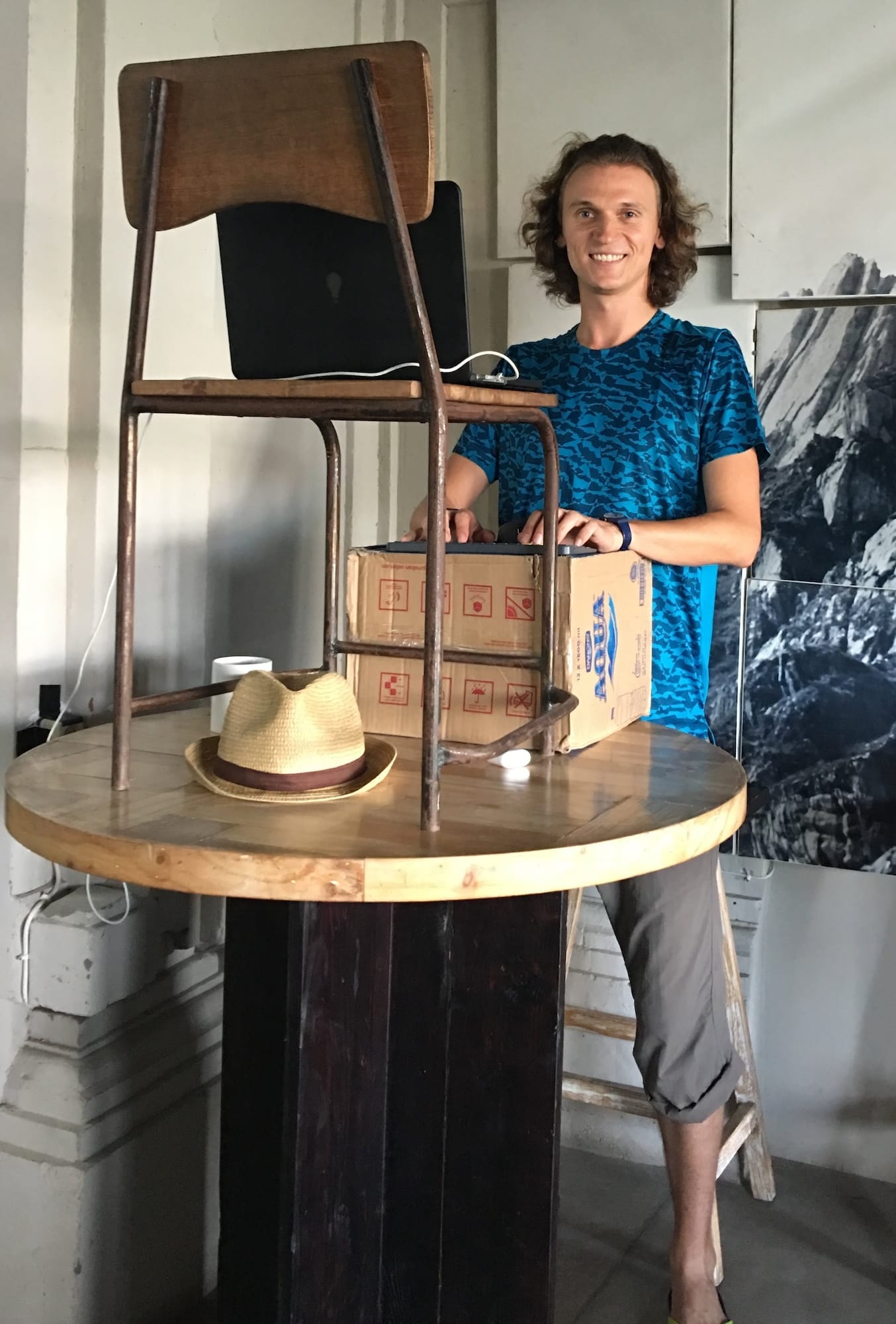
Community Colivings
Discovering The Hatchery Place in 2019 was a breakthrough. Think of a coliving space as coworking plus a bed. However, a community coliving is something more. It's a place where people come to connect, share meals, activities, and experiences. Thanks to the hosts who foster positive community vibes, it's the best place to form nomadic friendships.
That's why I recommend staying in a community coliving as the next step in your nomading journey. Loneliness is an immense challenge for many of us. While, coworkings are great for work, they don’t excel in social interactions. Colivings with a community-first approach fix that.
Before you look for a place to stay, understand that community colivings aren't typical vacation rentals. They won't allow short stays and usually aren't listed on Booking.com or Airbnb. That's because building connections requires time.
Instant communities or relationships do not exist. Hosts who run colivings understand that. Nevertheless, the time commitment is absolutely worth it.
How to find community colivings?
Nine Coliving in Tenerife remains my favorite. I stayed there for over a year. To understand why, I recommend listening to my podcast conversation with Anne Kuppens, the Nine owner.
 Piotrek Bodera
This is where I met my Ramón Morcillo and Daniel Gavrilov. They created projects to help you find best colivings:
- Mapmelon is a community for coliving enthusiasts and a booking platform
- Colivers Club is a podcast that focuses on colivings hosts and guests
- Colivium is a search tool to compare colivings
- Cowaiting notifies you when a last-minute spot opens up in a coliving
I was a guest on Ramón's Colivers Club podcast
Network School: Community Coliving + Startup Incubator
In my experience, every coliving has its own vibe. Some attract musicians, others hikers, or water sports enthusiasts. The Network School in Forest City, Malaysia, launched in 2024, focuses on startups and entrepreneurs.
 | Network School Team
Balaji Srinivasan, previously the CTO of Coinbase, created the School to bring his ideas from The Network State to life. In short, the Internet created conditions for a new kind of society. Gathered around shared values. Which may lead to the creation of a new type of internationally recognized sovereign. Akin to Knights of Malta.
Currently, tech-focused startups introducing crypto, AI, or biohacking products are leading the network state movement. If you’re interested in these topics, consider staying in the Network School.


Avoid No-Community Coliving
Please note that "coliving" is a broad term. It applies to student dorms, shared apartments, surf camps, or fancy hotels that want to attract nomads. However, they offer no community vibe because it's not their priority.
Before committing, do your research. Check the reviews, photos, and Instagram posts. People who stayed in excellent community colivings rave about their extraordinary experiences.
Cozy apartments on Booking.com
Spacious apartments with workspaces are what we need. My spouse and I work remotely, and we love nomading together. So we mastered the art of finding the right place to stay.
- Type the city name or preferred neighborhood, dates (1-3 months), and the number of guests.
- Select filters for your preferences. We need: Wi-Fi, air conditioning, swimming pool, balcony.
- Check free cancellation to ensure travel flexibility.
- Do not select accommodation types: hotels, apartments, resorts, etc. These definitions depend on the country and the property. In practice, there's little difference between them.
- If there are too many results, filter further by enabling "Very Good: 8+". Only excellent-rated locations will be displayed.
- Very Important: sort accommodations by Genius discount first. You can often get substantial discounts.
- Open 2-4 top results and look at photos showing the indoor and outdoor spaces. This method confirms space suitability for remote work.
- Check the reviews focusing on guests who stayed for a month or longer. Many reviews are a favorable sign.
- Copy the property name with the address and paste it into Google Maps. This is a useful way to verify the proximity to the city center, airport, supermarket, etc.
- Finalize the booking with a virtual card you use only for Booking. There are instances of card cloning scams, and virtual cards are the solution.
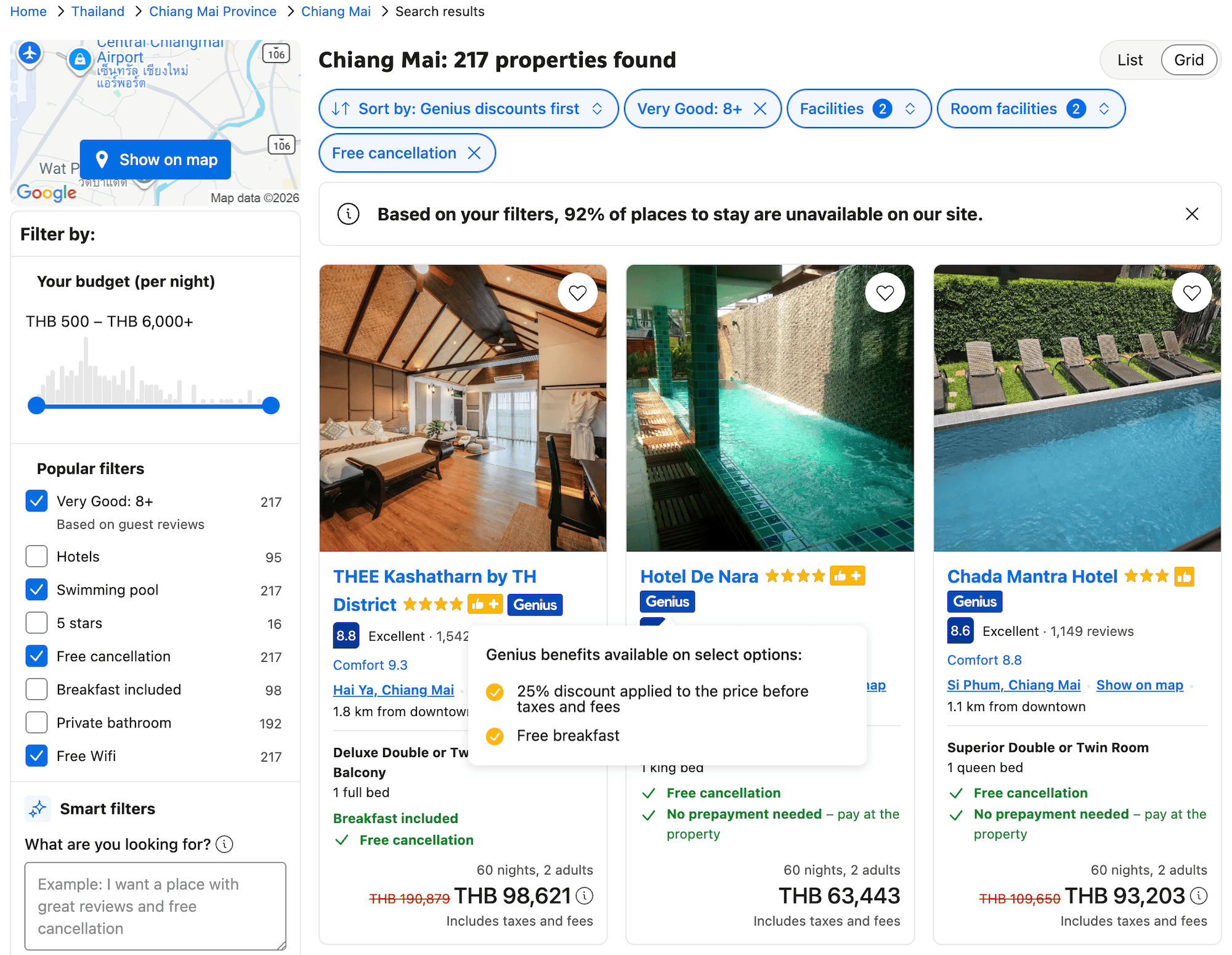
Years of success have shown this method's effectiveness. We found homey apartments in Kuala Lumpur, Da Nang, Tokyo, Sydney, Vienna, Chiang Mai, and many others.
Why Booking.com and not Airbnb or others?
Many digital nomads prefer Airbnb, including Marc Wieland, my Swiss friend. I treat it as a last resort because:
- Booking.com offers 28 million properties vs 10 million on Airbnb.
- I've been working in tourism, so I'm familiar with hotel standards.
- Airbnb used to be about hosts welcoming you in person. Now it’s about purpose-built apartments without a personal touch.
- Airbnb requires upfront payment. Booking.com offers flexible payment options before check-in.
- Local currency booking is best for me due to Revolut's low exchange rates. Airbnb charges in the selected currency, but uses its exchange rates.
- Many property owners now list on both platforms.
- The legality and zoning of Airbnb rentals remain a hot topic in many countries. Hotels have been around for centuries.
- Hotels understand the Airbnb model competition, so they upgrade their offerings. Most apartments by default offer Wi-Fi, laptop-friendly desks, kitchen counters, and other amenities.
Occasionally I try other booking platforms, but I often regret it. In December 2025, I tried Revolut Stays in Sydney. Getting my refund from Revolut for the wrong apartment took two months of lengthy conversations.
Over the years, I had a few rough experiences with Booking.com properties. However, I could always resolve the issues with their support. They earned my loyalty by decades of high quality service. No other platform has yet rivaled this.
AI second opinion on rentals
While Booking.com remains my primary accommodation platform, I'm pleased to experiment with AI tools. Specifically, with Claude MCPs that pull data directly from:
- DirectBooker
- Expedia
- lastminute.com
- Tripadvisor
- Trivago
- Super.com
- And many other sources added regularly to Claude > Settings > Connectors > Filter by "Productivity" and "Travel"
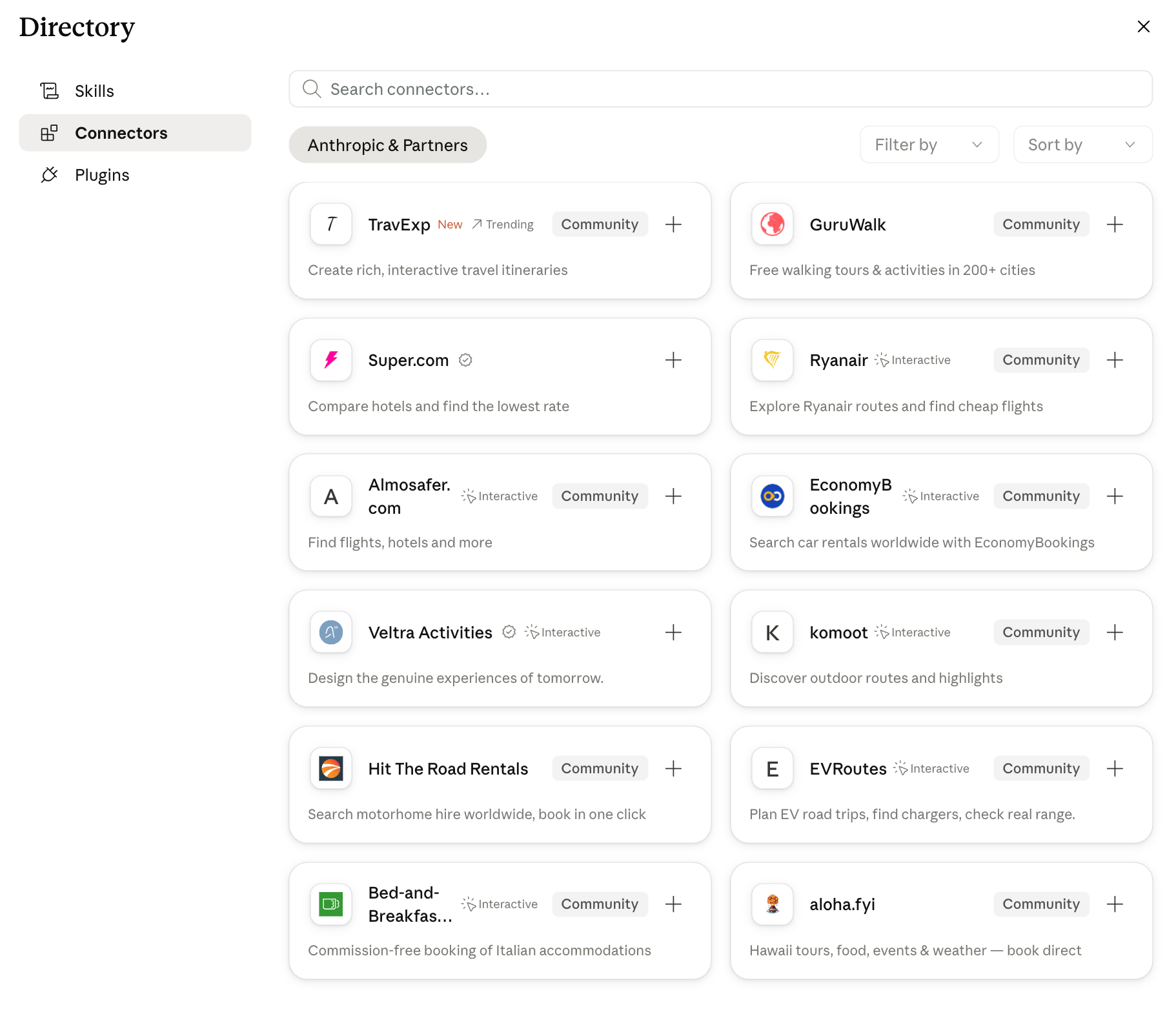
Here's a prompt you can try:
This is our travel plan:
{Insert dates, locations, number of guests, link to the current best offer on Booking and PDF with the reservation}
I want to do deep research to compare the rates I got from Booking with the other platforms. Especially with the connectors: DirectBooker, Expedia lastminute.com, Tripadvisor, Trivago, Super.com, and any other that you can reach.
I like my current apartment because I need:
- place to work remotely
- good Wi-Fi
- spacious room
- preferably a balcony or wide windows to allow natural light
- decent neighborhood
- gym in the building or nearby
- close to the city center
- great and plenty reviews of the place
- nice queen size bed or king size bed
- {insert other features you need}
Find out if identical lodging, including rooms, is available for less. If possible, only compare in local currency. I always use Revolut/Wise for super low currency exchange rates, so I prefer to pay in the local currency.
Next, verify if comparable lodging exists here on those dates. Check that the accommodation possesses every feature I require.
Present the results in a table with all relevant details so I can compare them side by side.
This approach allowed me to locate identical lodging on Booking, though at a reduced cost. Since AI tools are becoming better with more MCPs, the second opinion method is a solid option to find considerable deals.
 Piotrek Bodera
Direct rental from the owner
Once you've been in one destination for months, you felt its vibe. Friendships form, habits develop, and you like it so much that you want to stay longer. It happened to me in Tenerife, Spain, and Kuala Lumpur, Malaysia.
Due to local laws, many platforms, including Booking.com, can't offer stays longer than 90 days. Which makes sense, because travel visas are usually valid for a maximum 90 days either. One way to stay longer is to rent directly.
Instead of searching for accommodation via real estate agents or rental platforms, it's best to talk directly to the owner. If the accommodation you stayed in for three months was great, you have already established a positive relationship. They know you as a loyal guest, and you like their place.
This way, you avoid agent fees and time-consuming negotiations. And that's how I found my favorite spots that I return to.
Over to you
What's your approach to finding lodgings while traveling? How long do you stay before you move? Where did you stay to get a great direct rental deal?
Reply and tell me what you think. I strive to respond to every comment, and I'd love hearing from you.
See you next Tuesday.


Discussion